Which group, *Aspidoscelis* or *Cnemidophorus*, often favors more sparsely vegetated, rocky slopes in northern ranges like Utah, aligning with modern generic grouping?
Answer
Aspidoscelis
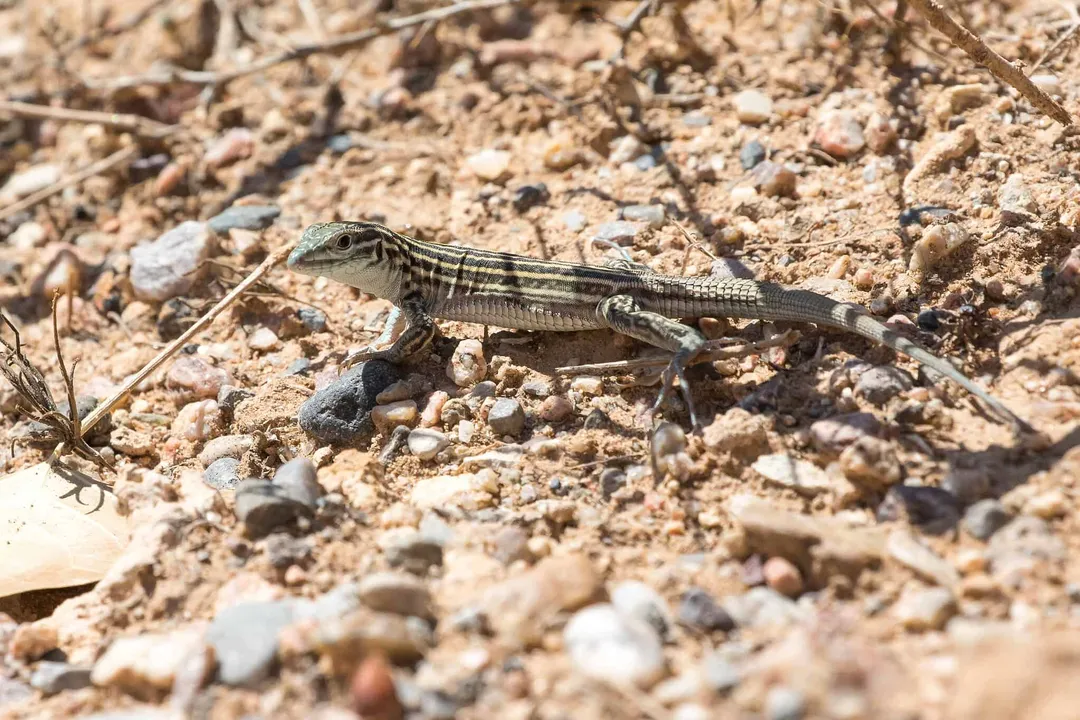
There are observable correlations between the updated generic grouping and the preferred microhabitats of whiptails. The group placed within *Aspidoscelis*, such as *A. neomexicana* found in Utah, tends to favor environments characterized by sparsely vegetated, rocky slopes or open desert scrub. Conversely, lineages sometimes retained in *Cnemidophorus*, while still inhabiting arid lands, may exhibit a slightly broader tolerance, sometimes including riparian edges or grassland areas. This correlation between finer ecological niches and revised genetic groupings reinforces the utility of the *Aspidoscelis* classification for these more northern species.
Related Questions
To which Family do whiptail lizards, celebrated for their speed and long tails, generally belong?What scientific advancement drove the splitting of the formerly massive genus *Cnemidophorus* into smaller genera like *Aspidoscelis*?What unique reproductive method characterizes some populations of the Desert Grassland Whiptail Lizard (*Cnemidophorus uniparens*)?What characteristics distinguish Suborder Lacertilia (Sauria) lizards, including the whiptails, from snakes?Which Kingdom classification signifies that whiptails are multicellular, heterotrophic organisms sharing fundamental animal life characteristics?Which genus typically encompasses many North American whiptail species, such as the Arizona Whiptail (*A. arizonae*), post-taxonomic split?What is the Global Conservation Status Rank (G-Rank) assigned to *Aspidoscelis gularis* (Texas Spotted Whiptail) by NatureServe?Which Phylum classification signifies that whiptails are connected to vertebrates because they possess a notochord at some developmental stage?What is the taxonomic distinction between the Order Squamata and the Suborder Lacertilia regarding reptile groups?Which group, *Aspidoscelis* or *Cnemidophorus*, often favors more sparsely vegetated, rocky slopes in northern ranges like Utah, aligning with modern generic grouping?