Vervet Monkey Scientific Classification
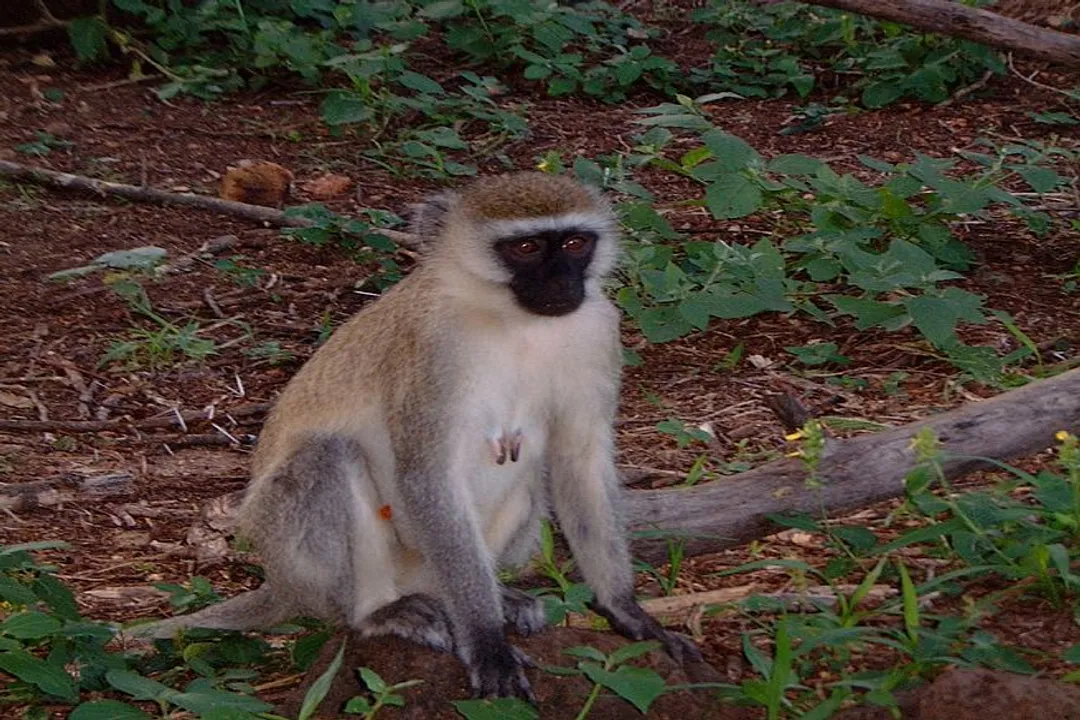
The creature commonly known as the vervet monkey presents a fascinating case study in biological classification, one that has seen considerable revision as genetic research progresses. While easily recognizable across its African range, pinning down its exact taxonomic placement, especially at the species level, requires looking closely at its lineage within the primate order. [1][3] For many years, the vervet was grouped broadly, but contemporary science now places it within a distinct genus, reflecting its unique evolutionary path. [2]
# Primate Placement
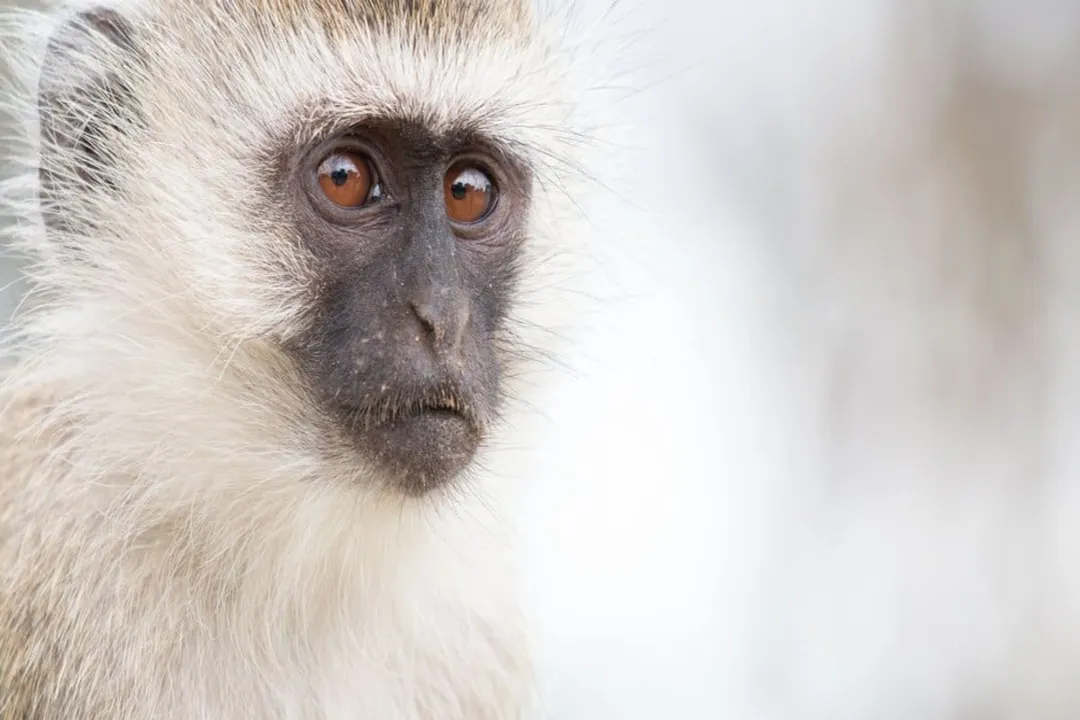
The foundation of the vervet monkey's scientific identity begins far up the hierarchy. Like all monkeys, apes, and humans, the vervet belongs to the Kingdom Animalia, being a multicellular, heterotrophic organism. [7] Moving down, it fits into the Phylum Chordata, signifying the presence of a notochord at some stage of development, and the Class Mammalia, confirming it is a warm-blooded vertebrate that nurses its young. [7] Its placement within the Order Primates is defined by shared characteristics like grasping hands and feet, forward-facing eyes providing binocular vision, and relatively large brains for body size. [3]
# Family Affiliation
Within the Primates, the vervet monkey is classified under the Family Cercopithecidae. [2][7] This family is crucial because it separates Old World monkeys from New World monkeys (Platyrrhini). Old World monkeys, including the vervets, are characterized by their downward-pointing nostrils, non-prehensile tails (which are never used for grasping), and the presence of ischial callosities—tough, padded areas on their rumps. [5][6] The vervet’s inclusion here places it alongside baboons, macaques, and guenons. [5]
# Genus Reclassification
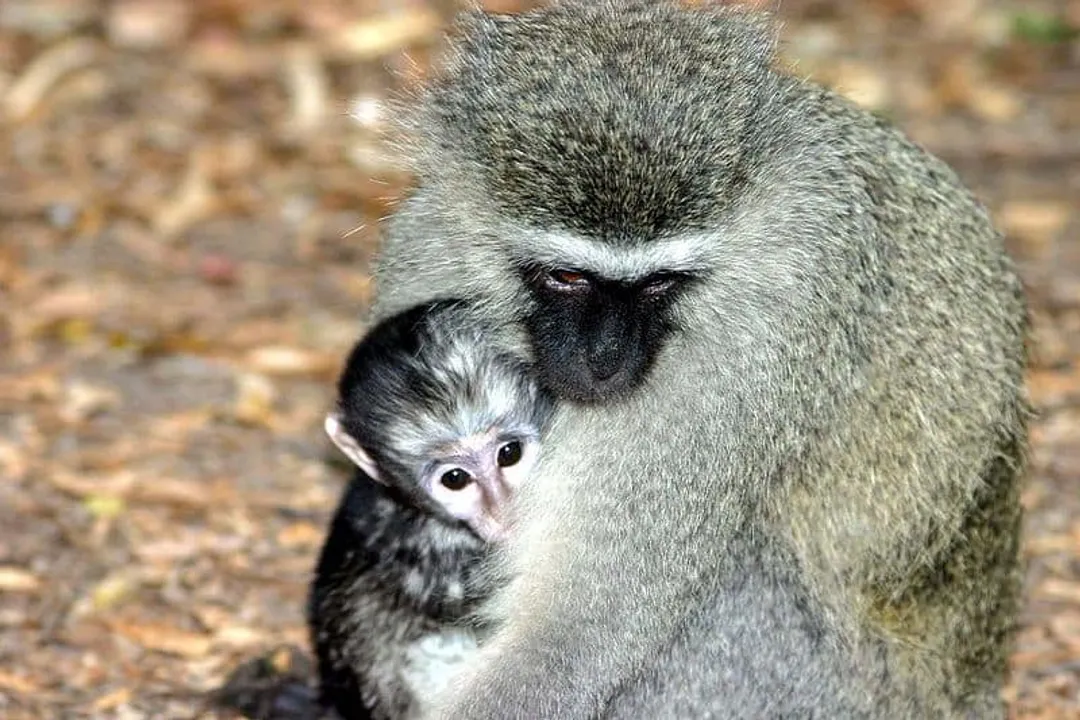
A significant point of contention and clarity in the vervet’s history revolves around its genus assignment. Historically, many of the African guenon-like monkeys were lumped together under the genus Cercopithecus. [1][6] However, molecular and morphological data led to the recognition that the monkeys commonly called vervets form a distinct evolutionary group. [2] Today, the scientific consensus places them primarily within the genus Chlorocebus. [1][2][6] This shift acknowledges that Chlorocebus species diverged from other Cercopithecus monkeys roughly 5 million years ago. [2]
The genus Chlorocebus is often referred to as the "green monkeys," a name derived from the greenish cast on the lower back and tail of many species within this group. [2][6] It is interesting to note that while the term "vervet monkey" is widely used, it often refers to several closely related species within Chlorocebus, leading to common confusion in regional identification. [1] For instance, in some older literature or general surveys, you might still see references to Cercopithecus aethiops, which now corresponds to the scientific classification of the green monkey group. [6]
# Species Complexity
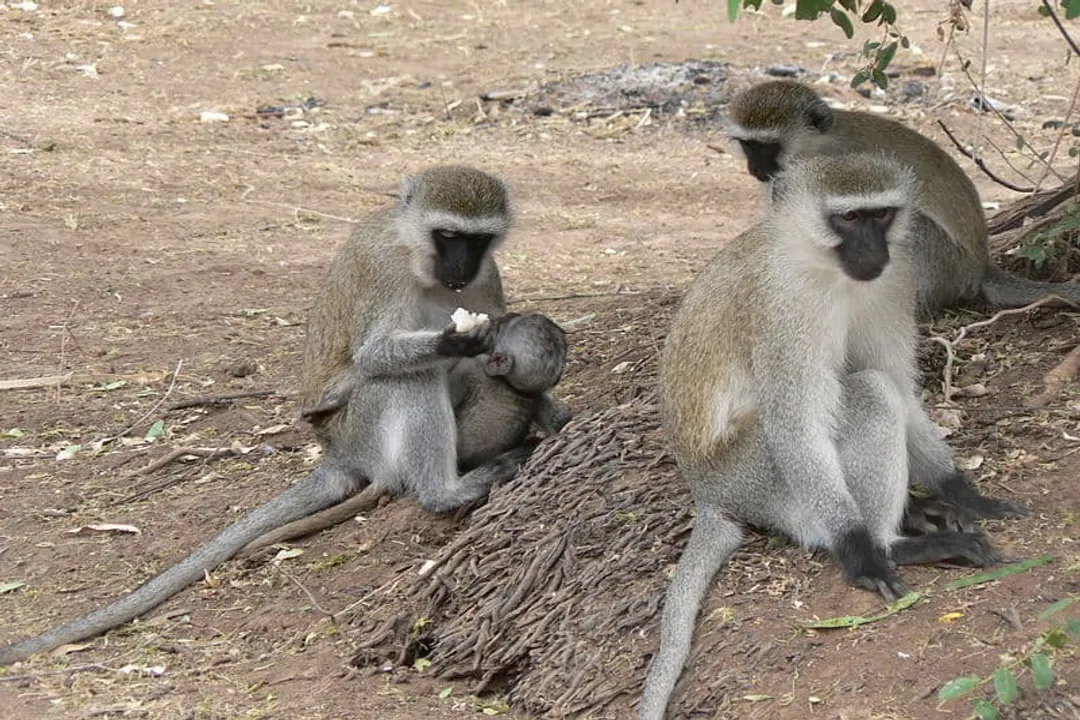
The primary complexity arises when defining the specific species that constitute "the vervet monkey." The name often points to Chlorocebus aethiops, the Savanna or Green Monkey, but other closely related and often sympatric (living in the same region) species exist, leading to hybrid zones and historical taxonomic ambiguity. [1][6]
The species Chlorocebus aethiops itself is historically associated with the savanna regions of Eastern Africa. [2] However, other distinct species recognized within the complex include:
- Chlorocebus pygerythrus: The Tantalus monkey. [2]
- Chlorocebus tantalus: The Tantalus monkey (sometimes listed as a subspecies or synonym depending on the authority). [1]
- Chlorocebus sabaeus: The Green or Sabaeus monkey, typically found further west. [1][9]
When looking at the taxonomy used by specific institutions, like the San Diego Zoo Wildlife Alliance, they recognize C. aethiops (Green Monkey) and C. sabaeus (Green Monkey) as distinct species, though the common terminology can obscure these differences. [5]
A striking example of how classification directly affects ecological understanding comes from considering invasive populations. For instance, the Chlorocebus sabaeus complex is noted for its presence as an invasive species on Caribbean islands like St. Kitts and Nevis. [9] Understanding whether the established population descends from C. sabaeus or a hybrid group impacts management strategies for controlling their spread, making precise species identification far more than an academic exercise. [9]
# A Note on Subspecies
Further complicating the picture are subspecies. For the savanna green monkey, Chlorocebus aethiops, some classifications recognize distinct subspecies based on geographic distribution and subtle physical differences, such as coat shade or the extent of black fur on the face. [6]
For example, the Grivet (Chlorocebus aethiops aethiops) is often distinguished from other regional variants. [6] When examining biological surveys, such as those pertaining to South African biodiversity, researchers might focus on the C. aethiops group found in the Lowveld area, noting subtle morphological traits that separate them from populations further north or west. [8] This level of detail is essential for population genetics and conservation assessments, as a subspecies might be far more geographically restricted and thus more vulnerable than the species as a whole. [8]
It is worth pausing here to consider the practical implications of this shifting classification. For a general reader, the common name "vervet monkey" suffices, but for a field biologist or conservation manager, knowing whether they are dealing with C. sabaeus versus C. aethiops is critical, especially if the two groups have different ecological tolerances or conservation statuses. [1] The continuous analysis of mitochondrial and nuclear DNA sequences drives these revisions, continually refining the picture of how these closely related primates separated over time. [2]
# Comparing Key Species
To illustrate the subtle distinctions that drive classification decisions, we can compare two major members of the Chlorocebus genus often lumped under the vervet umbrella: C. aethiops and C. sabaeus. While both are Old World monkeys found in Africa, their historical ranges suggest a geographical split that may now be blurred by introductions. [1][9]
| Feature | Chlorocebus aethiops (Savanna/Green Monkey) | Chlorocebus sabaeus (Green Monkey) |
|---|---|---|
| General Range | Eastern and Southern Africa | West Africa, introduced to the Caribbean [1][9] |
| Nomenclature Note | Complex, often includes subspecies like the Grivet [6] | Recognized as distinct, noted for invasive status [9] |
| Coloration Detail | Often described with a greenish mantle [2] | Similar general appearance but distinguished genetically |
One insightful observation stemming from these divisions relates to vocal repertoire. While not strictly part of the Linnaean hierarchy, the vocal communication structure in closely related primate species often evolves rapidly and can act as a pre-mating isolating mechanism, reinforcing species boundaries that genetics later confirm. [3] A subtle difference in a specific alarm call between two Chlorocebus groups might precede a formal taxonomic split, offering a behavioral confirmation of evolutionary divergence.

# The Hierarchy Summed Up
To bring the Linnaean structure into sharp focus, here is the typical taxonomic pathway for the vervet monkey, based on current understanding of the Chlorocebus genus:
- Kingdom: Animalia [7]
- Phylum: Chordata [7]
- Class: Mammalia [7]
- Order: Primates [3]
- Family: Cercopithecidae [2]
- Genus: Chlorocebus [2]
- Species: Varies (C. aethiops, C. sabaeus, etc.) [1]
This structure shows the vervet is firmly rooted as an Old World Monkey. [5] Another area where classification has real-world consequences involves protected area management. If a population is classified as a distinct subspecies—for example, a specific Lowveld variant—it might qualify for stricter protection under national endangered species acts in South Africa, even if the overall Chlorocebus genus is considered widespread. [8] This fine-scale taxonomy, therefore, dictates conservation funding and land-use decisions. [8]
The current state of vervet classification, resting in the Chlorocebus genus, reflects decades of biological work moving from broad morphological grouping to detailed genetic sequencing. [2] It is a dynamic field, reminding us that the names we use for the natural world are not static labels but working models of evolutionary history, constantly being refined by new data. [1]
Related Questions
#Citations
Vervet monkey
Vervet Monkey (Chlorocebus pygerythrus) Fact Sheet
Vervet monkey - Wisconsin National Primate Research Center
vervet monkey (Chlorocebus aethiops Linnaeus)
Chlorocebus aethiops (vervet monkey) | INFORMATION
Vervet Monkey Animal Facts - Chlorocebus pygerythrus
Vervet monkey
Vervet or Green Monkey