Whale Shark Scientific Classification
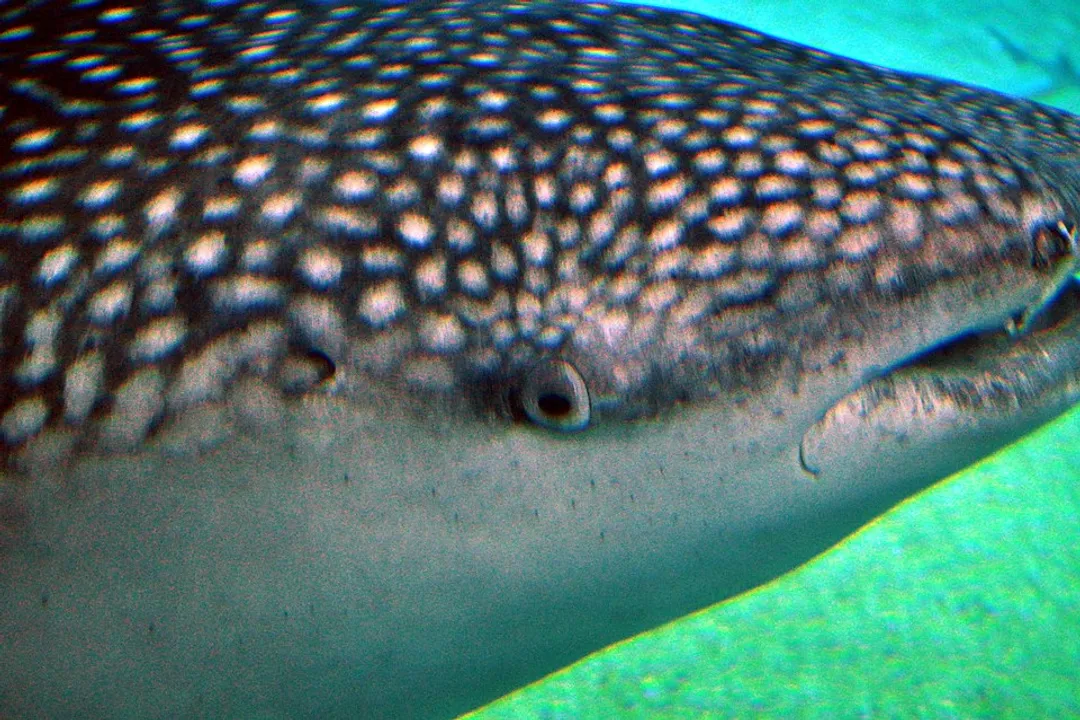
The whale shark, Rhincodon typus, holds a legendary status in the marine world, instantly recognizable as the largest fish on Earth. [2][6] This title alone sets it apart, yet its scientific placement within the tree of life is just as fascinating as its colossal size or its unique, docile demeanor. Understanding its formal classification reveals why this gentle giant belongs in the category it does, separating it from true whales and clarifying its evolutionary relatives among other fish. The very name, which merges "whale" and "shark," suggests a necessary taxonomic sorting to place it correctly in the animal kingdom. [2][5]
# Naming Legacy
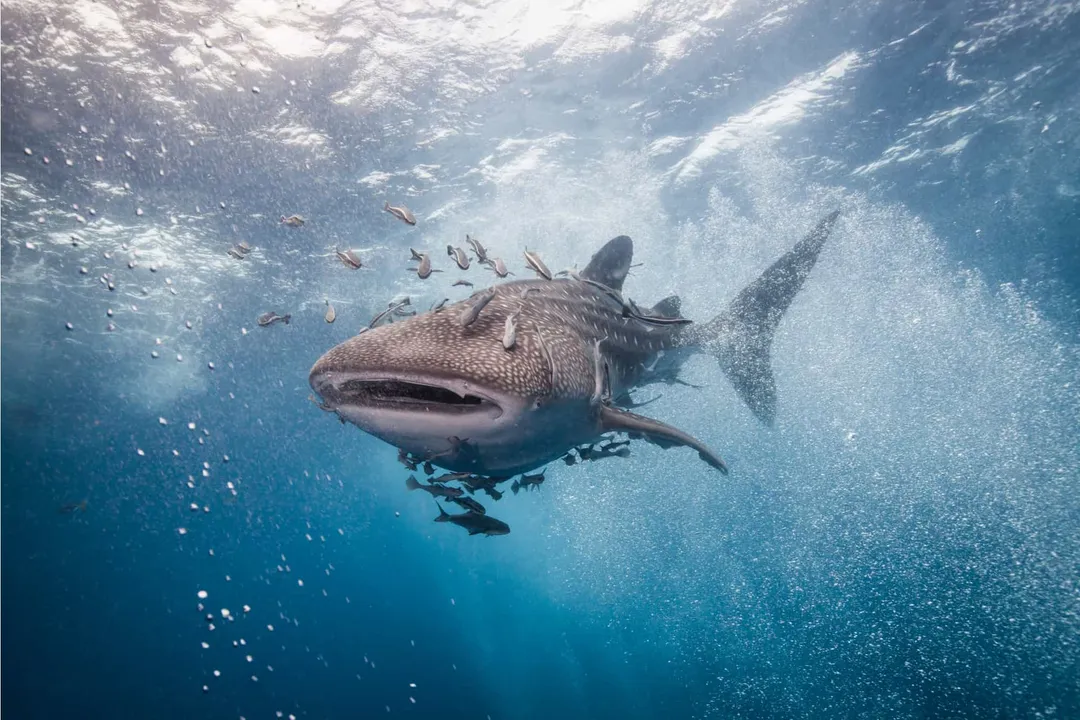
The formal description of this massive species arrived in the mid-1800s, a process that involved initial missteps and subsequent corrections, typical of early scientific documentation. The binomial name assigned is Rhincodon typus, credited to A. Smith. [2][3] While some records cite the year as 1829, [1] the widely accepted authority points to 1828. [2] Smith, a military doctor stationed in Cape Town, South Africa, described the shark after a specimen was harpooned in Table Bay. [2]
The genus name, Rhincodon, is derived from Greek words meaning “rasp” and “tooth” (rhyngchos and odous), a nod to the creature's rasp-like teeth. [7] Over time, scientific consensus has worked to standardize nomenclature. For instance, the genus was previously sometimes classified as Rhiniodon, and the family as Rhinodontidae. [2] However, in 1984, the generic variation was officially suppressed in favor of Genus Rhincodon and Family Rhincodontidae. [7] This streamlining confirms that the whale shark is the only living species remaining in the genus Rhincodon. [2]
# Hierarchical Placement
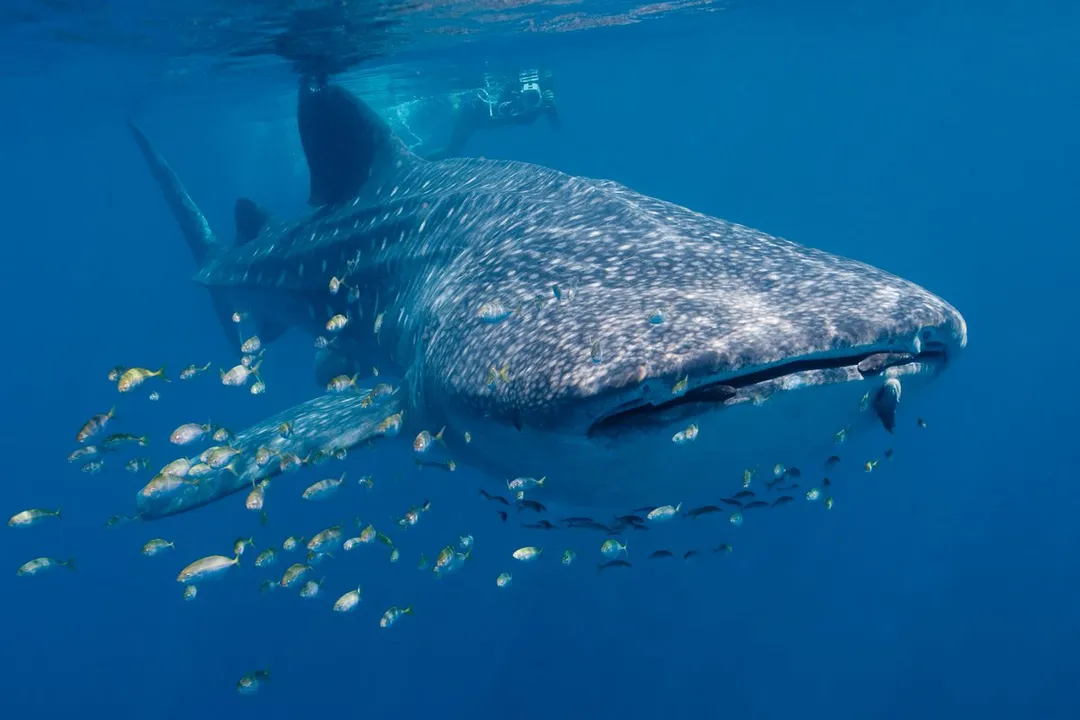
The full scientific classification of the whale shark reveals its place within the vast domain of life, starting broad and narrowing down to its unique species designation.
# Kingdom Chordata
At the highest level of relevance, the whale shark belongs to Kingdom Animalia [2][3][5][7] and Phylum Chordata. [2][7] Membership in Chordata means it possesses, at some stage of its life, a notochord, a dorsal hollow nerve cord, pharyngeal slits, and a post-anal tail. [4] Within this phylum, it is further categorized under Subphylum Vertebrata. [4]
# Class Chondrichthyes
The next crucial placement is Class Chondrichthyes. [2][3][5][7] This group encompasses all cartilaginous fish, which includes all sharks, rays, and skates. [3][4] The defining feature of this class is that their skeletons are made not of true bone, but of cartilage, which is generally more flexible and less dense. [3][5] This contrasts sharply with bony fish (Osteichthyes). Membership in Chondrichthyes also confirms that the whale shark breathes using gill slits, lays eggs (though it gives live birth), and does not nurse its young. [5]
Within this class, the whale shark falls into the Subclass Elasmobranchii, [1] a category shared with most other sharks and rays. [7]
# Order Orectolobiformes
Deeper still, the whale shark is placed in Order Orectolobiformes. [1][2][3][5][7] This group is commonly known as the carpet sharks. [2][3] This affiliation might surprise many readers, as most members of the Orectolobiformes are benthic, meaning they live on or near the seafloor, such as nurse sharks and wobbegongs. [3][7] However, the whale shark stands out as the only pelagic (open ocean) species within this order. [4][7] This adaptation to a vast, migratory ocean existence, rather than a bottom-dwelling one, highlights a significant evolutionary divergence within its relatives. [7]
# Sole Survivor
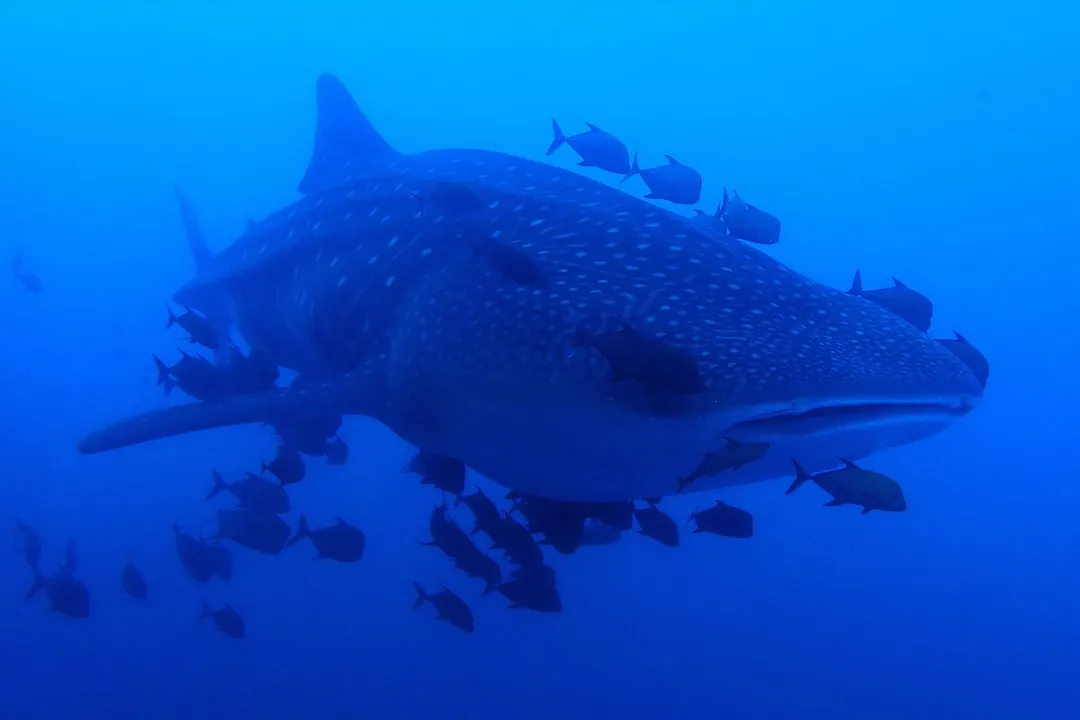
The classification culminates in the Family Rhincodontidae. [1][2][3][5][7] Uniquely, the whale shark is the only extant (currently living) member of this family. [2] This places it in an exclusive biological club, with its closest relatives either being extinct—such as Rhincodon ferriolensis described from Europe—or existing in fossil records dating back millions of years. [2][7] Its lineage is ancient, with fossil teeth suggesting its evolutionary history stretches back to the Late Oligocene, approximately 28 million years ago. [2]
The defining physical characteristics that cemented its place in this taxonomy are linked to its feeding strategy. Its massive mouth, located terminally at the front of its flattened head (unlike many sharks whose mouths are underslung), [2][3] contains hundreds of rows of tiny, vestigial teeth. [2][7] These teeth are not used for eating; instead, the shark employs specialized, sieve-like structures derived from modified gill rakers to filter feed. [2][7] The presence of these features, combined with its general shark morphology, secures its spot at the head of its own family tree.
A fascinating piece of data that underpins its classification as a highly adapted pelagic species is found in its visual system. Scientists have discovered that whale sharks possess a form of rhodopsin (the light-sensing pigment) that is unusually sensitive to blue light, which dominates the deep ocean. [2] This adaptation, which in humans is associated with congenital night blindness, allows the whale shark to see effectively across its vast vertical range, diving deep and returning to the surface. [2] This physiological specialization is a strong indicator of the evolutionary pressures faced by a species classified as fully pelagic, unlike its benthic carpet shark cousins.
The uniqueness of Rhincodon typus is further emphasized by its individual coat. Every whale shark exhibits a unique arrangement of pale spots and stripes against a dark background. [2][3][4] This pattern is so individual that organizations dedicated to its study rely on it for photo-identification databases, much like human fingerprints. [6] If you are looking to contribute to scientific knowledge without traveling the globe, learning the proper protocol for capturing and submitting clear photos of the area behind the pectoral fins and gills is an actionable step that directly supports ongoing population studies, helping researchers distinguish individuals and track their health and migratory paths. [6]
The scientific journey to properly categorize Rhincodon typus has been one of refinement, moving from historical confusion to clear definition. Its classification—a unique, living member of the family Rhincodontidae within the carpet shark order—perfectly reflects its status as an outlier: the largest fish, one that behaves like a whale, yet is unequivocally a cartilaginous fish whose physical adaptations are finely tuned for its life in the vast, open blue.
Related Questions
#Citations
Whale shark - Wikipedia
Whale Shark Facts and Information | United Parks & Resorts
Rhincodon typus (whale shark) - Animal Diversity Web
Whale Shark Fact Sheet | Blog | Nature - PBS
CITES identification manual Whale Shark - DCCEEW
Whale Shark – Discover Fishes - Florida Museum of Natural History
Whale Shark Fish Facts - Rhincodon typus - A-Z Animals
Whale Shark, Rhincodon typus (Smith, 1828) - The Australian Museum
Whale Shark | World Wildlife Fund