Vermilion Flycatcher Scientific Classification
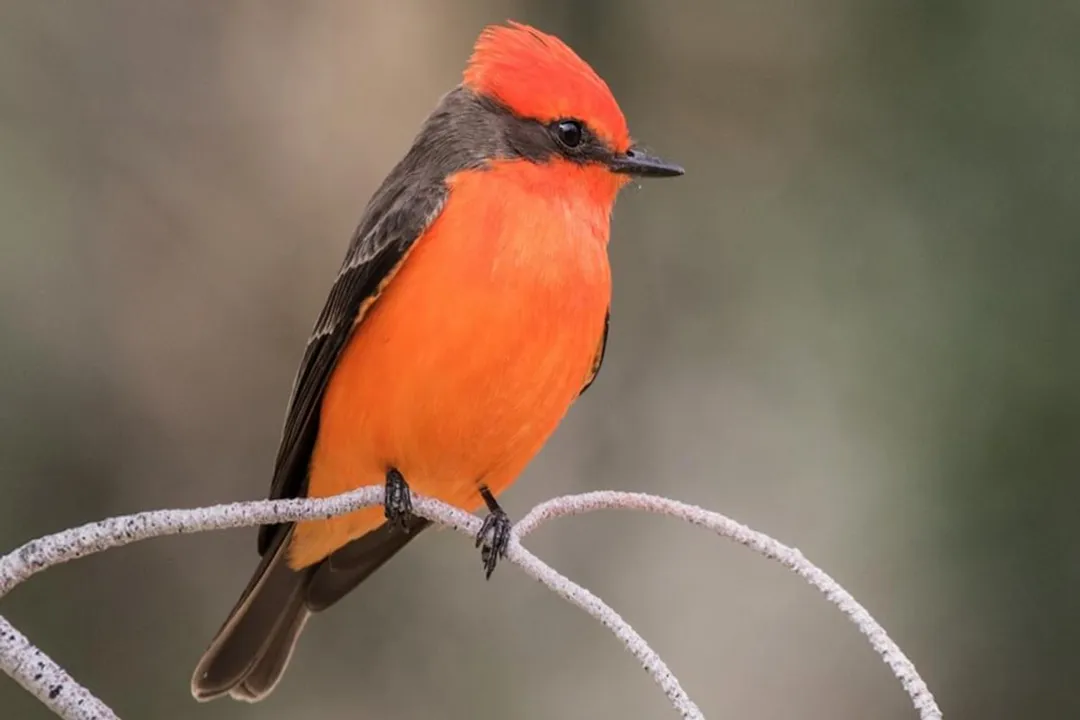
The fiery flash of crimson and black against the arid landscape announces the arrival of the Vermilion Flycatcher, a species that captures the eye with its stunning sexual dimorphism. While its common name immediately identifies it, understanding where this bird fits within the grand scheme of life requires delving into its scientific classification. This Linnaean ordering is far more than just a set of Latin labels; it tells a story of evolutionary relationships, reflecting shared ancestry with other avian species across the globe. [5] The official designation, built layer by layer from the broadest category down to the specific species name, provides the universal language necessary for ornithologists everywhere to communicate about this striking bird without ambiguity. [6]
# The Broadest Ties
Like all living things, the Vermilion Flycatcher begins its classification journey at the highest ranks. It belongs to the Kingdom Animalia, signifying it is a multicellular, heterotrophic organism. [5] Moving down, it falls into the Phylum Chordata, meaning it possesses a notochord at some stage of development, which typically translates to having a backbone in this case. The Class is Aves, recognizing it as a bird, characterized by feathers, wings, and a beak. [5] The classification becomes more specific at the Order level, where the Vermilion Flycatcher is placed within Passeriformes. [5][6] This order is the largest order of birds, commonly referred to as perching birds or songbirds, even though not all members of this group are known for complex songs. [5] Its inclusion here places it alongside sparrows, finches, and numerous other highly adaptable bird families. [2]
# Family Assignment
The next critical step places the Vermilion Flycatcher into the family Tyrannidae, the group known as the Tyrant Flycatchers. [5][6] This family is unique because it is overwhelmingly dominant in the Americas, hosting more species than any other bird family on the continents. [2] While the common name is "Flycatcher," a key characteristic of many species in this family is their feeding behavior: they are often sally-gleaners, meaning they wait on a perch before sallying out to catch insects in mid-air before returning to the same or a nearby perch. [7] Their membership in Tyrannidae strongly suggests shared physical traits and behaviors with groups like the kingbirds and phoebes, defining its ecological niche as an aerial insectivore primarily found in the New World. [4]
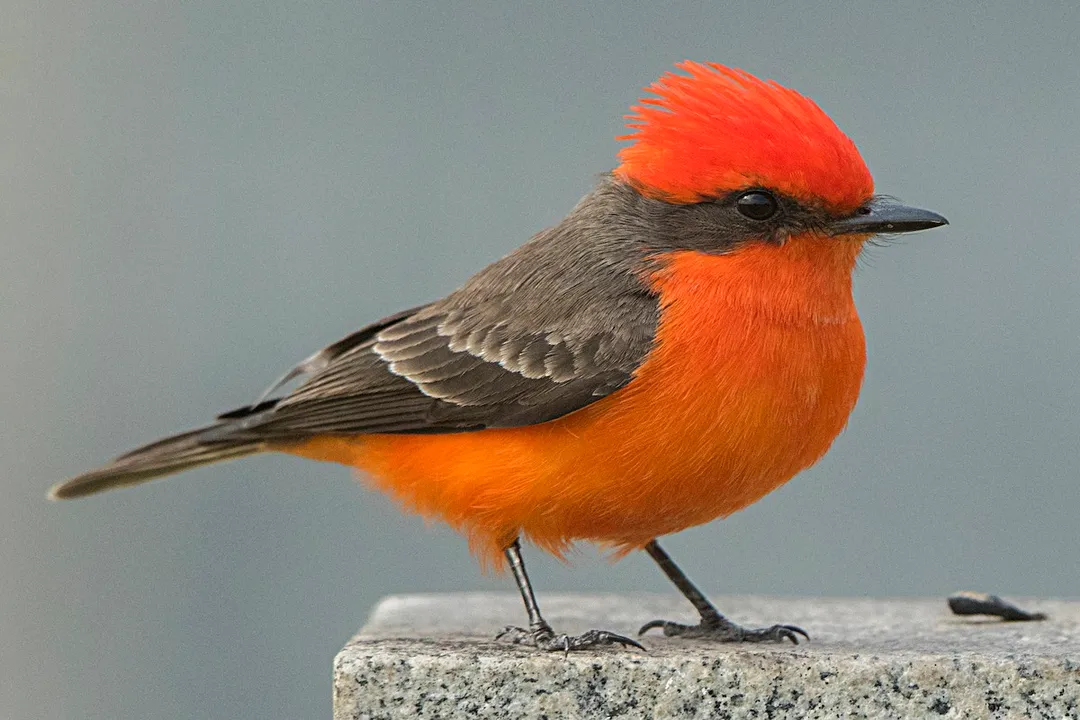
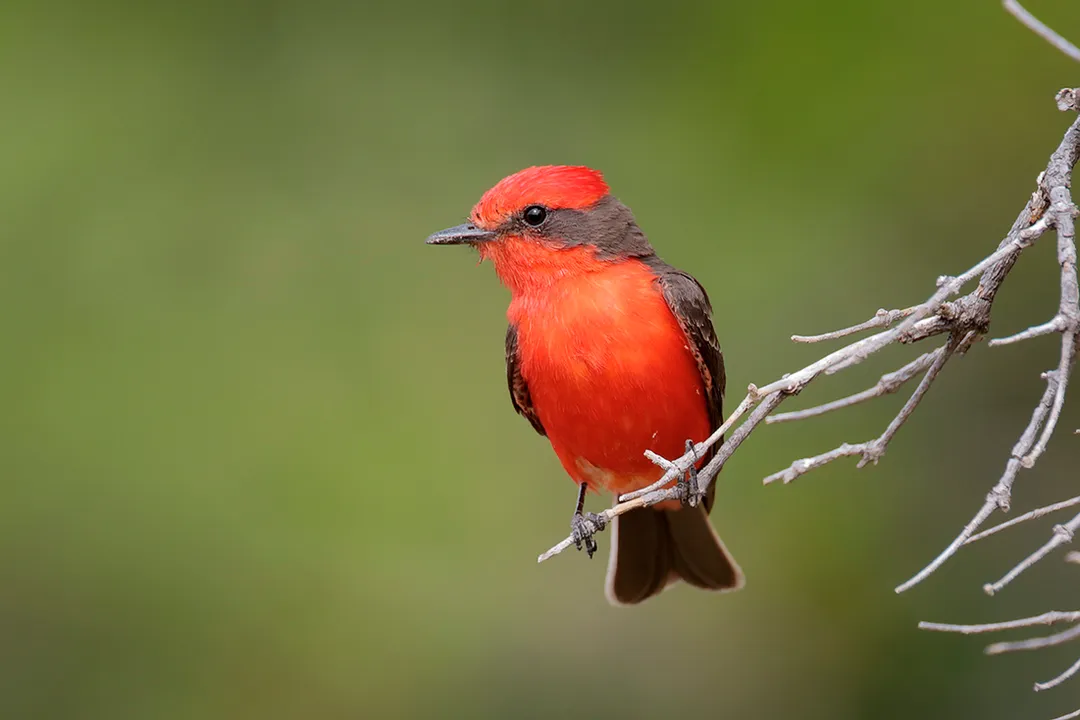
For instance, examining the family placement, one can observe that while most flycatchers are dull green or brown, the Vermilion Flycatcher is a notable exception due to the male’s brilliant coloration—a unique splash of vibrancy within a family often characterized by subtlety. [2] This divergence in plumage suggests significant evolutionary pressures acting upon this specific lineage within the broader Tyrannidae structure. [5]
# The Genus Defining Trait
The genus, the level immediately preceding the species name, is Pyrocephalus. [6] This name itself is quite descriptive, derived from Greek roots meaning "fire head" or "fire-covered," which is a very apt description for the male's fiery red breast and belly. [6] This genus houses the species known collectively as the Vermilion Flycatchers. [6]
The placement within the genus Pyrocephalus is crucial because it groups the bird with its closest relatives, species that share a very recent common ancestor. While many sources point to a single widespread species, taxonomic work over time has suggested potential splits within Pyrocephalus based on geographic separation and subtle morphological differences, indicating that the classification process is dynamic, not static. [6]
# Species Naming Debate
The species epithet—the second part of the scientific name—has been a point of taxonomic discussion for this bird. Most commonly, it has been referred to as Pyrocephalus rubinus. [6] However, historical and ongoing taxonomic reviews have sometimes favored the name Pyrocephalus obscurus. [6] This discrepancy often arises when closely related, geographically separated populations are either lumped together as one species with subspecies or split into multiple distinct species. [5]
The Zoological Nomenclature of the Americas (SACC) has been involved in discussions regarding the classification within this genus, indicating that authoritative bodies actively assess these relationships. [8] A proposal concerning the Pyrocephalus genus, such as SACC Proposal 818, highlights ongoing efforts to refine which names apply to which populations, suggesting that the precise current species assignment can sometimes depend on the authority consulted or the most recent revision accepted. [8] For those observing birds in different parts of the continent, this means one might encounter literature referencing the species under slightly different binomials, though P. rubinus remains widely accepted in many contemporary field guides. [2][9]
The distinction between rubinus and obscurus often relates to geography. For example, populations found in the southern parts of South America might be grouped under one designation, while those further north or in Central America might be associated with another, even if they are considered conspecific (the same species) by some authorities. [5]
# Comparison of Classification Ranks
To visualize the structured nature of this classification, we can look at how the Vermilion Flycatcher stands relative to other life forms. This hierarchical structure ensures that every organism has a unique, globally understood address:
| Rank | Classification | Defining Characteristic Summary |
|---|---|---|
| Order | Passeriformes | Perching birds; generally highly successful adaptive radiation [5] |
| Family | Tyrannidae | New World Tyrant Flycatchers; aerial insectivores [4][7] |
| Genus | Pyrocephalus | "Fire head"; the distinct group of Vermilion Flycatchers [6] |
| Species | P. rubinus / P. obscurus | The specific biological unit; currently debated in some circles [6] |
Observing this table reveals that the most significant functional grouping occurs at the Family level (Tyrannidae), grouping it by feeding ecology and geography, while the Genus level (Pyrocephalus) separates it specifically from other North and South American flycatchers that do not share that specific "fire head" morphology. [6]
# Ecological Context of Taxonomy
The distribution of the Vermilion Flycatcher offers an interesting, albeit indirect, insight into why its classification has been subject to review. It is a species with an extremely broad range, stretching from the southwestern United States down through Mexico, Central America, and widely across South America. [2][9] When a species spans such vast and ecologically diverse regions—from the Sonoran Desert scrublands [7] to tropical woodlands [4]—it is highly probable that regional populations will evolve differences. Taxonomists often look at these differences to decide if subspecies exist, or if those differences are significant enough to warrant full species status. [5] The very broad distribution documented in resources like the Cornell Lab's All About Birds overview [2] and the Montana Field Guide [9] is the reason the classification debates surrounding rubinus and obscurus persist.
When you observe a male in Arizona, it is bright scarlet, [7] which aligns with many descriptions of rubinus. If the classification were strictly tied only to physical markers, a bird in southern Chile might be classified differently based on shades of red or minor size variations, reflecting the complexity inherent in classifying widespread, sexually dimorphic species. [5]
It is fascinating to consider how closely related organisms are identified through this nested system. For example, while Pyrocephalus sits firmly in Tyrannidae, a completely different group of flycatchers, the Monarch Flycatchers, belong to the family Monarchidae, found almost exclusively in the Old World (Africa, Asia, Australasia). [6] The fact that they both share the common English name "flycatcher" illustrates a case of convergent evolution—where unrelated birds evolve similar lifestyles (catching insects mid-air) that drive them to occupy similar functional niches, even though their deep evolutionary roots, reflected in their formal classification (Family Tyrannidae vs. Monarchidae), are distant. [5]
# Naming Conventions Insight
A useful point for the casual observer relates to the structure of the scientific name itself, Pyrocephalus rubinus. The first name, Pyrocephalus, is always capitalized and remains consistent for all species within that group (the genus). The second name, rubinus, is never capitalized and is specific only to this particular species within the genus. If a new, closely related species were discovered tomorrow, it might be named Pyrocephalus [something else]. This strict two-part naming convention (binomial nomenclature) established by Linnaeus remains the bedrock of biological identification, providing stability regardless of popular opinion or local vernacular, which is why the scientific classification is a bedrock of ornithology. [6]
If you are looking at a bird that is clearly a Tyrant Flycatcher based on its behavior—hovering, quick flights to catch bugs—but it lacks the distinctive red plumage, its classification is still in Tyrannidae, but it would belong to a different genus entirely, perhaps Myiarchus (Crested Flycatchers) or Contopus (Wood-Pewees). This shows that while the Pyrocephalus genus is defined by that striking male color, the larger family groups them based on shared skeletal structure and genetic markers that are less obvious to the naked eye than plumage. [5]
# Finalizing the Placement
The consensus, while subject to ongoing revision, places the Vermilion Flycatcher firmly within the established avian structure: it is a perching bird belonging to the large New World flycatcher family, specifically within the genus dedicated to these fiery-colored aerial hunters. [5][6] The existence of multiple sources confirming the Order (Passeriformes) and Family (Tyrannidae) provides a high degree of confidence in its general placement, even as the specific species epithet might occasionally shift between rubinus and obscurus depending on the most current phylogenetic understanding. [1][5] For the birder in the field, knowing it is a Pyrocephalus means expecting that specific shape and feeding behavior, even if the precise species name is in flux based on the latest scientific journals. [2][8] This classification work, documented by sources from institutional guides to museum records, confirms its status as a unique member of the American avifauna. [7][9]
Related Questions
#Citations
Pyrocephalus rubinus (Vermilion Flycatcher) - Avibase
Vermilion Flycatcher Overview, All About Birds, Cornell Lab of ...
Species Profile for Vermillion flycatcher(pyrocephalus rubinus) - ECOS
VERMILION FLYCATCHER | The Texas Breeding Bird Atlas
Vermilion Flycatcher - Pyrocephalus rubinus - Birds of the World
Pyrocephalus - Wikipedia
Vermilion Flycatcher - Tucson Bird Alliance
Split Pyrocephalus rubinus into multiple species
Vermilion Flycatcher - Montana Field Guide