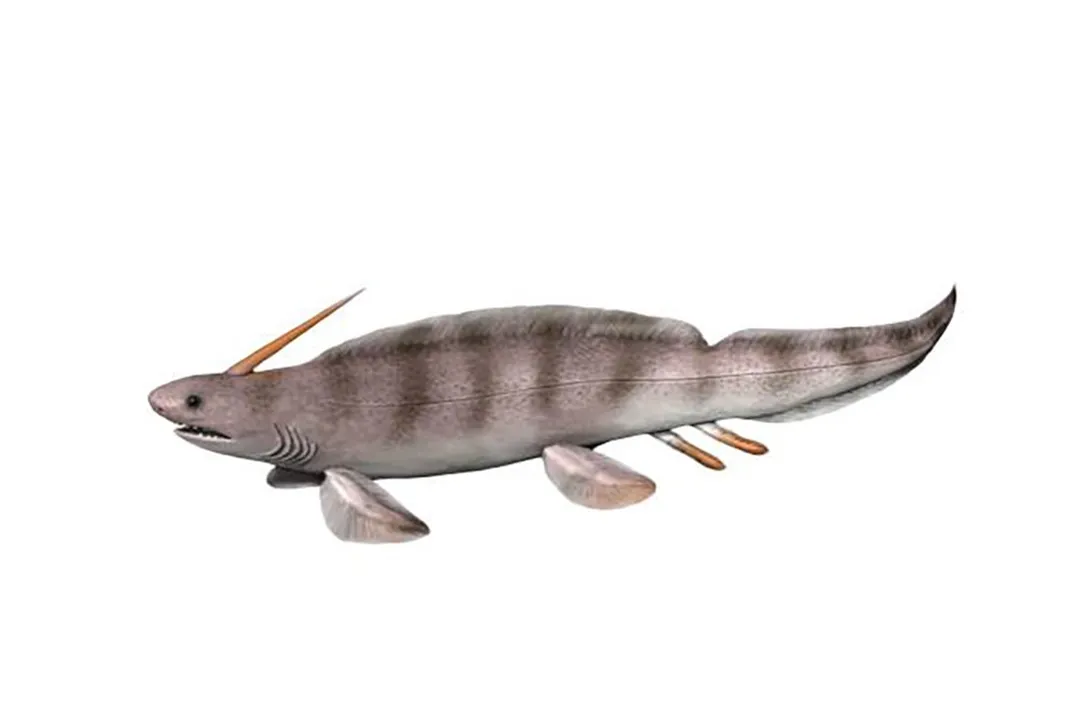
Where does the prominent, long spine that secured the name Xenacanthus project backward from?
Answer
The nuchal region (back of the head)
The primary feature giving *Xenacanthus* its name—the 'strange spine'—is specifically located projecting backward from the nuchal region, which is defined as the back of the head. This posterior projection is morphologically unique among known shark groups. Coupled with a potential second spine near the tail structure, this paired spination likely served as a passive defense mechanism, acting as a deterrent against larger predators within its ancient ecosystem by relying on its physical shape rather than active evasion tactics.
Related Questions
What does the Greek name Xenacanthus translate to?During which geological periods did Xenacanthus primarily exist?What critical habitat preference distinguishes Xenacanthus from most early sharks?What specialized arrangement characterized the dentition of Xenacanthus?Where does the prominent, long spine that secured the name Xenacanthus project backward from?How is the overall body configuration of Xenacanthus described in anatomical terms?To which extinct branch of elasmobranchs does the genus Xenacanthus belong?Which specific North American location is mentioned for yielding important Xenacanthus specimens during the Permian period?Which combination of features is specifically noted as highly diagnostic for identifying Xenacanthus fossils?What appears to have been the basis of Xenacanthus's early evolutionary success versus modern sharks?