Woodlouse Scientific Classification
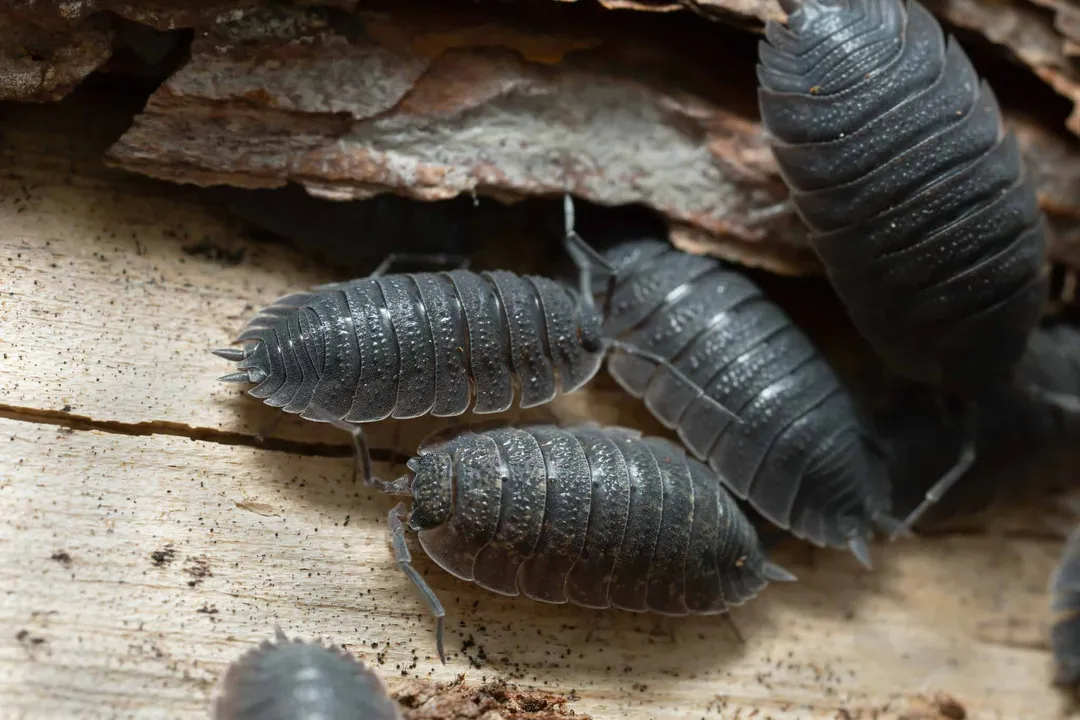
The creature many people know as a pill bug, sow bug, or roly-poly is a fascinating terrestrial crustacean whose placement in the tree of life tells a surprising story about evolution and adaptation. Despite their abundance under rocks and rotting logs, woodlice often confuse observers who assume they are insects due to their numerous legs and segmented bodies. [1][4][7] Scientifically, however, these small, armored decomposers belong to a distinct lineage, firmly rooted in the aquatic world of their ancestors. [4] Understanding their classification means tracing a path from the broadest biological groupings down to their specific terrestrial suborder.
# Kingdom Placement
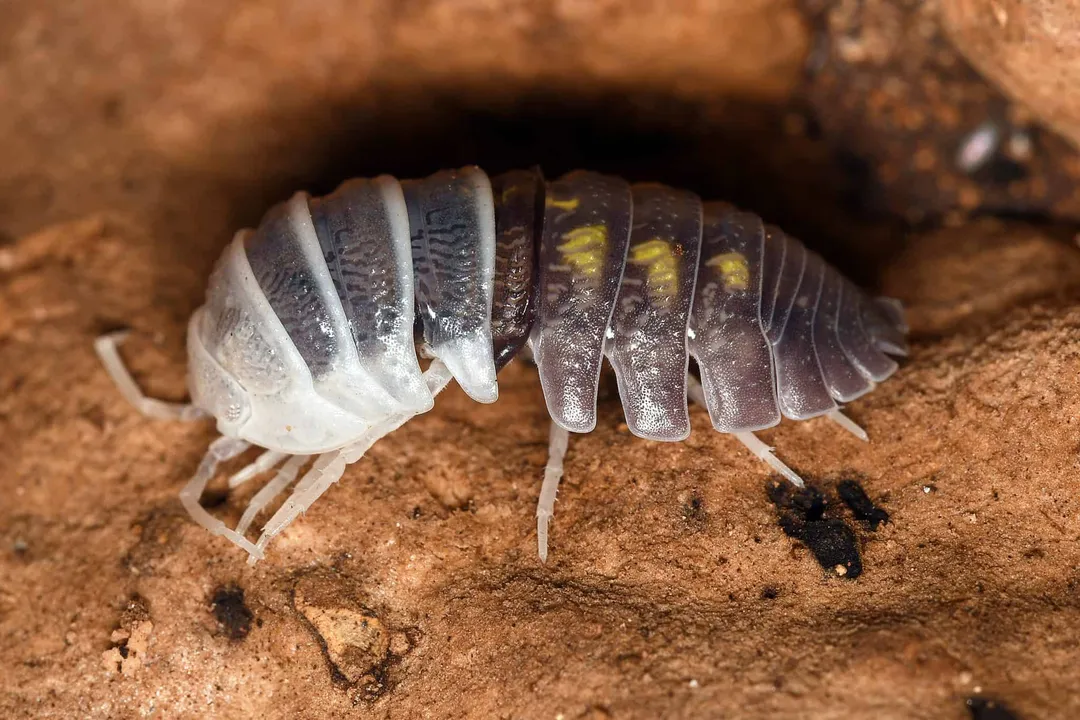
At the highest level, woodlice are classified within Kingdom Animalia. [1][5] This is the most fundamental grouping, signifying that the organism is multicellular, eukaryotic, heterotrophic (meaning it obtains nutrition by consuming other organisms or organic matter), and lacks cell walls. [1][8] This categorization immediately separates woodlice from plants, fungi, and bacteria, placing them alongside everything from insects and fish to mammals. [1] This shared kingdom status speaks to their fundamental biological requirements for movement, energy consumption, and growth, common to all members of the animal kingdom. [8]
# Phylum Arthropoda
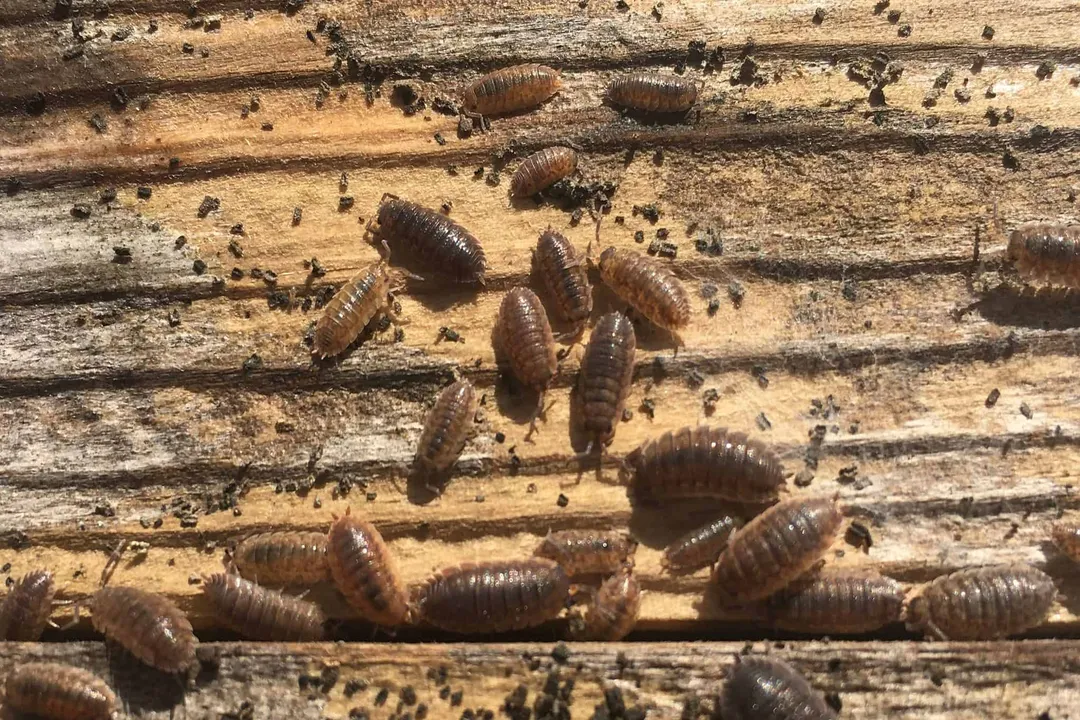
Descending one level, woodlice fall into Phylum Arthropoda. [1][5][8] This massive phylum is characterized by several key physical traits that woodlice possess, notably a segmented body, a tough, chitinous exoskeleton that must be periodically shed for growth, and jointed appendages. [1][8] It is the presence of these jointed legs that gives the phylum its name, derived from the Greek words arthron (joint) and podos (foot). [1] This phylum is incredibly diverse, encompassing insects, arachnids, and crustaceans alike. [1]
# Subphylum Crustacea
The next taxonomic step is perhaps the most crucial distinction: woodlice belong to Subphylum Crustacea. [1][2][5][10] This placement confirms they are not insects (which belong to the Subphylum Hexapoda). [4] Crustaceans are typically aquatic, possessing two pairs of antennae and biramous (two-branched) appendages, though these features can be modified in terrestrial forms. [1][4] Woodlice share this subphylum with crabs, lobsters, and shrimp. [4][10] A defining trait retained by most crustaceans, including woodlice, is their method of respiration: they use specialized structures, which are essentially modified gills, to absorb oxygen from the environment. [1][4] This reliance on moist surfaces for gas exchange is why finding woodlice in dry areas is rare; they must remain in humid refuges to keep these respiratory surfaces functional. [4]
A useful way to remember this distinction for general identification is to check the antennae. While highly reduced or specialized in terrestrial forms, true insects possess only one pair of antennae, whereas crustaceans, including woodlice, possess two pairs. [1]
# Class Malacostraca
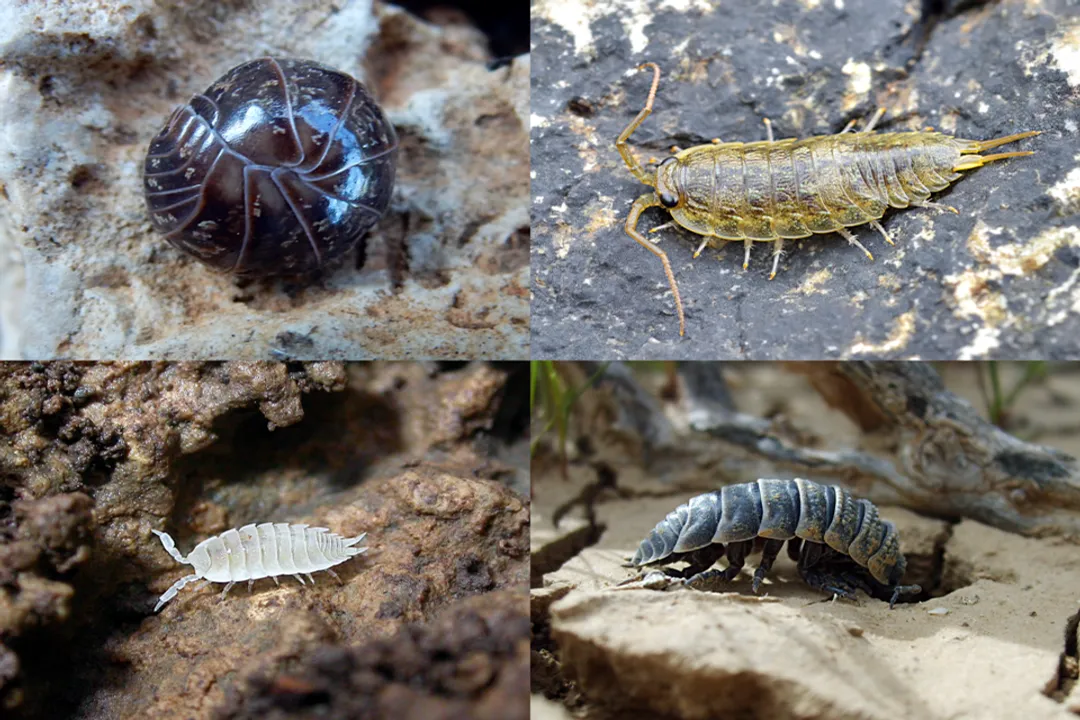
Within Crustacea, woodlice are classified in Class Malacostraca. [1][2][5] This group is characterized by having 19 body segments, divided into a cephalothorax (fused head and thorax) and an abdomen, along with 19 pairs of appendages. [1] While many malacostracans are familiar marine organisms, this class is very broad and includes freshwater and terrestrial species as well. [1] The name Malacostraca translates roughly to "soft-shelled," which is interesting given that many familiar isopods, like woodlice, appear quite hard-shelled; this term generally refers to the ancestral condition of the class or the softer exoskeleton relative to other arthropods. [1]
# Order Isopoda
The journey continues to Order Isopoda. [1][2][5] The term Isopoda means "equal feet," referring to the fact that the seven pairs of legs (pereopods) found on the thorax are nearly uniform in size and shape, unlike in insects where the front, middle, and rear pairs are often highly specialized. [1][5] This order contains a vast array of organisms, including many fully aquatic species, cave-dwellers, and even parasitic forms. [2][5] What makes woodlice distinct within this large order is their adaptation to life entirely on land. [2][5]
# Suborder Terrestrial Life
The defining step that separates the familiar woodlouse from its aquatic relatives is the classification into Suborder Oniscidea. [1][2][5] This suborder contains all the terrestrial isopods. [2][5] They represent one of the most significant evolutionary achievements in the group: becoming fully adapted to terrestrial life, though still constrained by the need for high humidity. [5] They breathe using pseudotracheae (pleopods), which are external respiratory organs derived from the ancestral gill structures that must remain moist to function. [4]
For general identification, the common names often overlap, but the scientific structure clarifies the types. For example, the common rough woodlouse is Porcellio scaber, and the pill bug is often Armadillidium vulgare. [1] While both belong to Oniscidea, they often fall into different families, illustrating the diversity within terrestrial isopods. [1] An interesting point of comparison is their defensive mechanism: members of the family Armadillidiidae, the pill bugs, possess the ability to roll into a tight, protective ball (conglobation), a trait the rough woodlouse (Porcellio) typically lacks. [1][5]
| Taxonomic Rank | Group Name | Defining Characteristic (for this context) |
|---|---|---|
| Kingdom | Animalia | Multicellular, heterotrophic animal life [1][8] |
| Phylum | Arthropoda | Segmented body, jointed legs, exoskeleton [1][8] |
| Subphylum | Crustacea | Two pairs of antennae; aquatic ancestry [1][4] |
| Class | Malacostraca | 19 body segments, characteristic appendage structure [1] |
| Order | Isopoda | "Equal feet"—seven pairs of similarly sized walking legs [1][5] |
| Suborder | Oniscidea | The exclusively terrestrial isopods [2][5] |
It is fascinating to consider the environmental niche these tiny creatures occupy. As detritivores, they are critical in breaking down dead plant matter, returning essential nutrients to the soil. [9] In fact, one specific species, the rough woodlouse (Porcellio scaber), has been noted for its role in seed dispersal; it consumes seeds and excretes them, sometimes miles away from the parent plant, effectively acting as a tiny, slow-moving gardening assistant. [9] This ecological function is directly supported by their morphology—their need to consume decaying, moisture-laden material dictates their movement and habitat selection, linking their classification directly to their place in the ecosystem.
The sheer diversity within the Isopoda order, with many species remaining entirely aquatic, highlights the evolutionary jump made by Oniscidea. [2][5] When you encounter a woodlouse in your garden, you are looking at an ancient lineage that successfully crossed the boundary from sea to land, a feat only achieved by a few invertebrate groups. Their entire classification structure, from Animalia down to Oniscidea, is a record of the morphological compromises—like retaining gill-like lungs—they made to survive away from the open ocean. [4] This scientific placement provides a much richer understanding than simply grouping them with the insects they superficially resemble.
Related Questions
#Citations
Woodlouse - Wikipedia
Woodlice, Pillbugs, and Rock Slaters (Suborder Oniscidea)
Woodlouse - Types, Habitat, Diet, Lifespan, Life Cycle, & Pictures
Common Woodlouse - University of Puget Sound
Woodlouse Classification: Types, Characteristics, and Categories
Suborder Oniscidea - Woodlice - BugGuide.Net
Woodlouse - Armadillidium vulgare - A-Z Animals
Woodlouse Definition and Examples - Biology Online Dictionary
The rough woodlouse is the smallest known animal to spread seeds ...
Common woodlouse | The Wildlife Trusts