What physical height range corresponds to the common questing posture of nymphs and adults?
Answer
Mid-calf to knee level.
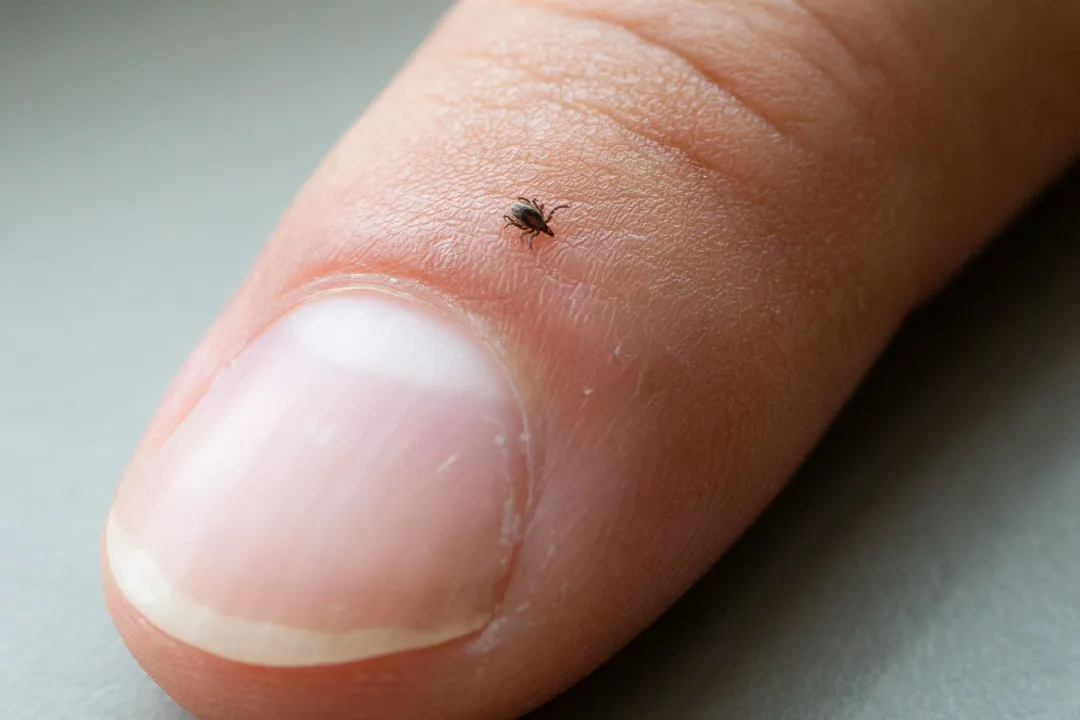
Understanding the vertical position maintained by questing ticks provides a practical method for reducing accidental exposure during periods of high activity. Nymphs and adult ticks typically position themselves on vegetation such that their questing height corresponds roughly to the mid-calf to knee level on a human. This height aligns perfectly with the level of grasses and low shrubs commonly encountered near woodland edges or trails. Consequently, remaining on cleared, manicured paths or utilizing protective clothing that effectively seals off the lower leg area can significantly decrease the likelihood of a tick latching on while passing by.
Related Questions
What is the absolute dietary requirement for *Dermacentor* tick development?How does the adult male wood tick's blood meal requirement compare to the female's?What substance is secreted by the tick's *capitulum* to prevent immediate host detection?What small mammals are typical hosts for larvae and nymphs of *D. andersoni*?Which group of animals defines the common host preference for adult *D. variabilis*?When questing, how does a tick utilize its legs to sense potential passing hosts?What physical height range corresponds to the common questing posture of nymphs and adults?What happens after a tick ingests blood that prepares it for future pathogen injection?Which specific disease is transmitted by *D. andersoni* but not generally associated with *D. variabilis*?Why is the feeding dependency of *D. andersoni* larvae/nymphs on small mammals ecologically significant?