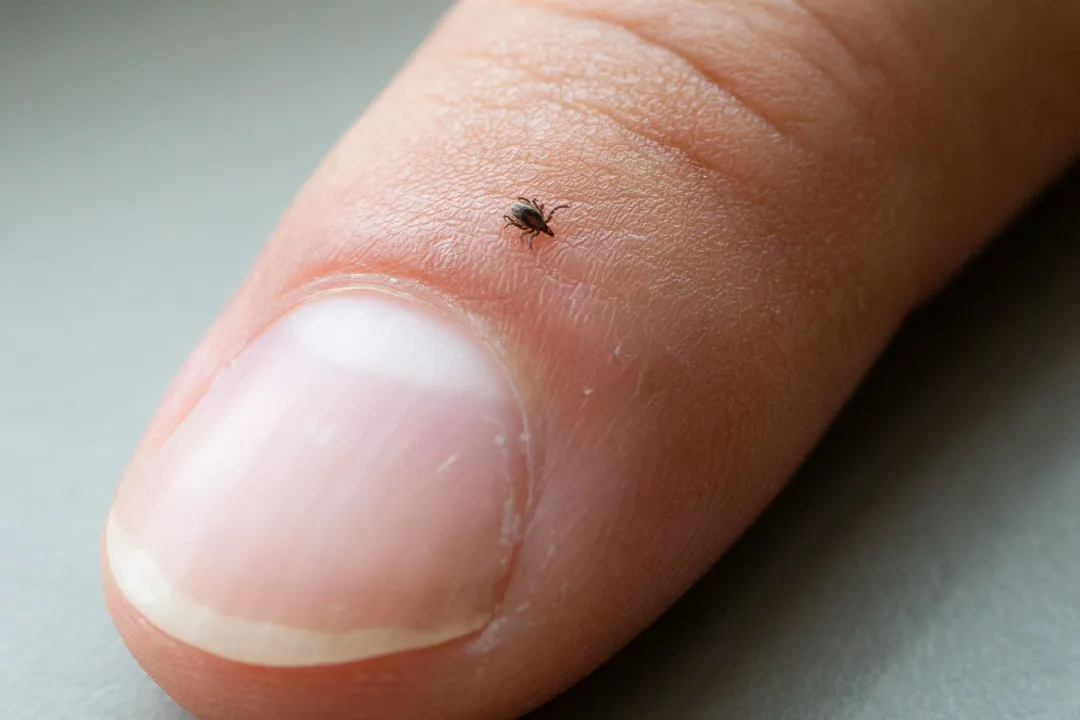
What happens after a tick ingests blood that prepares it for future pathogen injection?
The pathogen moves from the tick's gut into its salivary glands.
The consumption of blood is more than just a nutritional event for the tick; it is the critical step that facilitates the transmission cycle of disease agents. When a tick feeds on an infected host, the pathogens it acquires are initially present in the gut content. For the tick to become infectious to the next host, these pathogens must undergo a maturation or migration process. Specifically, the ingestion of the infected blood meal triggers or allows the movement of the pathogen—such as a bacterium or virus—from the digestive tract into the tick's salivary glands. Once located in the salivary glands, the pathogen is positioned perfectly to be injected into the bloodstream of the next unsuspecting host during a subsequent feeding attempt.