What specific visual cue helps separate closely related whiptails in California habitats?
Answer
Tail spotting and body patterning continuity
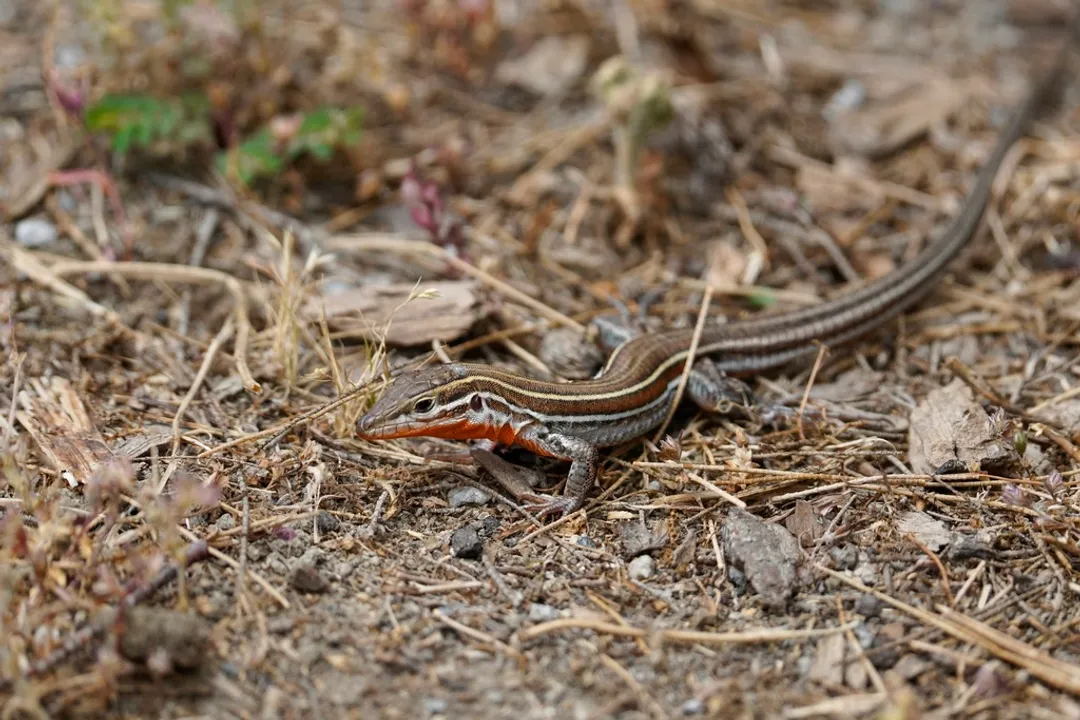
California's whiptail populations present a specific identification challenge because several similar species coexist or have overlapping ranges, sometimes resulting in hybridization events. Herpetological guidance for this region heavily relies on careful examination of pattern continuity on the lizard's body. Some species exhibit unbroken lines running longitudinally down their bodies, contrasting sharply with other species whose patterns are disrupted or present as distinct spots. This close attention to pattern detail, especially on the tail, is necessary to distinguish between these closely related species inhabiting similar Mojave Desert environments.
Related Questions
To which genus do whiptails currently belong, succeeding *Cnemidophorus*?What biological factor explains how *Aspidoscelis uniparens* populations stabilize without males?Where is the Western Whiptail, *Aspidoscelis tigris*, generally found?What primary need mandates that whiptails favor open areas or edges of vegetation?What habitat structure does the Texas Spotted Whiptail (*A. sexlineata*) prefer over completely bare sand?What factor becomes crucial when studying lizard populations near Tucson, Arizona, regarding habitat use?What specific visual cue helps separate closely related whiptails in California habitats?What microhabitat feature provides temporary shade for a generalist like *Aspidoscelis tigris*?Why is loose soil or sandy substrate highly beneficial for many whiptail species?Which specific environment characterizes the habitat of the Arizona-Sonora Whiptail (*Aspidoscelis sonorae*)?