What habitat structure does the Texas Spotted Whiptail (*A. sexlineata*) prefer over completely bare sand?
Answer
Brushy areas with denser grasses or low shrubs
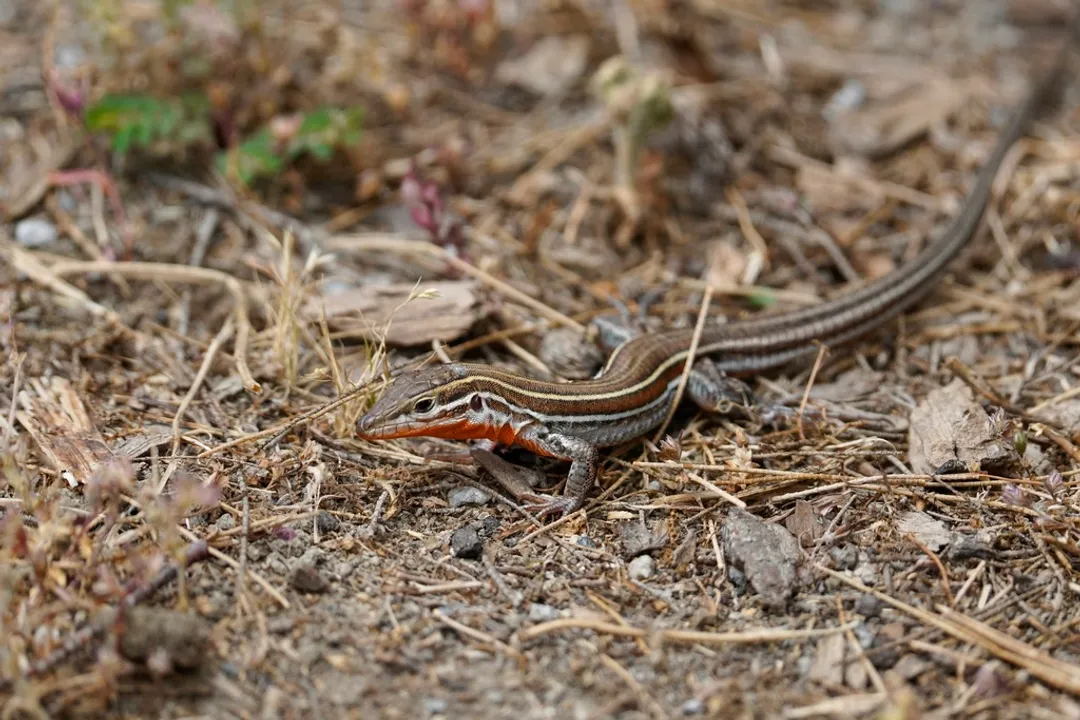
The Texas Spotted Whiptail (*Aspidoscelis sexlineata*) exhibits habitat preferences distinct from those species confined to deep deserts. Its range in South Texas, including the Rio Grande Valley, is associated with environments that possess a different vegetation structure than Arizona's deep deserts. Specifically, this species seems better suited to areas where the ground cover includes denser grasses or low shrubs, providing quick cover from potential overhead threats. While they still need open patches for basking and foraging, the presence of underbrush structure seems critical to their survival strategy in the South Texas Plains.
Related Questions
To which genus do whiptails currently belong, succeeding *Cnemidophorus*?What biological factor explains how *Aspidoscelis uniparens* populations stabilize without males?Where is the Western Whiptail, *Aspidoscelis tigris*, generally found?What primary need mandates that whiptails favor open areas or edges of vegetation?What habitat structure does the Texas Spotted Whiptail (*A. sexlineata*) prefer over completely bare sand?What factor becomes crucial when studying lizard populations near Tucson, Arizona, regarding habitat use?What specific visual cue helps separate closely related whiptails in California habitats?What microhabitat feature provides temporary shade for a generalist like *Aspidoscelis tigris*?Why is loose soil or sandy substrate highly beneficial for many whiptail species?Which specific environment characterizes the habitat of the Arizona-Sonora Whiptail (*Aspidoscelis sonorae*)?