What microhabitat feature provides temporary shade for a generalist like *Aspidoscelis tigris*?
Answer
The base of a large creosote bush
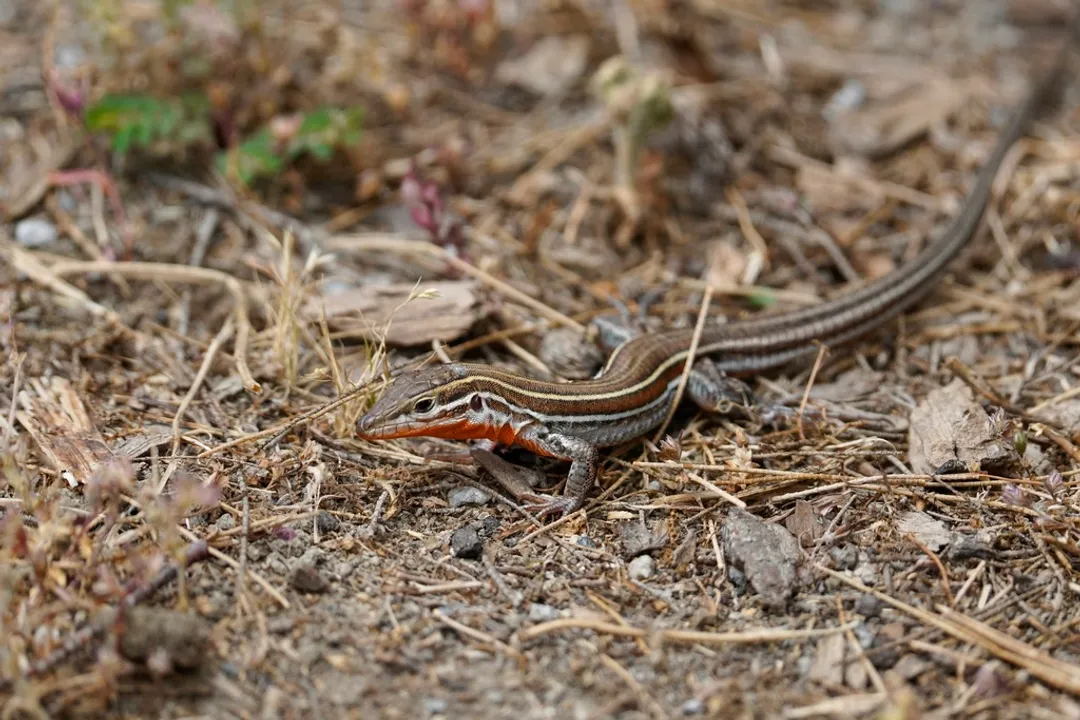
When tracking generalist species like the Western Whiptail (*A. tigris*), identifying microhabitats is more effective than relying solely on broad biome identification. During the hottest parts of the summer day, these lizards shift their active locations away from direct sun. They concentrate their activity in microclimates that offer temporary shade and refuge from extreme heat. Specific examples of these crucial features include the base of a large creosote bush or small areas where the sand is slightly finer, allowing for easier access to necessary shelter or insect prey.
Related Questions
To which genus do whiptails currently belong, succeeding *Cnemidophorus*?What biological factor explains how *Aspidoscelis uniparens* populations stabilize without males?Where is the Western Whiptail, *Aspidoscelis tigris*, generally found?What primary need mandates that whiptails favor open areas or edges of vegetation?What habitat structure does the Texas Spotted Whiptail (*A. sexlineata*) prefer over completely bare sand?What factor becomes crucial when studying lizard populations near Tucson, Arizona, regarding habitat use?What specific visual cue helps separate closely related whiptails in California habitats?What microhabitat feature provides temporary shade for a generalist like *Aspidoscelis tigris*?Why is loose soil or sandy substrate highly beneficial for many whiptail species?Which specific environment characterizes the habitat of the Arizona-Sonora Whiptail (*Aspidoscelis sonorae*)?