Why is loose soil or sandy substrate highly beneficial for many whiptail species?
Answer
It aids in rapid burrowing when disturbed or escaping heat.
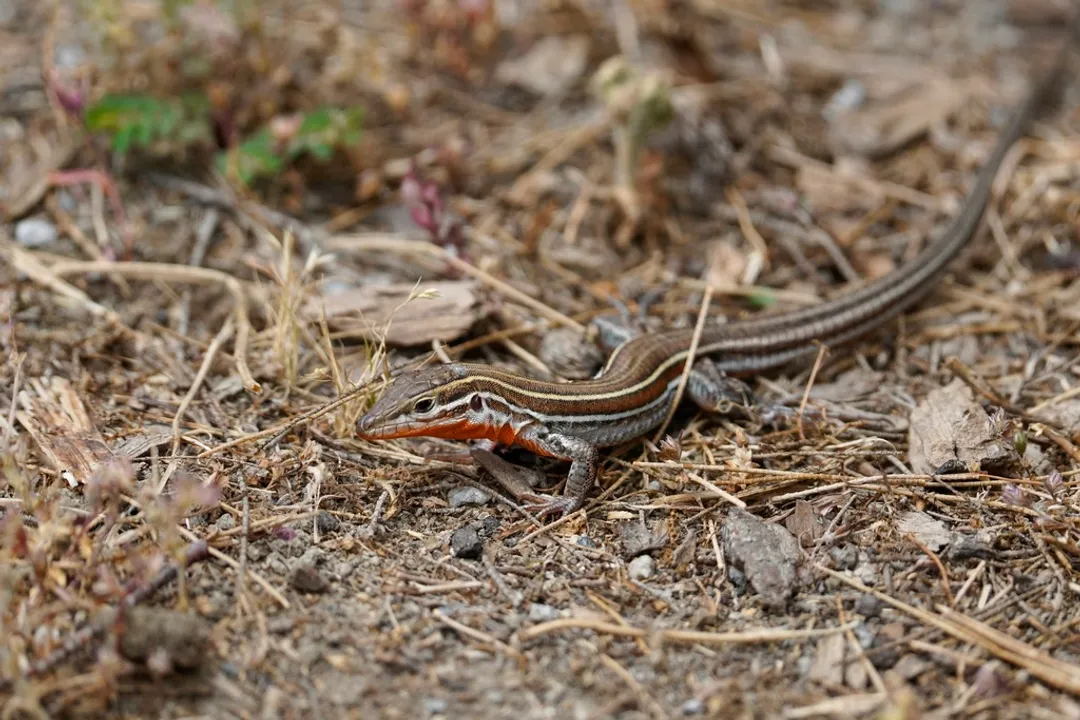
Soil substrate acts as a significant determinant for the location of many whiptail species, including the Plateau-striped Whiptail. The preference leans heavily towards areas possessing loose soil or sandy substrates. This characteristic is functionally important because it facilitates rapid and efficient burrowing when the lizard is disturbed by a potential predator or needs to escape excessive thermal stress during the midday peaks. If the ground is too hard-packed or covered entirely by a dense mat of vegetation, the likelihood of finding a whiptail decreases substantially, regardless of optimal temperatures.
Related Questions
To which genus do whiptails currently belong, succeeding *Cnemidophorus*?What biological factor explains how *Aspidoscelis uniparens* populations stabilize without males?Where is the Western Whiptail, *Aspidoscelis tigris*, generally found?What primary need mandates that whiptails favor open areas or edges of vegetation?What habitat structure does the Texas Spotted Whiptail (*A. sexlineata*) prefer over completely bare sand?What factor becomes crucial when studying lizard populations near Tucson, Arizona, regarding habitat use?What specific visual cue helps separate closely related whiptails in California habitats?What microhabitat feature provides temporary shade for a generalist like *Aspidoscelis tigris*?Why is loose soil or sandy substrate highly beneficial for many whiptail species?Which specific environment characterizes the habitat of the Arizona-Sonora Whiptail (*Aspidoscelis sonorae*)?