Where is taipan located in the world?
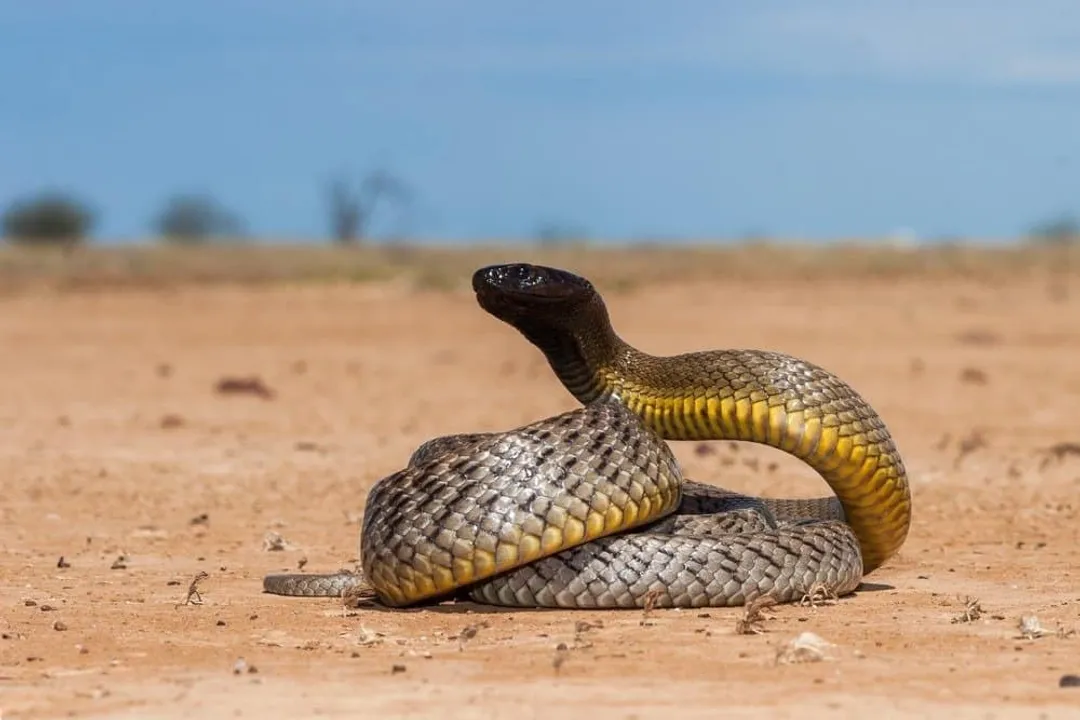
The magnificent, yet often misunderstood, taipan is exclusively found in one part of the world: Australia, with a peripheral population extending into New Guinea. This group of highly venomous snakes, belonging to the genus Oxyuranus, is represented by two primary species, each occupying distinctly different geographical niches across the continent. [2][6] Understanding where a taipan lives requires first distinguishing between the Inland Taipan and the Coastal Taipan, as their respective ranges rarely, if ever, overlap. [1][3]
# Taipan Species
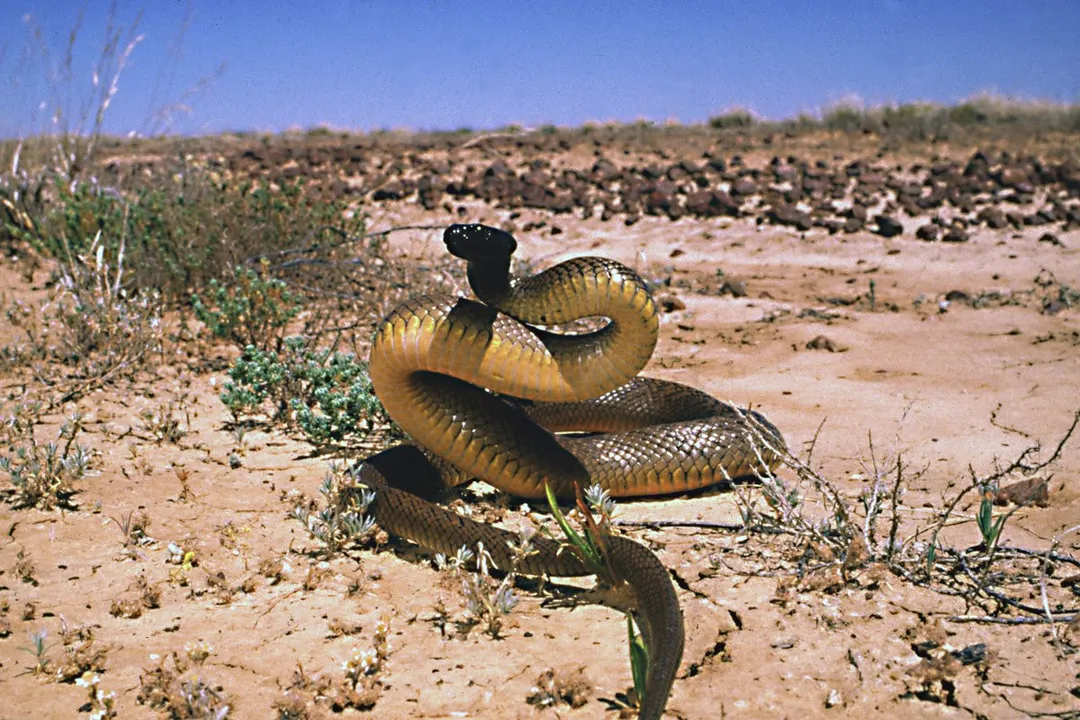
The name "taipan" refers generally to any member of the genus Oxyuranus. [2] While there are widely recognized mainland species, the distinction often hinges on habitat, leading to classifications that separate the extremely arid-dwelling Inland Taipan from its wetter, more northerly cousin, the Coastal Taipan. [1][3] A third entity, sometimes referenced, is the Papuan taipan, which is frequently considered a subspecies of the Coastal Taipan found outside of mainland Australia. [2][6] It is the remarkable difference in habitat preference between the two mainland species that most clearly defines their global location.
# Inland Range

The most famous of the taipans, known scientifically as Oxyuranus microlepidotus, is the Inland Taipan, sometimes also referred to by its common name, the Fierce Snake. [3][5][7] Its location is highly concentrated in the semi-arid, black soil plains of central east Australia. [3] Specifically, its territory centers on the border regions where three Australian territories meet: Queensland, South Australia, and the Northern Territory. [3][7]
This snake thrives in environments that many other large reptiles avoid. The typical habitat is characterized by cracking black soil plains and floodplains, areas that experience intense heat and low rainfall. [3] While the Inland Taipan possesses the most toxic venom of any land snake in the world based on laboratory tests measuring median lethal dose (LD50), [3][5][7] its remote and dry habitat means that direct encounters with humans are exceedingly rare. [3] This contrast between world-leading toxicity and geographic isolation is a defining characteristic of O. microlepidotus. A reader tracing its range on a map would find a relatively small, arid triangle in the heart of the continent, far removed from major population centers. [3][7]
# Coastal Distribution

In sharp contrast to its inland relative, the Coastal Taipan (Oxyuranus scutellatus) prefers wetter, more tropical and subtropical climes. [1] As its name suggests, its distribution hugs the coastal areas of northern and eastern Australia. [1][2]
The Coastal Taipan's range stretches from the far north of Queensland, running down the eastern seaboard through New South Wales, and into the northern reaches of the Northern Territory. [1][6] This snake's preferred environment includes not only coastal regions but also moist eucalyptus woodlands and grassy areas. [1] Because this distribution track runs parallel to much of Australia’s densely populated eastern coast, human encounters, while still uncommon for a wild animal, are statistically more likely here than in the remote interior where the Inland Taipan resides. [2][6]
# Habitat Contrast
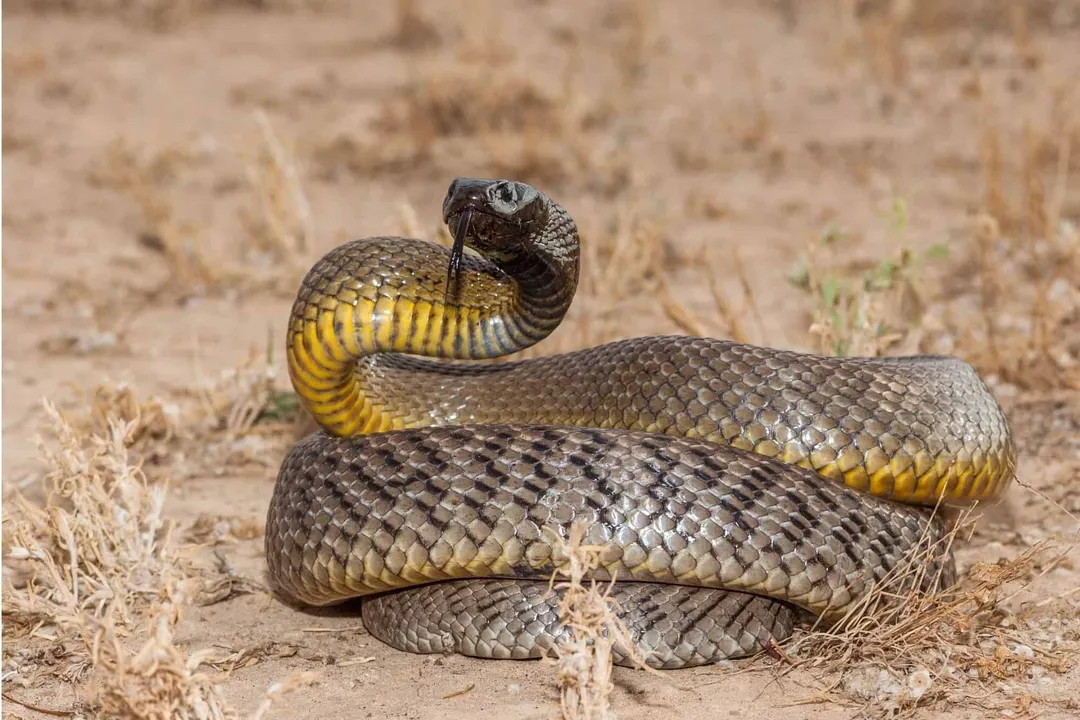
When comparing the two species, the division of their environments becomes starkly apparent. The Inland Taipan is an inhabitant of the outback, favoring environments that can reach extreme dry conditions and high temperatures, often seeking shelter in deep cracks within the hard clay soils. [3] Their diet in these regions primarily consists of mammals, such as the long-haired rat, which is a key feature of the semi-arid ecosystem. [3]
Conversely, the Coastal Taipan occupies areas that receive significantly more rainfall and maintain higher humidity levels. [1][2] This preference for wetter woodlands and coastal margins means that their environmental pressures—predators, prey availability, and thermoregulation challenges—are fundamentally different from those faced by their inland counterpart. One might visualize the distribution as two elongated swathes: a central, arid, vertical line for the Inland Taipan, and a broader, wetter, coastal band arching around the east and north for the Coastal Taipan. [1][6] This geographical separation is so distinct that, effectively, the two mainland species occupy different continents of climate, despite both being fundamentally Australian. [3]
# New Guinea
The geographical reach of the taipan genus extends beyond the Australian mainland, primarily through the Coastal Taipan lineage. The species Oxyuranus scutellatus has a known presence in the island of New Guinea. [1][2] In this region, the snakes are sometimes specifically designated as the Papuan taipan. [2] Their presence here confirms that the environmental conditions suitable for the Coastal Taipan—tropical, often coastal or near-coastal habitats—extend northwards into the Indonesian and Papua New Guinean territories. [6] Therefore, the most widely distributed taipan species is not confined solely to Australia but has secured a foothold across the Torres Strait onto a neighboring landmass.
# Sighting Context
For general readers interested in wildlife sightings, the location data suggests a clear expectation management strategy. If one is traveling through the dry, remote clay plains of central Queensland or South Australia, the potential for encountering the most venomous land snake on Earth exists, though the probability remains low due to the sparsity of human activity in those exact zones. [3][7] The real risk profile for people living or working in the eastern coastal corridor—from Brisbane down to Sydney—involves the Coastal Taipan, which inhabits areas more frequently shared with human settlements and agricultural activity. [1][2] Thus, while the Inland Taipan holds the title for raw venom toxicity, the Coastal Taipan’s habitat puts it into more direct contact with the human population of the eastern states. [6] The location of any taipan sighting is, therefore, the single most important indicator for understanding which specific species one is observing and the level of extreme caution required. [1][3]
#Videos
Taipan facts: one of the most venomous snakes! | Animal Fact Files
Related Questions
#Citations
Coastal taipan - Wikipedia
Inland Taipan - The Australian Museum
Inland Taipan / Fierce Snake - Australia Zoo
Meet the Inland taipan (Oxyuranus microlepidotus), the most ...
Taipan | Characteristics & Facts - Britannica
Inland Taipan - Sydney Zoo
Taipan Animal Facts - Oxyuranus
Taipan facts: one of the most venomous snakes! | Animal Fact Files