What specialized structure is located at the tail terminus of *R. humilis* to aid in forward propulsion within tunnels?
Answer
A small, hardened spur
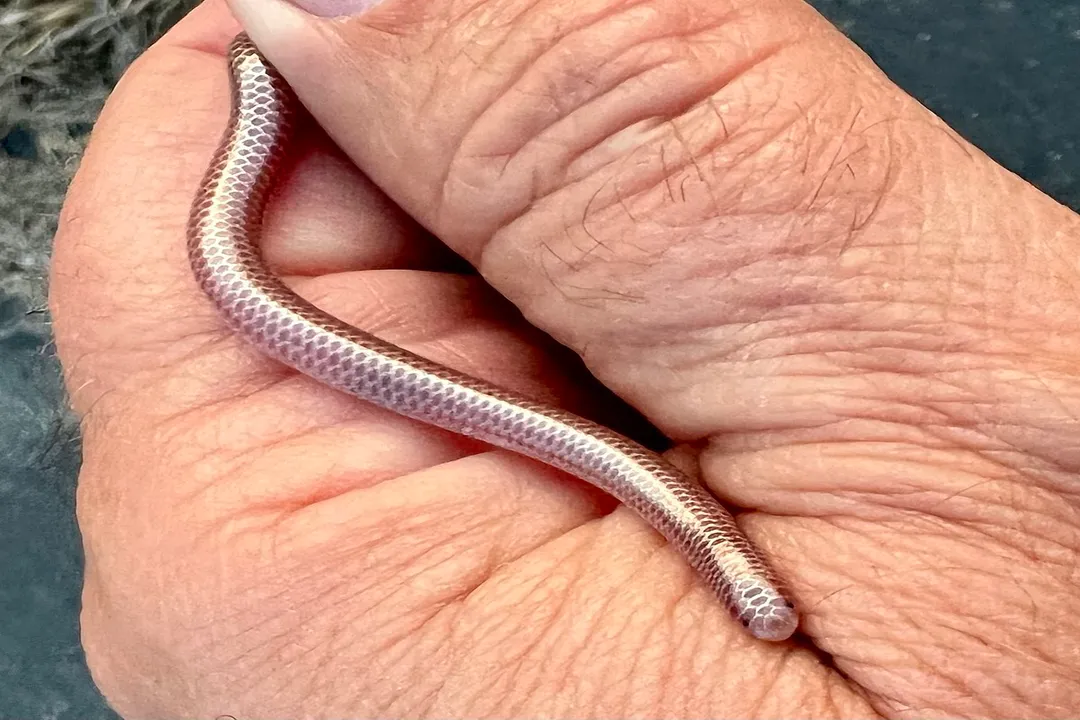
The tail of the Western Blind Snake is highly adapted for its subterranean locomotion, functioning beyond just balance or rudder control seen in surface snakes. It terminates in a distinct feature: a small, hardened spur. This spur is actively used by the snake to jab into the walls of its constructed tunnels. This action provides essential purchase and leverage, allowing the snake to anchor itself momentarily so it can effectively push its rigid body forward through the dense soil medium.
Related Questions
What mechanism facilitated the initial diversification of blindsnakes heavily influenced by the breakup of Indigascar?How does the skull of *Rena humilis* function mechanically to facilitate its subterranean existence?What geological time frame is suggested by molecular studies for the initial diversification of Scolecophidians?What specialized structure is located at the tail terminus of *R. humilis* to aid in forward propulsion within tunnels?Which description accurately characterizes the scales on the body of the Western Blind Snake?Within the Scolecophidia infraorder, which family specifically houses the genus *Rena*, containing *R. humilis*?What specific dietary relationship critically links the evolutionary success and persistence of *R. humilis*?What surprising mechanism is strongly supported by molecular phylogenies for the dispersal of some blindsnake clades across the Atlantic gap?What does the Latin meaning of *humilis* in the Western Blind Snake’s scientific name, *Rena humilis*, signify about its lifestyle?When did the major evolutionary radiation within the Typhlopidae family occur relative to the Cretaceous extinction event?