How do blind snakes find food?

The existence of blind snakes, those often small, fossorial reptiles that look remarkably like earthworms, presents a fascinating biological puzzle, especially when considering how they manage to locate sustenance beneath the soil or within complex subterranean structures. Despite their common name, they usually possess rudimentary eyes, often appearing as mere dark spots beneath the scales, rendering functional sight largely irrelevant to their survival. For these secretive creatures, finding a meal relies not on light, but on an intricate reliance on chemical and tactile information gathered from their immediate environment.
# Specialized Diet
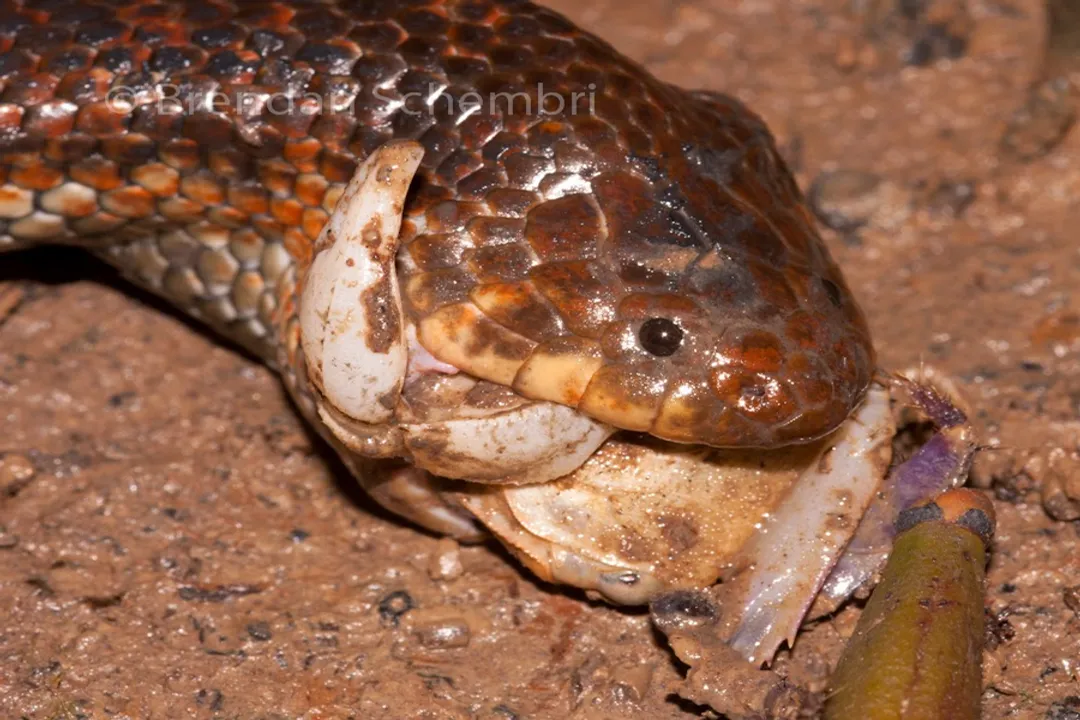
The primary answer to how blind snakes find food lies in what they are looking for, as their dietary requirements are extremely specialized, which dictates their search strategy. Across the globe, various species of blind snakes exhibit a strong preference, or outright requirement, for the colony insects that dominate their underground existence: ants and termites. The Texas blind snake, Leptotyphlops dulcis, for instance, subsists almost entirely on these insects. Similarly, Australian blind snakes often feed heavily on the larvae and eggs of ants and termites, and sometimes even adult ants and termites themselves. This dietary focus means the snake is not searching for the scattered prey of other reptiles, but rather for the chemical signature of an entire, active colony.
It is worth noting that this specialization leads to unique interactions. Some sources suggest that certain snakes that feed on insects will actually decapitate their prey, though the context for this behavior varies widely across the reptile kingdom. For the blind snake, the goal is less about the act of killing and more about accessing the protein-rich, non-mobile stages of the colony—the eggs and larvae—which are often hidden deep within the nest structure.
# Sensory Reliance

Since vision is essentially non-functional, the blind snake has refined other senses to an extremely high degree, turning its head into a sophisticated chemical and mechanical probe. The tongue, though used less frequently for flicking than in surface-dwelling snakes, remains vital for sampling the environment, gathering chemical cues from the substrate or air. These chemical traces—pheromones released by the ant or termite colony—are then transported to the vomeronasal organ (Jacobson's organ) in the roof of the mouth for detailed analysis. This allows the snake to trace a chemical trail back to its source, effectively mapping the location of the underground nest.
The texture and movement of the substrate also provide significant feedback. Blind snakes are expert burrowers, possessing streamlined, cylindrical bodies perfectly suited for moving through soil tunnels. As they move, they use the sensitive scales and skin along their snout and body to detect subtle vibrations or pressure changes caused by the movement of insects or the structure of a termite gallery. Their close association with the soil means they are constantly "feeling" their way through the environment, sensing the density changes that indicate a hollow tunnel or a packed insect mound.
A deeper look into their sensory biology reveals an inherent trade-off. Because they hunt chemical targets, they must be able to differentiate between the specific chemical makeup of their prey and the chemical defenses or alarms of the prey colony. For example, the Texas blind snake is known to be able to consume ants that utilize formic acid as a defense mechanism, suggesting a highly specialized chemosensory mechanism that allows it to bypass or neutralize these chemical deterrents, or perhaps target the non-defended larval chambers. This level of chemical parsing is far more important than detecting light or shadow.
An interesting byproduct of this sensory reliance is how their physical structure aids their foraging. Their reduced eyes, while not used for sight, are still present beneath the scales. However, their narrow, blunt heads and lack of a traditional neck give them a shovel-like quality, allowing them to push through soil with minimal resistance. This mechanical efficiency means they expend less energy finding the colony entrance, maximizing the caloric return from the often difficult-to-access, defended food source.
# Accessing the Nests
Finding the chemical signature of a colony is only the first step; the second is successfully navigating the defenses to reach the nursery chambers. Blind snakes often enter established ant or termite tunnels or create their own narrow pathways directly to the colony. This physical access is crucial. A common scenario involves the snake finding the entrance to a termite gallery or an ant trail. Once inside the network, the snake relies heavily on the tactile information from its head and body to navigate the labyrinthine passages, searching for the protein-rich eggs and immobile larvae.
The feeding events themselves can be risky. While they consume adults, targeting the brood chambers is often the most efficient strategy. However, this puts the snake directly in contact with a large concentration of potentially aggressive, biting, or stinging insects.
Here, the contrast between different species becomes informative. While some species might rely on sheer speed to snatch prey before a defense is mounted, the behavior of Leptotyphlops dulcis in Texas suggests a remarkable level of stealth and chemical camouflage. Anecdotally, the presence of these snakes in specific ecosystems, such as being brought into unusual locations by predators like screech owls, confirms their deep association with the subterranean environment where their food lives. Similarly, reports from South Africa regarding their local blind snakes point toward a life spent almost entirely beneath the surface, reinforcing the need for specialized non-visual navigation skills.
When considering the risk assessment for a blind snake, one must consider the energy budget. Colony insects, especially their larvae, represent high-density, static food patches. If a snake misjudges the chemical signature or structure of a nest, it risks injury from defenders for minimal caloric reward. Therefore, the evolutionary pressure on these snakes has likely favored the development of exquisitely tuned chemical reception over any investment in visual acuity, making their foraging technique an energy-efficient, albeit dangerous, gamble on chemical detection.
# Global Comparisons
While the core strategy remains similar—chemical tracking underground—the specific deployment can vary based on geography and local prey availability. Australian blind snakes in the genus Anilios or Ramphotyphlops share the myrmecophagous tendency with their American cousins. The specific species of ants and termites available in the arid or semi-arid regions of Australia dictate the precise chemical signals the snake must learn to recognize. In South Africa, local species follow a similar pattern of subterranean existence and diet, suggesting a convergent evolution of sensory systems across continents where resources are found underground.
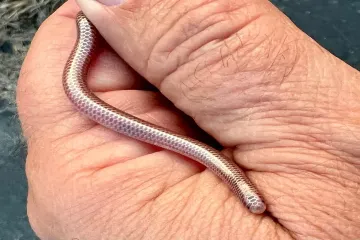
The sheer difference in prey size relative to the snake's size is also a factor. Many blind snakes are quite small themselves—some only a few inches long. This diminutive size allows them to exploit feeding niches inaccessible to larger, more active predators. They can follow trails through openings too small for an ant worker to notice a threat, or slide directly into the pupal chamber of a termite mound without triggering the mound’s main defenses. This physical alignment with the prey’s infrastructure is as critical to their foraging success as their keen sense of smell.
# The Mechanics of Discovery
To put it plainly, a blind snake finds food by smelling its way into a protected fortress. It locates the periphery of the colony by detecting airborne or ground-level chemical traces diffusing from the nest. Once a likely location is found, the snake uses its body to probe the soil, searching for the telltale structure of chambers or tunnels. This combination of chemical tracking and physical exploration allows them to locate prey that is entirely hidden from view, effectively creating a three-dimensional map of the underground ecosystem using only their nose and skin. The slow, deliberate movements of a blind snake on the surface should not be mistaken for inefficiency; it is the careful calibration of a highly specialized predator searching for the invisible bounty beneath its feet.
The sheer success of this specialized hunting method is evidenced by the snake's survival across diverse, often harsh, environments, from the Australian outback to the Texas plains. Their world is not one of light and shadow, but one of chemical gradients and subtle earth tremors, proving that effective predation requires the right senses for the right job.
Related Questions
#Citations
Blind Snake - The Australian Museum
Snakes that decapitate their food
How do snakes see with no eyes, and how is it possible for ... - Quora
Prey Transport Mechanisms in Blindsnakes and the Evolution of ...
TIL Screech owls bring Texas blind snakes into their nests ... - Reddit
What does a blind snake eat? - Facebook
Leptotyphlops dulcis (Texas Blind Snake) - Animal Diversity Web
Blind Snake | SEQ Snake Catchers
Blind Snakes - Reptiles Magazine