What plumage characteristic distinguishes juveniles from mature Yellow-bellied Sapsuckers?
Answer
Juveniles generally display browner tones throughout their plumage instead of stark black and white.
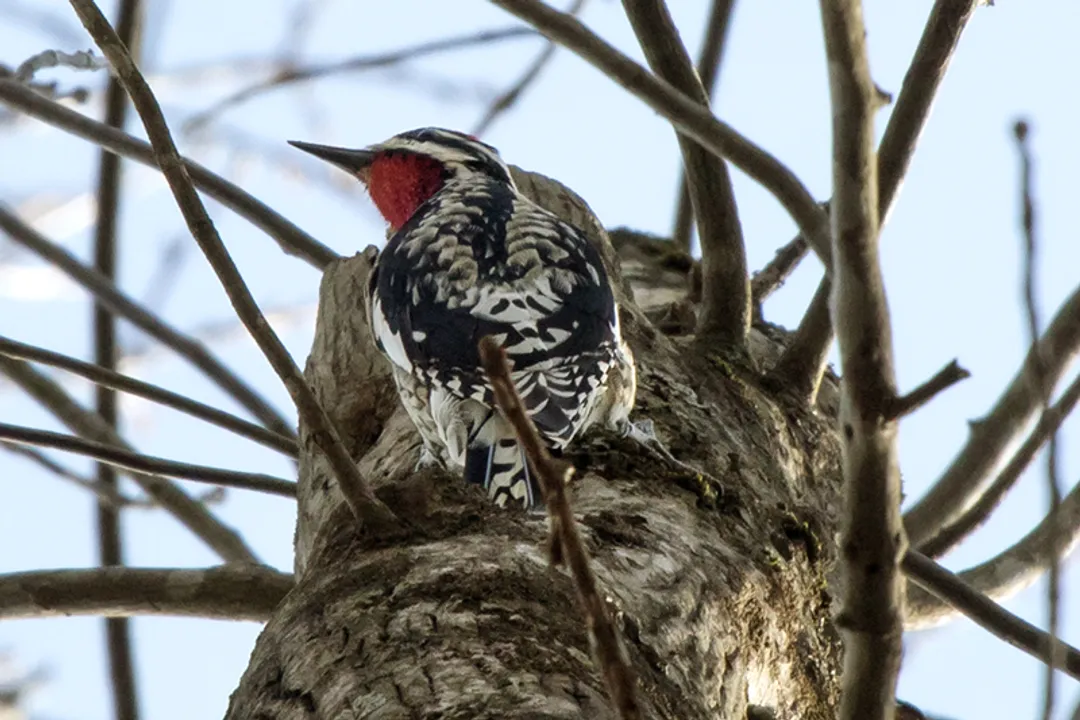
Young birds, classified as juveniles, present a less intense and somewhat duller version of the adult coloration, which can impede identification if one expects the high contrast associated with mature individuals. The overall effect is that juveniles exhibit more muted, brownish tones across their plumage rather than the crisp, stark black and white pattern seen in adults. Furthermore, young males do not acquire their distinctive red throat patch until later in their first year, meaning both sexes initially resemble a drab adult female.
Related Questions
What characteristic feeding behavior defines the Yellow-bellied Sapsucker?Which physical characteristic is highly conspicuous, appearing as a distinct white block on the wings?What term describes the specialized foot arrangement of the Yellow-bellied Sapsucker for clinging to vertical surfaces?How does the general size of the Yellow-bellied Sapsucker compare when viewed alongside a Red-bellied Woodpecker?What is the primary difference in head markings used to sex an adult Yellow-bellied Sapsucker in the field?What plumage characteristic distinguishes juveniles from mature Yellow-bellied Sapsuckers?What anatomical feature, besides the feet, is critical for support when the Yellow-bellied Sapsucker clings to vertical surfaces?Where is the red coloration found on an adult male that helps clearly flag his sex, alongside the throat patch?Why should field observers often prioritize looking for sap wells over confirming the belly color for identification?How do the bill and overall build of the Yellow-bellied Sapsucker relate to other woodpeckers?