Yellow Belly Ball Python Physical Characteristics
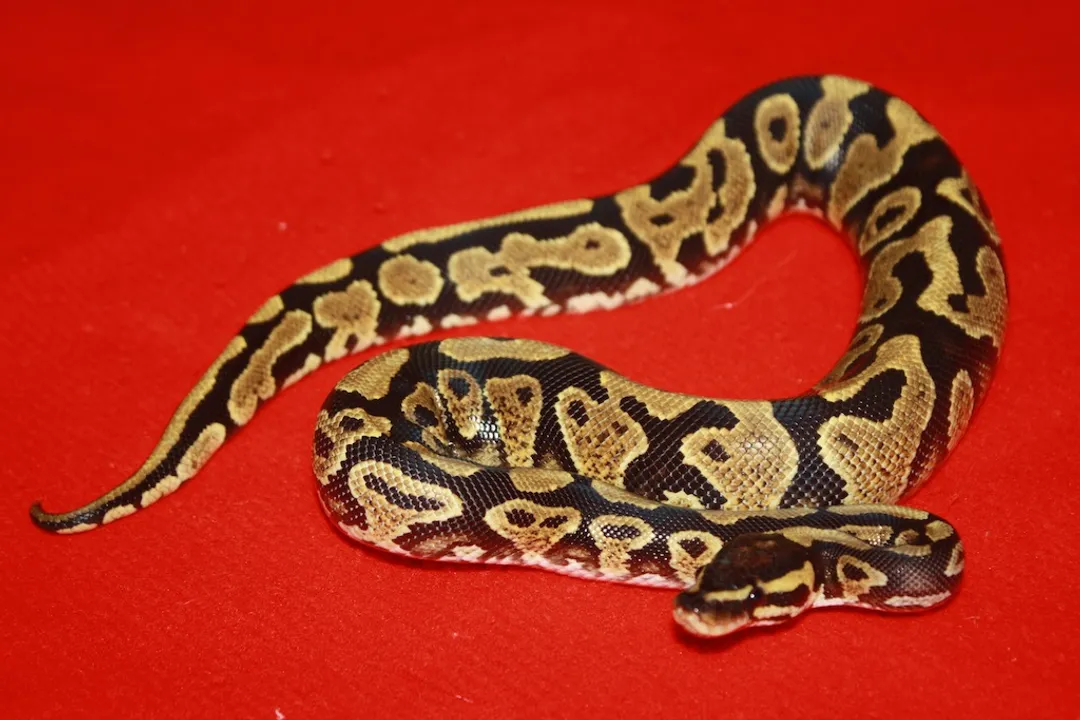
The Yellow Belly Ball Python stands out among the collection of co-dominant mutations due to its immediate visual impact, primarily through enhanced coloration and pattern modification. [1] This morph is celebrated for taking the typically muted tones of a normal Ball Python and amplifying them, resulting in a snake that carries a significantly higher degree of brightness and contrast throughout its body. [1][3] For those new to the world of reptile morphs, identifying a Yellow Belly can sometimes require a closer look at specific areas, as its characteristics are layered across the dorsal, lateral, and ventral scales. [4]
# Color Brightness
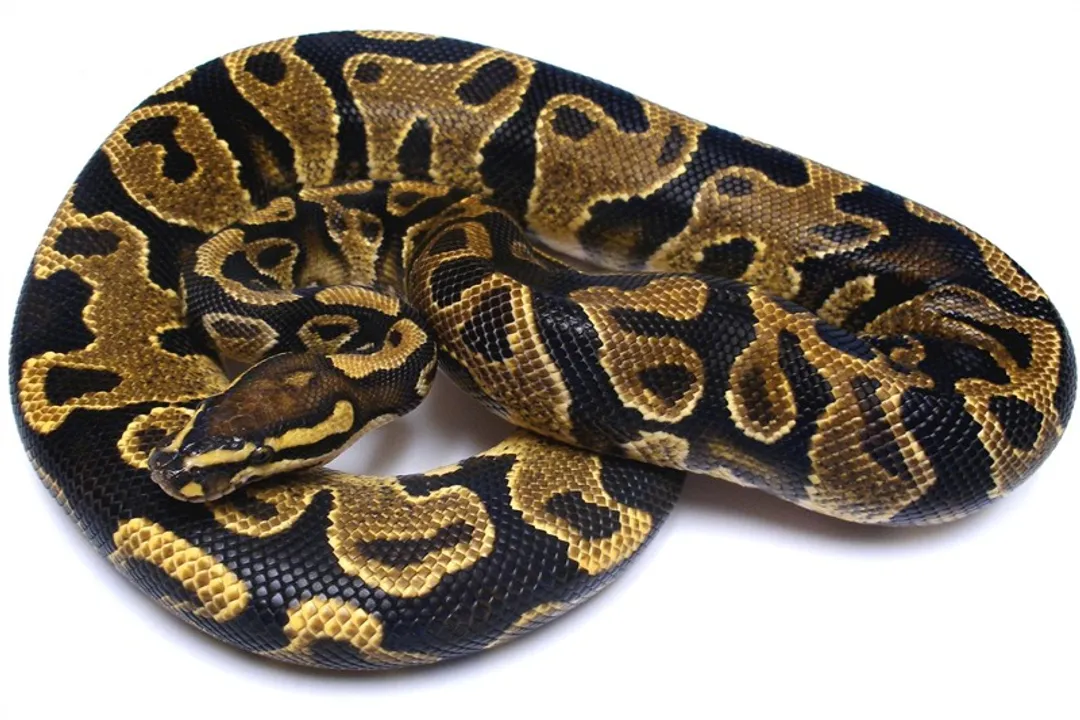
The most striking physical characteristic provided by the Yellow Belly gene is the dramatic increase in light coloration, particularly yellows and oranges. [1] In a visual comparison, the light-colored areas—the ground color—appear much more saturated and brilliant than those on a non-hypo Ball Python. [3] This brightness extends across the sides and can give the entire snake a "cleaner" appearance. [3] While the base coloration is influenced by the snake's heritage, a Yellow Belly will generally display an almost luminous yellow or rich orange hue where the lighter ground color manifests. [1] This enhancement is not just a subtle shift; it is often the feature that makes a keeper immediately recognize the morph in a clutch of hatchlings. [2]
When observing a single-gene Yellow Belly, the contrast between the dark markings and the light ground color is usually quite pronounced, which contributes to its high appeal in the reptile trade. [3] It’s worth noting that this gene, being co-dominant, interacts strongly with other genes, meaning that when paired with morphs like Pastel or Super Pastel, the resulting visual effect is an exponential increase in saturation, making the individual identifying characteristics of the Yellow Belly slightly more subtle within the combo. [7] However, on its own, the primary contribution is this vibrant, high-key illumination of the body's lighter areas. [1]
# Pattern Alterations
Beyond color saturation, the Yellow Belly gene structurally alters the classic Ball Python pattern. [1] A typical normal Ball Python displays a relatively consistent, somewhat busy pattern across its back and sides, featuring dark brown to black blotches outlined by light tan or gold. [8] The Yellow Belly morph introduces a degree of pattern reduction. [1] The dark dorsal markings tend to break up more significantly than in a wild-type animal. [8] In some instances, this reduction can be quite pronounced, leading to thinner pattern lines or smaller, less connected saddles down the vertebral column. [4]
When looking at the sides (laterals), the pattern elements often appear less dense, allowing more of that bright, enhanced ground color to show through between the darker markings. [3] For instance, in a young Yellow Belly, you might notice that the typical "alien head" markings seem less defined or contain more internal lighter coloration compared to a normal counterpart. [8] This effect is particularly noticeable when examining snakes that are just exhibiting the single gene expression, before they are bred into complex patterns. [1]
# Head Stamps Analysis
The head pattern, often referred to as the "head stamp," is another area where the Yellow Belly influence can sometimes be observed. [4] While not as consistently dramatic as the body coloration, the head markings in a Yellow Belly may appear slightly cleaner or have less intrusion from the dark pigmentation than expected on a standard Ball Python head. A key observation hobbyists often make when assessing hatchlings is whether the lighter areas on the head and neck seem predisposed to merging or lightening up earlier than usual, signaling the presence of the gene. [1] A perfectly expressed Yellow Belly might feature a brighter nape area just behind the head, where the dorsal pattern begins to lighten dramatically. [8]
# Ventral Markings
Perhaps the most definitive feature for confirming the Yellow Belly trait, especially in a snake whose pattern reduction is ambiguous, lies on the underside: the belly and ventrals. [3] In a standard Ball Python, the belly is usually a creamy white or pale yellow, often nearly immaculate or with only faint, sparse dark smudging along the edges of the ventral scales. [4] The Yellow Belly morph consistently alters this area. [1]
The ventral side of a Yellow Belly Ball Python is characterized by the presence of distinct dark spots, smudges, or stippling across the lighter belly scales. [1][4] These markings are typically scattered across the white or cream background, breaking up the uniformity usually seen in a normal belly. [3] The degree and distribution of this spotting can vary significantly between individuals, which is a characteristic feature of this gene. [4] Some snakes may exhibit only a few faint, isolated dark specks near the side-to-belly transition, whereas others can display heavy, almost confluent dark markings that cover a substantial portion of the ventral area. [4] A useful tip for new owners is to always check the tail base, as the spotting often becomes more concentrated or clearly defined in that transition zone between the dorsal pattern and the ventrals, providing a clear signature even if the mid-belly is relatively clean. [1] This variation in ventral spotting means that judging the 'quality' of a Yellow Belly isn't just about the dorsal brightness; it's also about the desirable pattern expression on the underside. [3]
# Genetic Context
Understanding the physical appearance of the Yellow Belly is inseparable from its genetic classification. It is established as a co-dominant gene. [1] This means that an animal only needs one copy of the gene to display the physical traits—a "Yellow Belly" animal is heterozygous (one normal gene, one Yellow Belly gene). [1] If a Ball Python inherits two copies of the gene, it is considered a Super Yellow Belly, which exhibits an even more drastic visual change, usually resulting in significantly greater pattern loss and even more intense coloration, often bordering on solid yellow or orange. [1][8]
When breeders discuss combinations, such as a Bumblebee (which is a Pastel Spider Yellowbelly), the Yellow Belly component is responsible for introducing the intense, clean background color and contributing to the overall reduction of the black/dark markings associated with the other genes in the mix. [7] It is fascinating to observe how the Yellow Belly acts as an intensifier across the board; its primary physical contribution is not just adding spots to the belly but acting as a contrasting agent that pushes the visual limits of whatever base morph it is combined with, often overriding the typical pattern structure of other genes by brightening the ground color so effectively. [3] This synergistic effect is why the Yellow Belly is such a foundation gene in the morph industry. [1]
# Comparison Points
Distinguishing the Yellow Belly from other similar morphs that also affect color, such as the Mojave or Pastel, requires careful observation of the specific pattern breakdown and belly marking. [7] While the Pastel gene brightens the base color, it typically enhances pattern contrast rather than reducing it significantly in a single-gene form, often keeping the dorsal markings more intact than a Yellow Belly. [8] The Mojave also lightens the base color but tends to produce cleaner, often more intricate side patterns, and while its belly can sometimes show light speckling, it usually lacks the distinct, often bold smudging characteristic of the Yellow Belly. [1]
Therefore, when assessing a snake that seems "bright but not quite right," look at the intersection of traits:
- Color: Is it a vibrant yellow/orange? (Favors Yellow Belly/Pastel). [1]
- Dorsal Pattern: Is the pattern visibly broken up or reduced? (Favors Yellow Belly). [1][8]
- Ventral Area: Are there noticeable dark markings or smudges on the belly/ventrals? (Strong indicator for Yellow Belly). [4]
By methodically checking these three areas, keepers can confidently identify the physical characteristics imparted by the Yellow Belly gene, whether it stands alone or contributes its vivid influence to a complex designer combination. [3][7]
#Videos
How to Identify Yellowbelly in Ball Pythons! - YouTube
The Yellow Belly Ball Python: How to ID it and use it in ... - YouTube
Related Questions
#Citations
Yellow Belly - Ball Python Traits - Morphpedia
How to Identify Yellowbelly in Ball Pythons! - YouTube
Yellow Belly Ball Python Description and Photos - Northwest Reptiles
Yellowbelly - Ball-Pythons.net
Identifying ball python morph traits - Facebook
Which ball python should I get? Bumblebee or Yellow Belly? - Reddit
Yellow Belly Ball Pythons Living Art Reptiles