Yellow Aphids Physical Characteristics
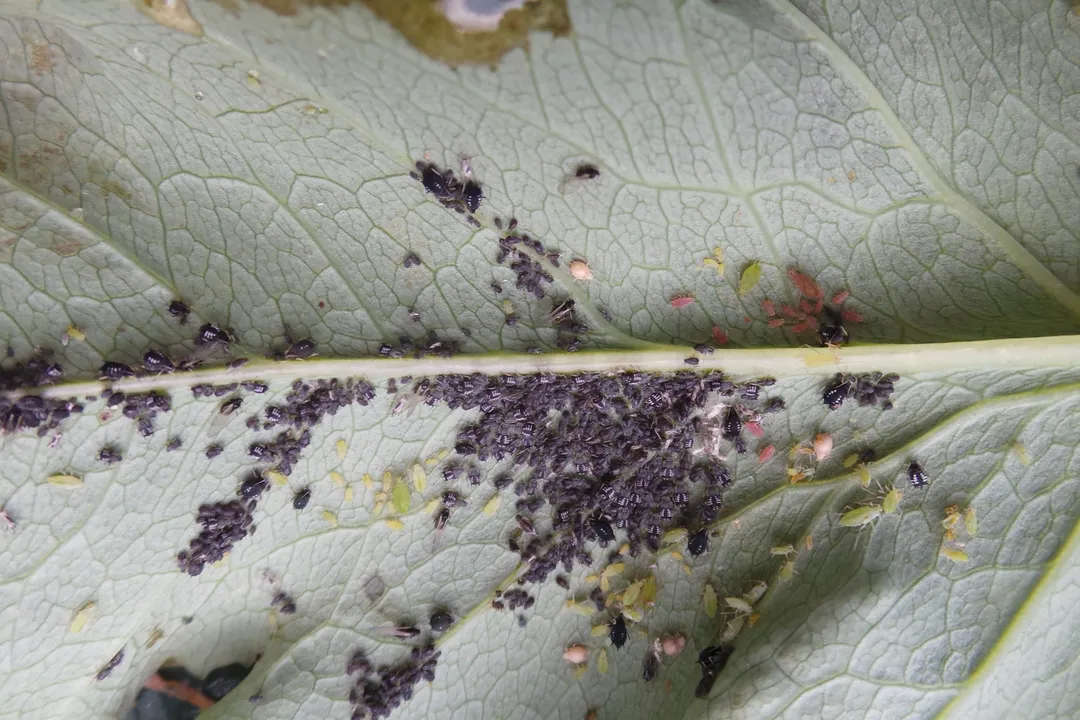
The appearance of yellow aphids is often striking, making them distinct from some of their more common green or black relatives, though this color can vary depending on the specific species present and its immediate environment. [1] When people refer to yellow aphids, they are frequently describing the Oleander Aphid (Aphis nerii), which serves as a prime example of this coloration, though other species can also present in yellow or greenish-yellow tones. [3][8]
# Basic Look
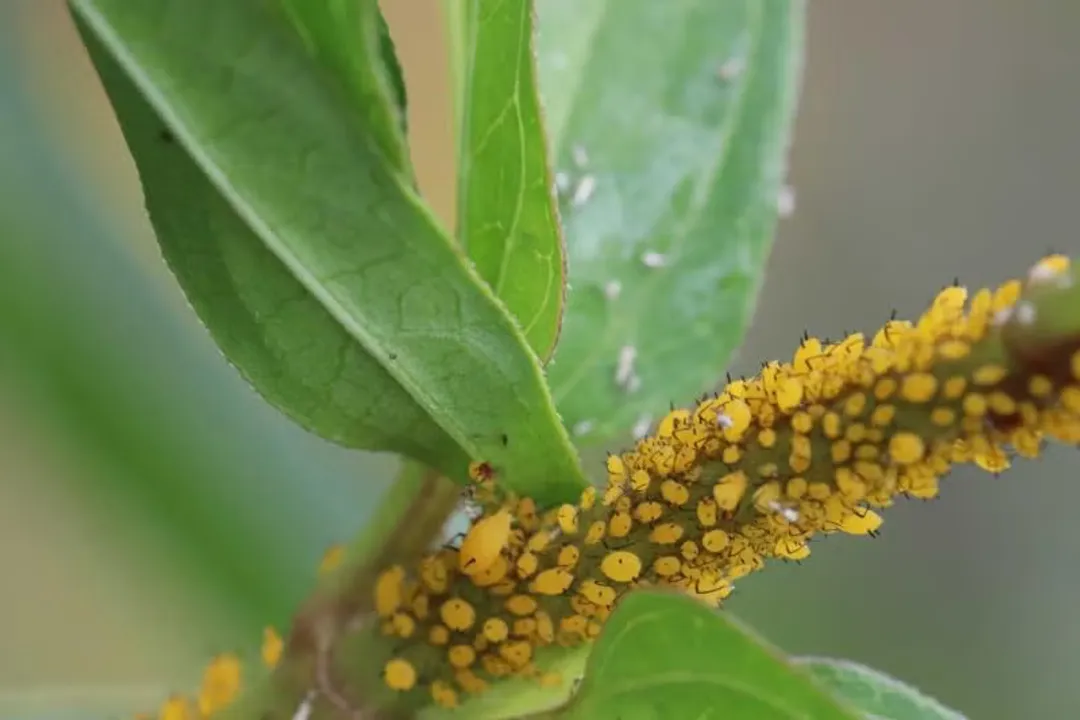
Aphids, in general, share a fundamental body plan: they are small, soft-bodied insects characterized by a pear shape. [4][6] This general structure holds true for the yellow varieties as well. Their bodies are often somewhat rounded, tapering toward the rear end where the reproductive structures are located. [6] The defining characteristic, of course, is the coloration. While some reports mention aphids that are greenish-yellow, the most visually recognized yellow aphids display a very bright, almost lemon-yellow hue. [1][3][9] This vibrant color often covers the entire body, contrasting sharply with other body parts.
One interesting observation made in the field is that the intensity of the yellow can shift based on environmental factors, which might lead to confusion if one relies solely on color. For instance, a heavy coating of waxy, powdery secretions, which is common among many aphid species, can dull the bright yellow to a paler, almost dusty yellow appearance upon initial inspection. Conversely, when wet or viewed in direct, strong sunlight, the color may appear more intense than it truly is, demanding careful observation to confirm species identification. [3]
# Appendage Details
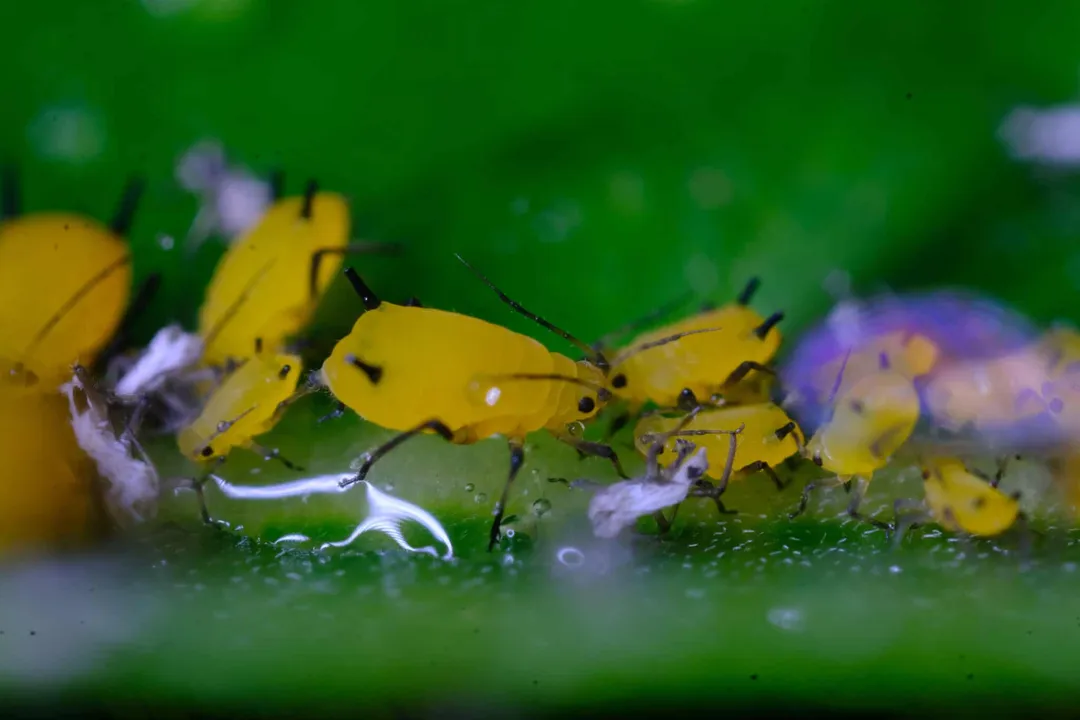
Beyond the main body color, the appearance of the extremities provides critical diagnostic clues, especially when trying to differentiate between various yellow-colored species. For the Oleander Aphid, in particular, the appendages stand out sharply against the bright yellow abdomen. [9]
These aphids typically possess black legs, black antennae, and most notably, black cornicles (also called siphunculi). [3][9] The cornicles are the two small tubes projecting from the rear of the abdomen, used for excreting defensive fluids. In many common green aphids, these cornicles match the body color or are slightly darker; however, the pronounced blackness of the cornicles on a bright yellow body is a strong identifier for A. nerii. [3] It is worth noting that while many yellow aphid species found on plants like pecans might also show darker legs, the combination of bright yellow with consistently black cornicles is a hallmark trait often sought by entomologists. [5]
It is important to remember that these aphid structures are relatively small, meaning that clear identification often requires a magnifying glass or a close-up photo, especially when observing smaller nymphs which may not have fully developed or darkened pigmentation yet. [4]
# Morphological Shifts
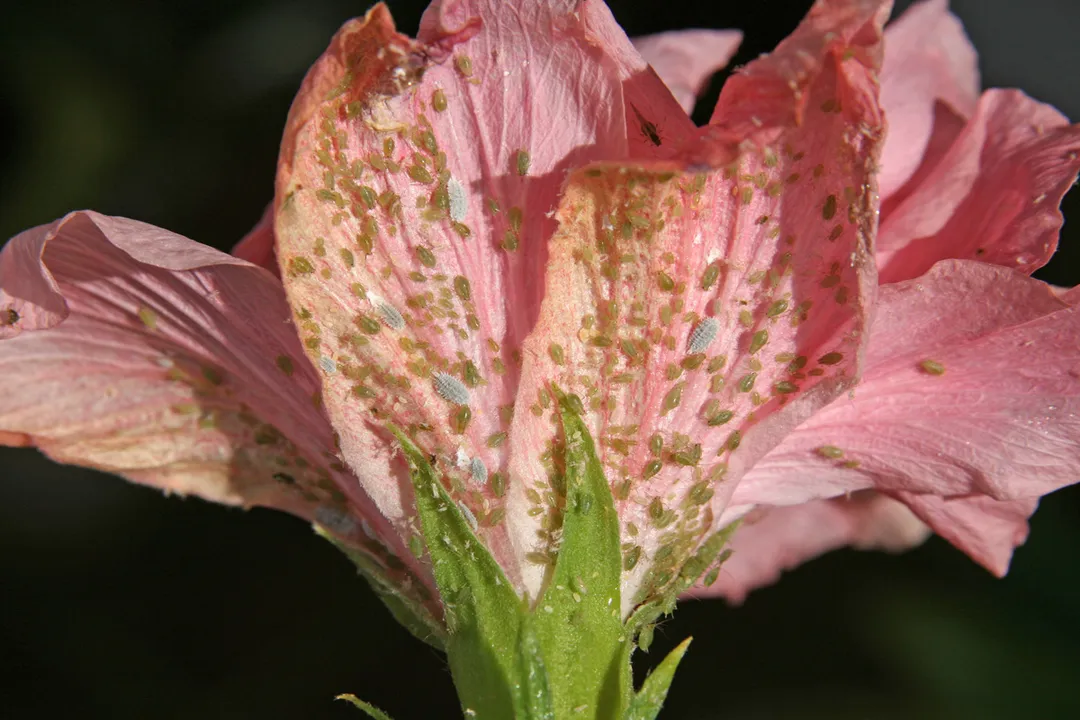
Like many aphid species, yellow aphids exhibit polymorphism, meaning they can exist in different physical forms depending on their life stage and immediate needs, most significantly concerning the presence of wings. [7]
The most common form encountered is the apterous adult, which is wingless. These are the primary reproductive members of the colony, constantly feeding and producing live young asexually. [7] However, when resources become scarce, or the population density gets too high, or simply as part of their regular life cycle, they produce alate forms. [7]
The winged (alate) yellow aphids have developed two pairs of membranous wings. Physically, these winged individuals often retain the characteristic yellow body color, but the head and thorax may appear slightly darker or browner compared to their entirely yellow wingless counterparts. [7] The wings themselves are usually clear or slightly smoky, with visible dark veins. The function of these winged forms is dispersal; they fly off to start new colonies on new host plants, carrying the same physical traits as their siblings, though their body shape is slightly more elongated to accommodate the wing muscles. [7]
# Scale Matters
When assessing the physical characteristics of yellow aphids, their sheer size is a fundamental aspect of their description. Aphids are minute insects. [4] While specific species sizes vary, the general rule is that they are small enough to be easily overlooked until they have clustered in large numbers, often appearing as a yellow-orange dusting on stems or the undersides of leaves. [1][4]
If we consider the Oleander Aphid again, adults are typically less than one-twelfth of an inch in length. [9] To put that into a practical context: ten of these aphids lined up end-to-end would barely cover the width of a standard pencil eraser. This diminutive size explains why infestations can often reach significant proportions—sometimes entirely covering a new shoot—before a gardener or farmer notices the problem, as individual specks blend into the plant's natural coloring until massed together. [4]
When observing the colony, you will notice a range of sizes representing different instars (developmental stages). Nymphs, or immature aphids, will be miniature versions of the adults, potentially lacking the fully developed cornicles or intense pigmentation of the mature insects, which adds another layer of visual variation within a single infestation. [6]
# Species Differentiation Points
While the general description points toward a small, yellow, pear-shaped insect, expert identification relies on distinguishing between common yellow species, such as the Oleander Aphid (A. nerii) and species like the Yellow Pecan Aphid (Monellia caryella). [3][5] The physical differences, though subtle, are essential for targeted management, as their host preferences differ significantly. [5]
For example, while A. nerii is strongly associated with oleander and milkweed and characterized by the black cornicles mentioned earlier, the Yellow Pecan Aphid is specifically adapted to pecan trees. [3][5] Although it is also yellow, identification guides might note differences in the specific structure of the antennae or cornicles, or perhaps a slightly different distribution of dark pigmentation on the thorax or legs, even if both appear "yellow" from a distance. [5] A key analytical difference for an experienced observer is often where the aphid is found; observing the presence of aphids on Oleander versus Pecan foliage immediately narrows the physical possibilities toward the known pests for that host plant. [3][5] Therefore, while the physical description starts with color and shape, confirming identity relies on the finer structural details and location. [1]
Related Questions
#Citations
Yellow Aphids Insect Facts - Aphis nerii - A-Z Animals
Oleander Aphid, Aphis nerii Boyer de Fonscolombe ... - UF/IFAS EDIS
Oleander Aphid | NC State Extension Publications
Yellow Aphids Facts & Photos | Wowzerful
Yellow Pecan Aphid - Oklahoma State University Extension
Aphids, in-depth - Wisconsin Horticulture
Aphids | Missouri Department of Conservation
Are Aphids on Milkweed Really a Bad Thing? - SDSU Extension
Oleander Aphids (Aphis nerii) - Insect Identification