Yellow-Bellied Sea Snake Physical Characteristics
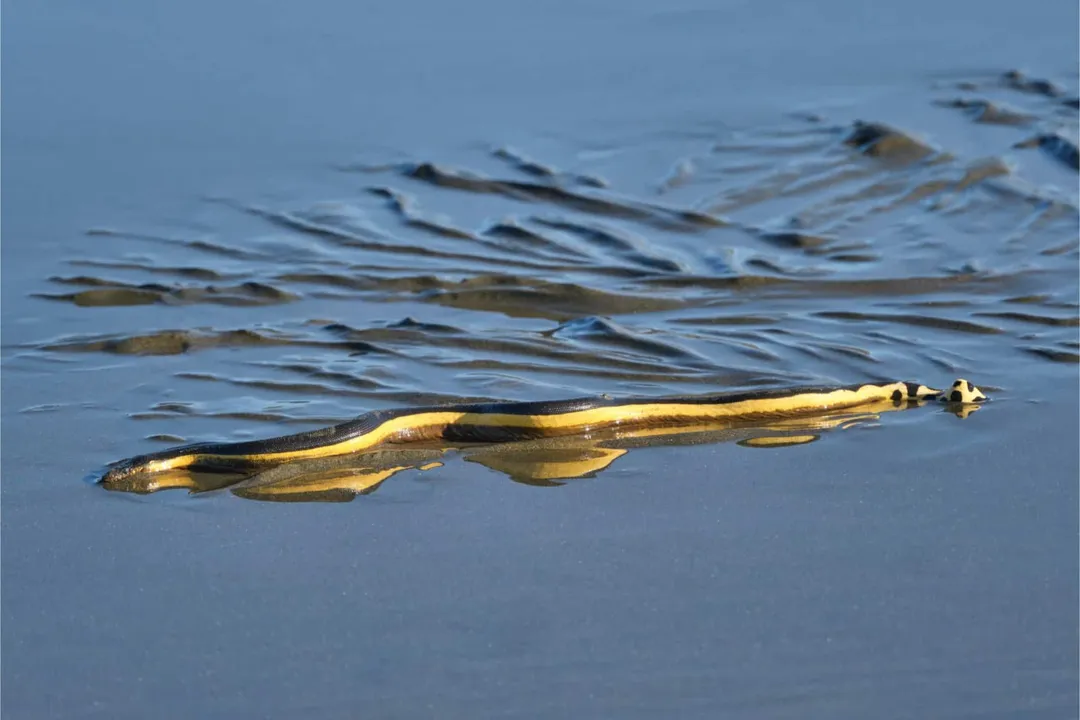
The Yellow-bellied Sea Snake, scientifically known as Pelamis platura, presents a physique exquisitely adapted for a life spent entirely in the open ocean, rarely, if ever, touching land. These reptiles possess a slender, elongated body structure characteristic of many elapids, but with specialized features that distinguish them as truly pelagic creatures. Adult lengths typically fall within the range of 50 to 100 centimeters, though larger individuals reaching up to 1.5 meters have been documented in some accounts. Males tend to be slightly shorter than females. The body is remarkably thin, often described as pencil-like, contributing to its streamlined movement through water.
# Coloration Pattern
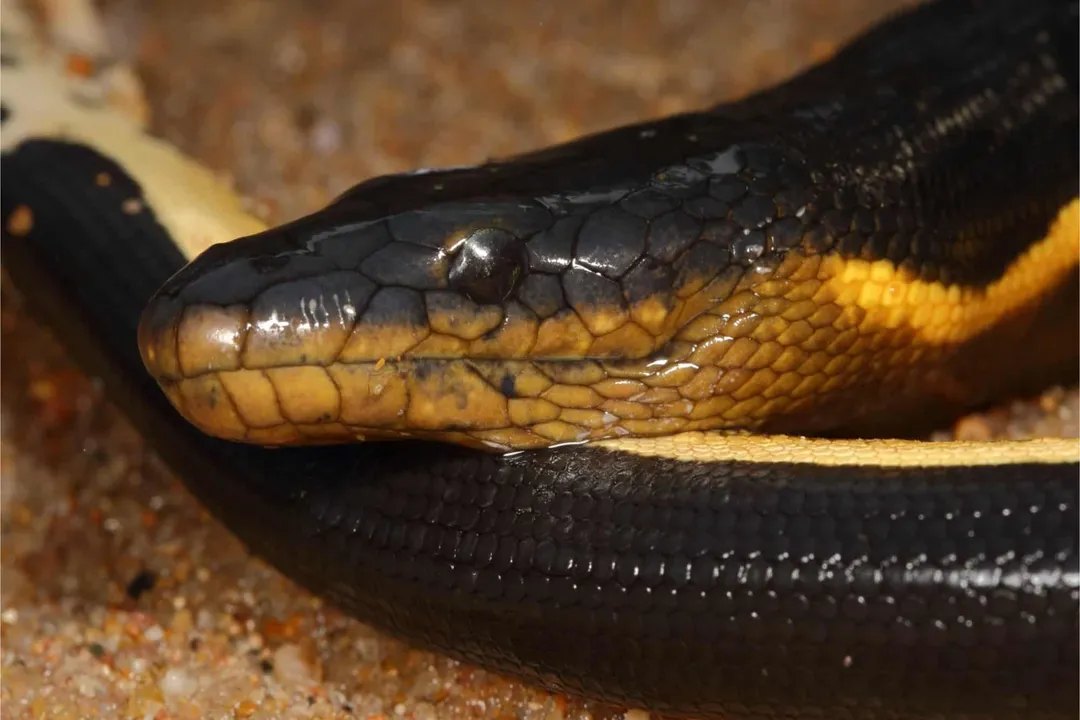
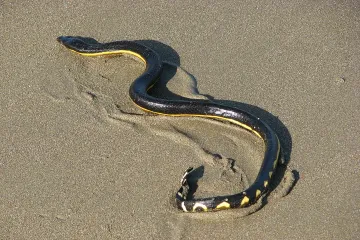
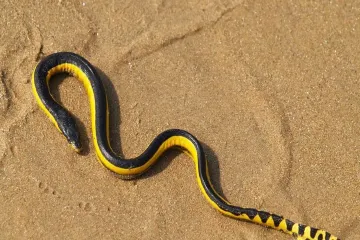
The most striking feature of this species is undoubtedly its dramatic tri-coloration, which gives rise to its common name. The snake exhibits a sharp division of color running longitudinally along its body. The dorsal side, or the top surface, is usually dark, often appearing black or dark brown. This dark upper coloration likely provides camouflage from above against the darker depths of the ocean when the snake is near the surface.
In stark contrast, the ventral side, or underside, is vividly yellow or sometimes light cream. This bright underside is thought to help the snake blend with the bright, sunlit surface waters when viewed from below. Where the dark dorsal surface meets the yellow ventral surface, there is often a band of lighter color, frequently seen as a pale olive or light brown, creating a distinctive three-toned appearance. The exact shade and prominence of these bands can vary significantly between individuals and populations. For instance, some specimens from the eastern Pacific, like those observed near the Galapagos Islands, might show a more pronounced contrast between the bands. Furthermore, some sources note that specimens found in certain regions may lack the central pale band entirely, presenting a more abrupt transition between the black top and yellow bottom. This variable patterning means that while the general description holds, an observer might see anything from a sharply defined black and yellow split to a more gradual tri-color gradient.
# Body Scales
The scales covering the body of the Yellow-bellied Sea Snake are small and smooth. Unlike many terrestrial snakes that possess large, specialized ventral scales to grip the ground for forward locomotion, sea snakes have relatively uniform, small, overlapping scales across their entire body, including the underside. These overlapping scales, which are arranged in rows, reduce drag while swimming. The scales are arranged in 29 to 37 scale rows around the midbody. This smooth, tight scaling is a critical adaptation, minimizing friction in the aquatic environment.
# Head Structure
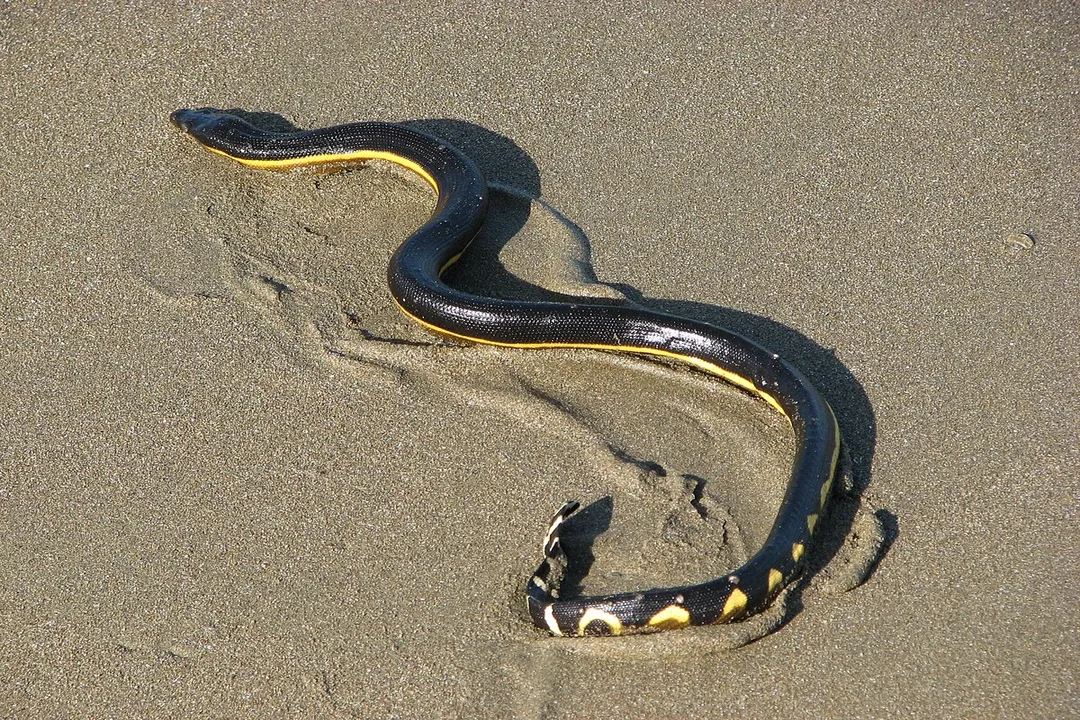
The head of P. platura is relatively small and slightly flattened compared to the body, often appearing distinct from the neck region. The snout is somewhat short. The snake possesses eyes that are proportionally small, likely reflecting reduced reliance on vision for detailed hunting in often turbid or dark waters compared to terrestrial counterparts. Like all members of the Elapidae family, they are equipped with fixed, relatively short fangs located in the front of the upper jaw. These fangs are connected to venom glands that produce a potent neurotoxic venom. While their venom is highly toxic to fish and small marine life, the delivery system is less robust than that of terrestrial snakes, as their small fangs are not designed for delivering large volumes.
# Tail Specialization
One of the most apparent physical departures from terrestrial snakes is the structure of the tail, which is highly modified for aquatic propulsion. The tail is laterally compressed, meaning it is flattened from side to side, resembling the blade of an oar or a paddle. This structure aids in steering and maneuvering in the water column. The body itself is relatively stout for a sea snake, but the paddle-like tail is the primary engine for movement in their pelagic existence.
It is interesting to note the functional distinction between the snake's body and tail. While the anterior portion, the front three-quarters of the body, remains relatively cylindrical for efficient forward thrust, the posterior quarter transitions into the distinctive, flattened rudder. This design suggests an evolutionary refinement where the main body provides the power stroke, and the specialized tail provides the final directional push and stabilization, a trait that contrasts with some other aquatic reptiles that may have more uniformly flattened bodies. If one were to imagine the snake navigating a current, the dark dorsal surface would present a relatively low profile to overhead predators, while the light ventral side minimizes shadow casting in the water column below.
# Size Variation and Distribution Markers
While size is a general physical characteristic, the distribution seems to correlate with observed size differences, which might offer a subtle physical marker depending on location. For example, some researchers note that snakes found in the cooler waters off places like New Zealand might be smaller or have slightly different coloration patterns than those found in warmer, more equatorial regions. The species holds the distinction of having one of the widest distributions of any sea snake, stretching across the Indian and Pacific Oceans. This vast range, spanning from the Persian Gulf to the coasts of the Americas, results in significant regional variation in appearance, even within the established physical parameters. For instance, specimens reported along the coast of Mexico often display the classic black-and-yellow pattern clearly. This extensive geographic range, far exceeding that of many other specialized marine reptiles, suggests a remarkable physiological tolerance to varying sea temperatures, which could subtly influence metabolic rate and, consequently, growth and final adult size.
# Sensory Features
Although less frequently detailed than color or size, the snake’s sensory apparatus is crucial for survival in its environment. Like many snakes, the Yellow-bellied Sea Snake relies heavily on its tongue for chemoreception, flicking it out to "taste" the water and gather chemical cues about its surroundings, aiding in locating prey or navigating. The small eyes, as mentioned, suggest a reduced reliance on vision compared to terrestrial hunting, prioritizing chemical and vibrational input from the surrounding medium.
# Summary of Key Dimensions
To provide a quick reference for the primary physical traits:
| Feature | Description | Typical Range/Observation |
|---|---|---|
| Total Length | Slender, elongated body | to (up to maximum recorded) |
| Dorsal Color | Dark (Black or dark brown) | Provides camouflage against deep water |
| Ventral Color | Bright Yellow or cream | Helps blend with surface light |
| Scales | Small, smooth, overlapping | Uniformly distributed, non-keeled |
| Tail | Laterally compressed | Acts as a paddle for propulsion |
| Venom System | Elapid type | Fixed front fangs, neurotoxic venom |
The entire physical makeup of Pelamis platura points toward a creature optimized for perpetual movement on the ocean surface or just below it. The combination of the flattened tail for propulsion and the light-absorbing/light-reflecting body coloration creates a highly specialized marine reptile, one whose physical characteristics are entirely dictated by its open-ocean niche.
Related Questions
#Citations
Yellow-bellied sea snake - Wikipedia
Pelamis platura (Yellowbelly Sea Snake ... - Animal Diversity Web
The Yellow-bellied Sea Snake Slithers in the Open Ocean
Yellow-Bellied Sea Snake - Waikiki Aquarium
Yellow-bellied Sea Snake | Mexican Marine Life.org
Galapagos Yellow Bellied Sea Snake Facts with Quasar Expeditions
yellow-bellied sea snake - Students | Britannica Kids | Homework Help
Yellow-bellied sea snake - New Zealand Herpetological Society
Yellow-Bellied Sea Snake - Hydrophis platurus - A-Z Animals