What latitude bands define the strong westerly winds utilized by the Wandering Albatross for gliding?
Answer
The Roaring Forties and Furious Fifties latitudes
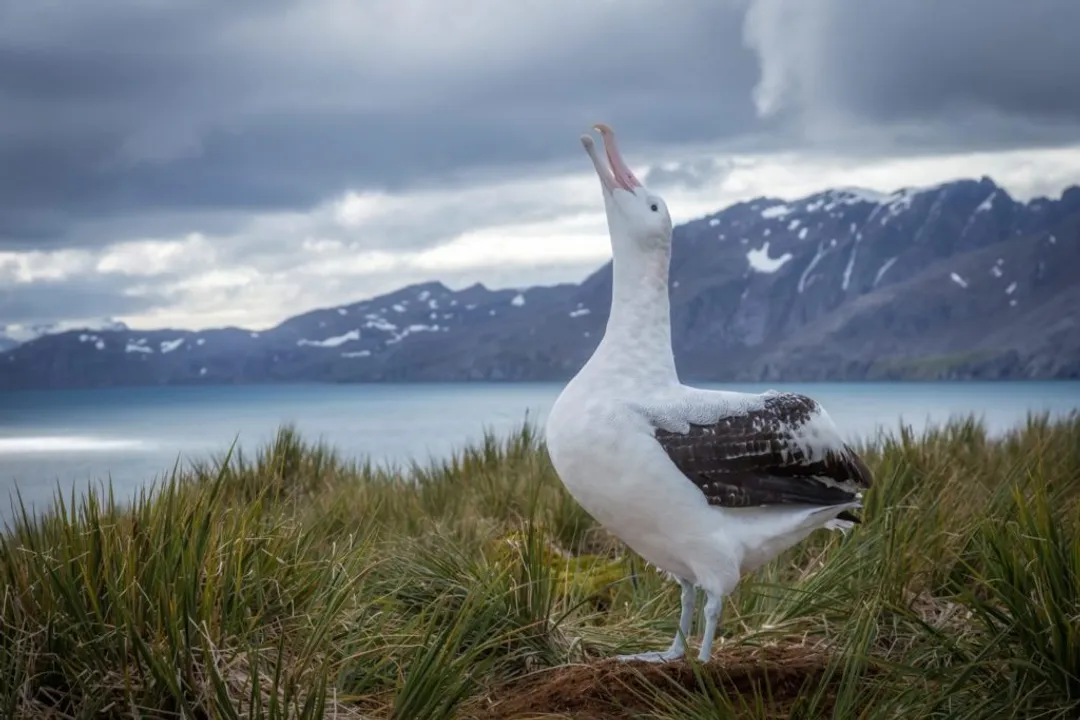
Outside of its breeding obligations, the Wandering Albatross maximizes its efficiency as a pelagic wanderer by exploiting powerful, consistent wind patterns prevalent in the far south. Specifically, these birds rely heavily on the strong westerly winds found between roughly $40^ ext{o}$ and $60^ ext{o}$ south latitude. These zones are formally known as the Roaring Forties and the Furious Fifties. By masterfully employing gliding and dynamic soaring within these high-wind bands, the albatross can cover immense geographical distances across the Southern Ocean while expending very little energy.
Related Questions
What is the maximum wingspan achieved by the Wandering Albatross?Which specific oceanographic boundary dictates the waters surrounding Wandering Albatross breeding colonies?Which island group is confirmed as a key breeding location for the Wandering Albatross?What is the approximate frequency for raising a single chick by an adult Wandering Albatross?What latitude bands define the strong westerly winds utilized by the Wandering Albatross for gliding?What constitutes the primary non-breeding habitat for this species when not nesting?Where is the highest probability for observers to spot a Wandering Albatross at sea?What is the characteristic nesting fidelity displayed by an adult Wandering Albatross?What sea condition increases the chance of an offshore encounter with the Wandering Albatross?How does the geographical scope of Wandering Albatross foraging contrast with its land-based reproductive area?