Wandering Albatross Facts
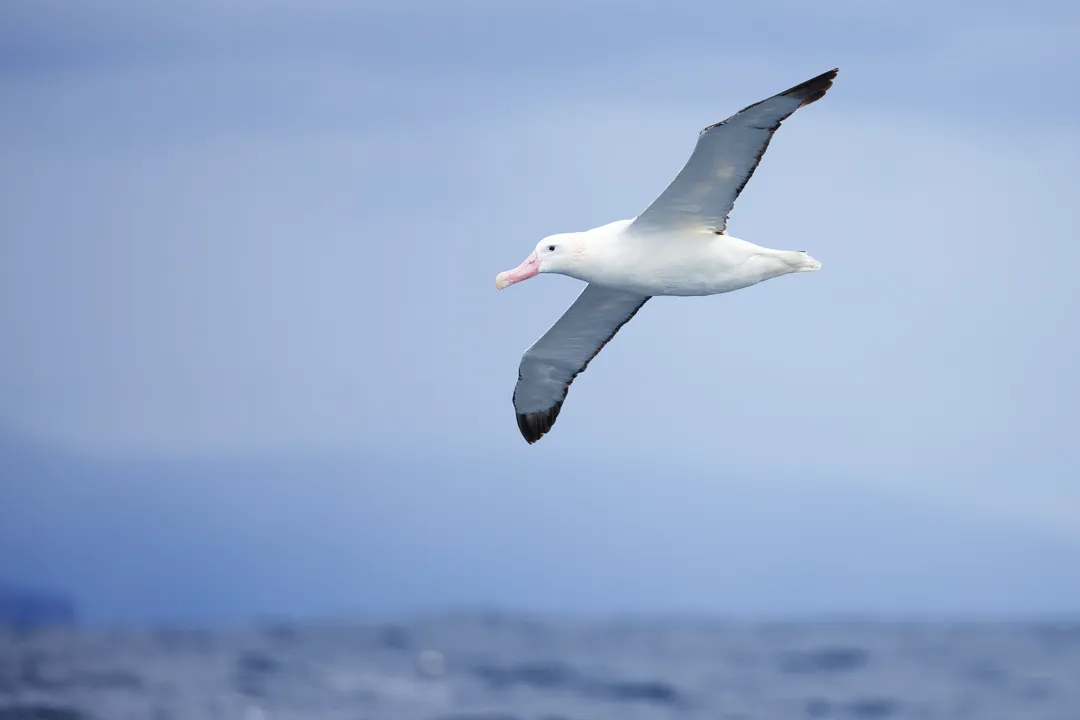
The sight of a Wandering Albatross gliding effortlessly above the churning Southern Ocean waves suggests a creature unbound by the usual struggles of aerial existence. This magnificent seabird, known scientifically as Diomedea exulans, [5] or sometimes simply as the Snowy Albatross, [3][8] commands attention primarily due to its staggering physical attributes, which place it among the most impressive avian flyers on Earth. [1][2] It embodies the wildness of the remote, cold waters it calls home, spending most of its life far from human sight. [4]
# Largest Wingspan
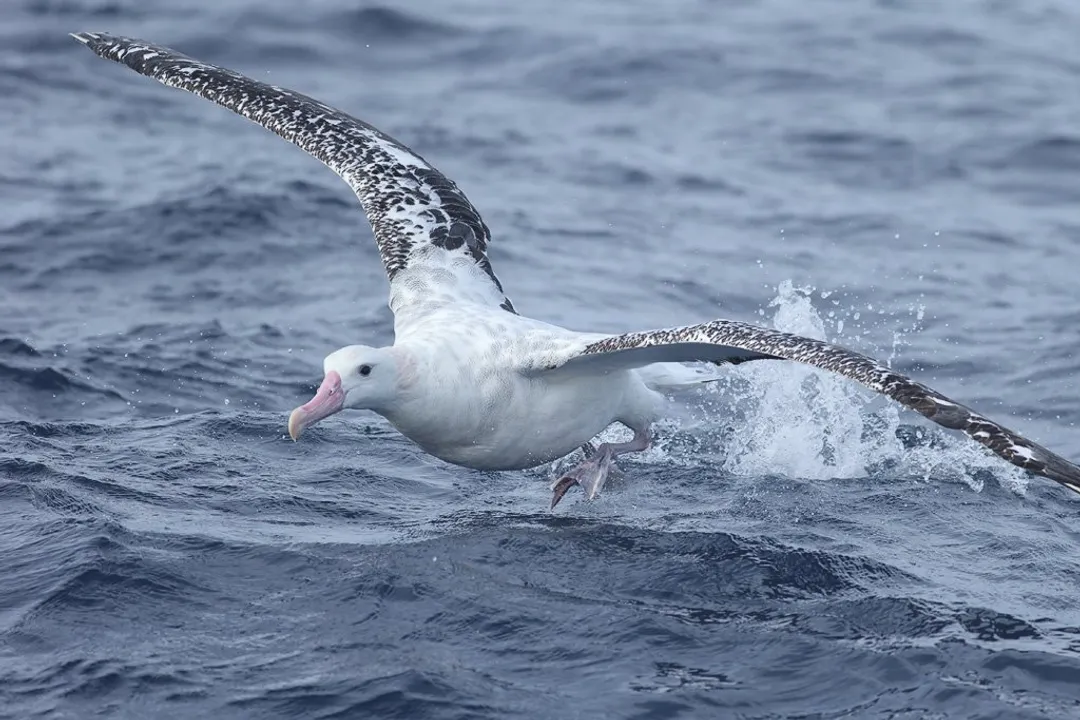
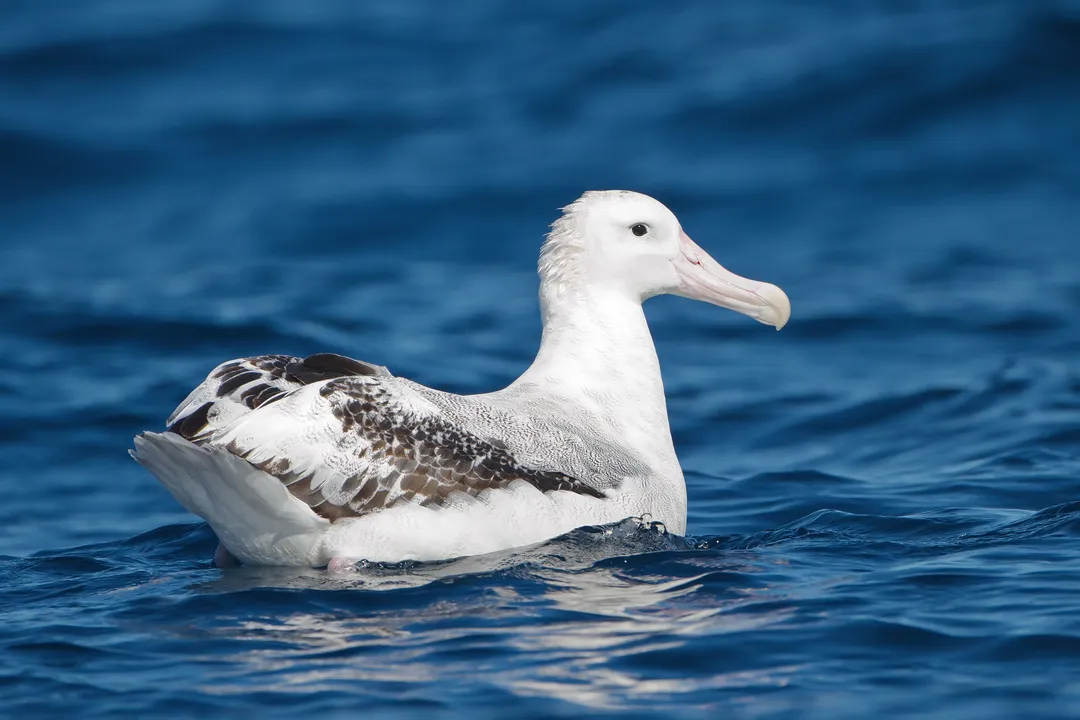
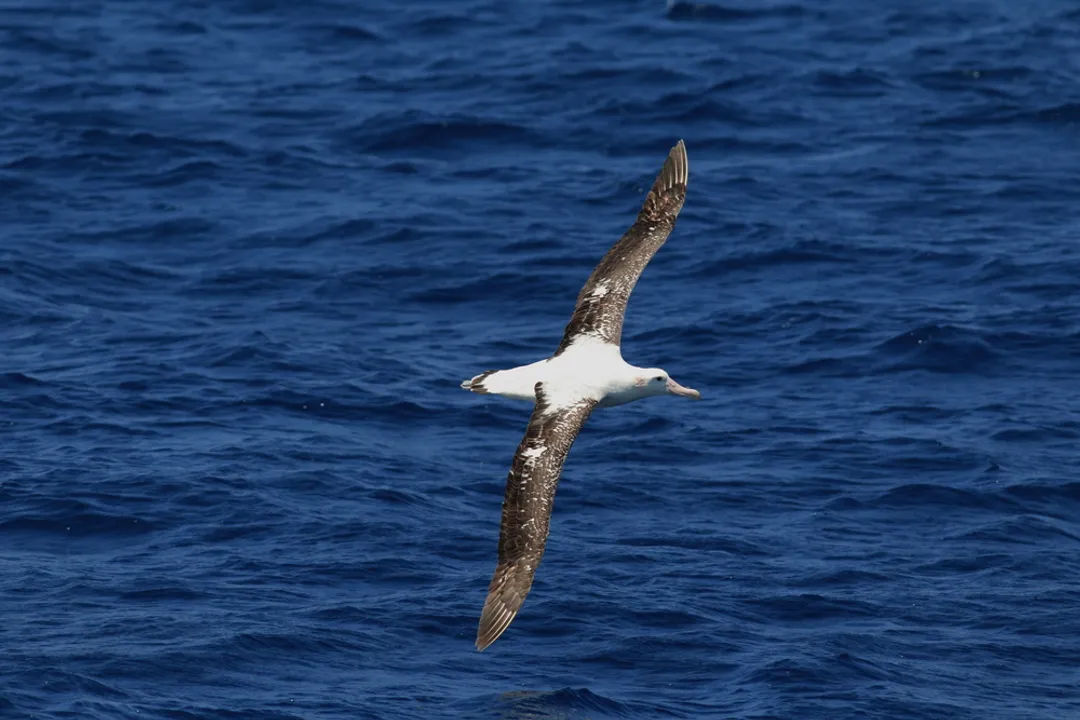
The defining characteristic of the Wandering Albatross is unquestionably its wingspan, the largest of any living bird. [1][2][3][5] Measurements frequently place this span between 2.5 and 3.5 meters (8.2 to 11.5 feet). [1][3][5] To put that scale into perspective, a 3.5-meter wingspan is longer than the height of most adult humans, requiring the bird to maneuver these massive appendages carefully, especially when maneuvering near land or predators. [1] While juvenile birds often exhibit darker plumage, particularly on the head and back, adults become progressively whiter as they age, with mature males often appearing almost entirely white save for their black wingtips. [3][7] This distinct contrast between the stark white body and the dark trailing edges of the wings is a hallmark of the adult. [3][5][7]
# Dynamic Soaring
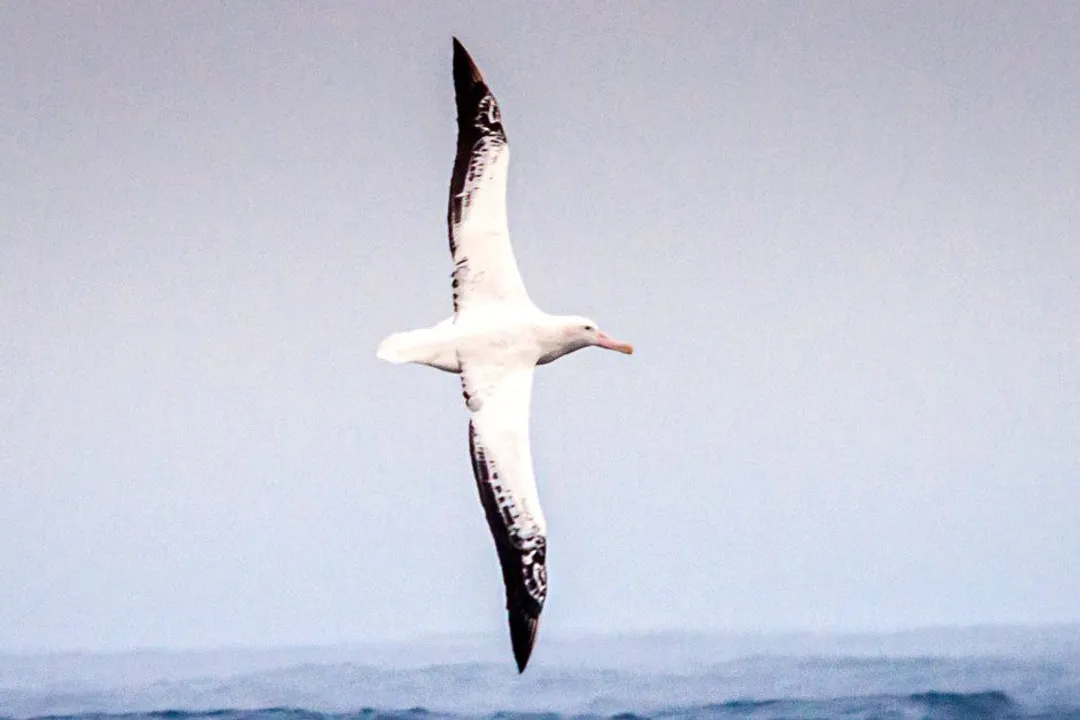
Their immense wings are not built for flapping repeatedly, which would consume far too much energy. Instead, they are long, narrow structures optimized for gliding efficiency, possessing a high aspect ratio. [9] The Wandering Albatross has perfected a technique called dynamic soaring. [1][4][9] This method allows them to harness the kinetic energy generated by the wind gradient just above the ocean surface. [4] They essentially "borrow" energy from the wind by alternating between flying high into the wind to gain altitude and then diving back down through the wind shear close to the waves. [9] This complex maneuver means they can travel vast distances—sometimes thousands of kilometers—without needing to actively flap their wings even once. [1][2] Considering the vast energy expenditure required for flapping flight, by exploiting the persistent winds of the Southern Ocean this way, the albatross achieves an astonishing level of fuel efficiency for long-distance travel, making it a true master of atmospheric mechanics in the avian world. [4][9]
# Slow Breeding
Life in the demanding environment of the open ocean requires significant investment in each offspring, and the Wandering Albatross certainly commits to its progeny. [5] They are renowned for their slow reproductive rate. [2][5][6] A female typically lays only a single egg per breeding cycle. [2][5] The incubation period is long, lasting about 70 to 80 days, shared between both parents. [5] Once hatched, the chick requires intensive care, often being fed for nearly a year before it is ready to fledge and take its first flight. [2][5][6] This extended dependency means that a successful breeding pair generally only attempts to raise another chick every two years. [2][5][6] Such a protracted reproductive schedule means that the population cannot rebound quickly from losses, making them highly susceptible to external pressures. [5]
# Southern Seas
The domain of the Wandering Albatross is the cold, windy Southern Ocean, where they exhibit a circumpolar distribution, meaning they inhabit waters circling the globe near Antarctica. [1][5][10] They are masters of the open water, often seen soaring over the tempestuous seas far from land. [4][10] When it comes time to breed, however, they are bound to isolated, sub-Antarctic islands. [1][5][10] Sites like South Georgia, the Crozet Islands, the Kerguelen Islands, and islands off the coasts of New Zealand and Australia serve as their nesting grounds. [1][5][10] These remote locations offer a degree of safety from terrestrial predators, which is vital given the extended period their single chick remains vulnerable on the ground. [5]
# Ocean Diet
The diet of this great flyer consists mainly of prey found near the ocean surface. [5] They are opportunistic feeders, consuming a variety of marine life. [1] Key components of their diet include squid and various types of fish. [1][5] They are also known to feed on krill and occasionally scavenge on the carcasses of whales or seals that drift to the surface. [5] Their feeding strategies are adapted to the oceanic environment, relying on visual cues and opportunistic encounters while gliding over the water. [1]
# Fishing Threat
Despite their vast range and ability to withstand severe weather, Wandering Albatrosses face significant threats primarily linked to human activity. [1][5][8] The primary danger comes from incidental capture, or bycatch, associated with commercial longline fishing operations. [1][5] These fishing vessels set lines that can stretch for many kilometers, baited with hooks that drift near the surface. [5] The birds are attracted to the bait, mistake it for a natural food source, and become hooked, often drowning after being pulled underwater by the heavy line. [1][5] Because the birds take so long to reach sexual maturity—often not breeding until they are ten years old—and breed so infrequently, the high mortality rate caused by fisheries significantly impacts the sustainability of the global population. [2][5][6] This threat has led to the species being classified as Vulnerable on the IUCN Red List, though the status has shifted over time depending on regional assessments. [1][5][8] Efforts to mitigate this impact often focus on changes to fishing gear design or setting practices to reduce the accessibility of the bait to foraging birds. [5]
# Naming and Range
It is worth noting the subtle taxonomic distinctions and common names associated with this bird. While "Wandering Albatross" is widely used, particularly in conservation contexts, the term "Snowy Albatross" is also frequently applied, especially when referring to the pale adult morphology. [3][8] The scientific name, Diomedea exulans, captures the essence of its far-ranging nature. [5] The distribution is indeed truly global within the Southern Hemisphere's cold currents, which speaks to an incredible adaptation for a life spent almost entirely at sea, only returning to specific, isolated breeding colonies to perpetuate the species. [1][10]
| Feature | Value / Description | Significance |
|---|---|---|
| Maximum Wingspan | Up to 3.5 meters (11.5 ft) [1][3] | Largest of any extant bird species. [2] |
| Flight Style | Dynamic Soaring [4] | Minimizes energy use over vast distances. [9] |
| Breeding Interval | Every two years [2][6] | Slow recovery rate after population losses. [5] |
| Primary Threat | Longline Fishing Bycatch [1][5] | Causes high adult mortality. [5] |
| Adult Plumage | Mostly white with black wingtips [3][7] | Age dependent; juveniles are much darker. [3] |
When observing data on successful fledglings, one finds a pattern that reinforces the severity of the conservation challenge. If a pair manages to successfully raise a chick to fledging age—a process taking nearly a year—it can be another 18 to 24 months before they attempt reproduction again. [2][6] This means that a single reproductive failure, such as one adult being lost to fishing gear, effectively sets the pair back by at least three years in terms of contributing a new adult to the gene pool. This prolonged reproductive hiatus is what makes the species so sensitive to mortality events that might seem minor for shorter-lived, faster-breeding birds. [5]
The sheer scale of their flight capability often leads to awe. Researchers studying their movements have noted that these birds can essentially circumnavigate the globe by riding specific wind patterns. [1] Understanding the physics behind this mastery of air currents helps solidify their status not just as large birds, but as highly specialized natural navigators perfectly tuned to the planet's major weather systems. [4][9] Their ability to find food across the massive, often food-scarce expanses of the Southern Ocean truly defines their mastery of this remote habitat. [5]
Related Questions
#Citations
Facts, pictures & more about Wandering Albatross
10 Fascinating Facts About the Wandering Albatross - Polar Tours
Snowy albatross - Wikipedia
Wildlife Guide: Wandering Albatross Facts - Quark Expeditions
Diomedea exulans (wandering albatross) - Animal Diversity Web
Wandering Albatross – Fun Facts We Bet You Didn't Know!
Wandering Albatross - The Australian Museum
The snowy albatross: Masters of the Southern Ocean skies | One Earth
New Research Unlocks Clues About the Iconic Flight of the ...
Wandering albatross - Australian Antarctic Program