Which feeding technique do Wandering Albatrosses primarily employ rather than deep diving?
Answer
Patrolling or skimming the water surface
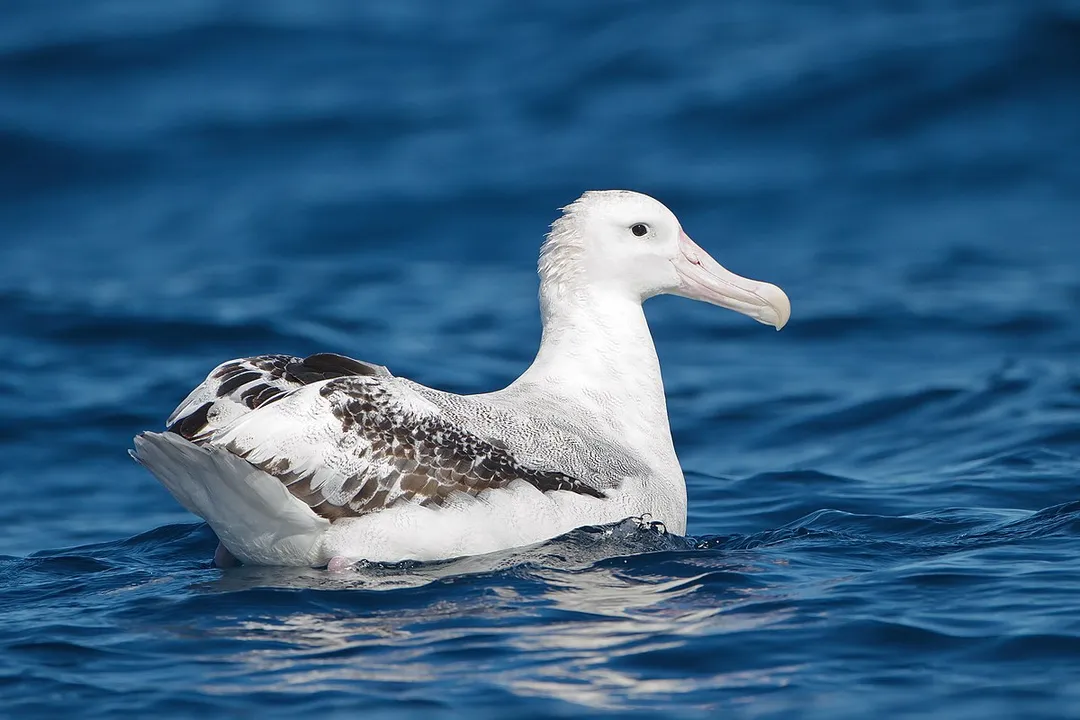
Wandering Albatrosses are specialized surface feeders, utilizing a style that minimizes physical exertion relative to the potential caloric return from oceanic life. They are distinguished from deep-diving seabirds by their preference for surface engagement, employing techniques described as 'patrolling' or 'skimming.' This involves gliding low over the water, scanning visually or using cues from other birds to locate prey aggregated near the air-sea interface. When they approach prey, they often steady themselves by patting the water with their feet, reaching down only to snatch the meal from the surface film or just below it, rarely requiring full immersion.
Related Questions
What is the dual vital function of the stomach oil produced by Diomedea exulans?What three main groups constitute the staple diet components for the Wandering Albatross?Which feeding technique do Wandering Albatrosses primarily employ rather than deep diving?Where are the salt glands located that enable the albatross to excrete excess salt concentrate?How is the large, hooked bill of the Wandering Albatross adapted for consuming slippery prey?What critical factor regarding prey intake is deemed more important than the volume consumed daily for sustained flight?In which specific internal organ does the Wandering Albatross store the highly concentrated stomach oil?What significant danger arises for Wandering Albatrosses that consume fishery discards?What common upper range for the wingspan of the Wandering Albatross is referenced when discussing foraging efficiency?Why does prey found beyond the immediate photic zone contribute less to the albatross's daily energy budget?