What specific anatomical feature defines the Order Procellariiformes grouping?
Answer
Distinctive nasal tubes used for excreting excess salt
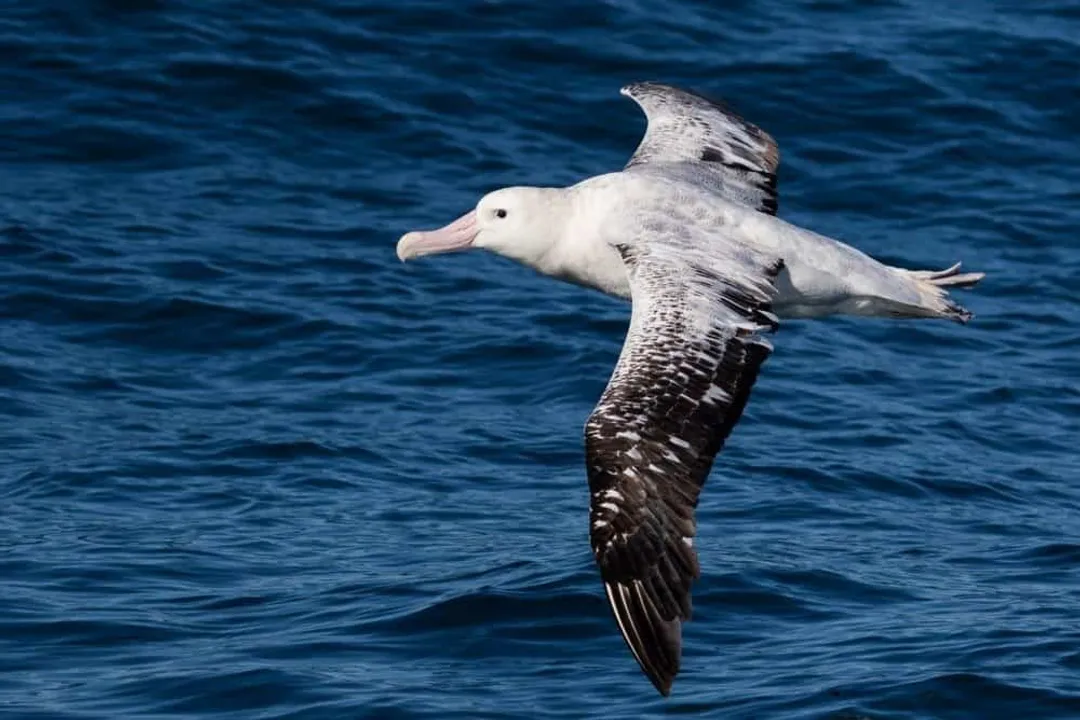
The Order Procellariiformes, which includes the albatrosses, petrels, and shearwaters, is fundamentally characterized by a very specific anatomical adaptation related to their marine diet: the presence of distinctive nasal tubes. These structures are essential physiological tools that allow the birds to efficiently excrete the excess salt absorbed when consuming seawater or salty prey. This shared feature distinguishes them within the Class Aves and results in the common group name, the tube-nosed seabirds. Although they share Class Aves traits like feathers and Order Chordata traits like a notochord, the nasal tube is the hallmark feature defining their placement at the Order level.
Related Questions
What characteristics define the Class Aves grouping for the Wandering Albatross?What specific anatomical feature defines the Order Procellariiformes grouping?What physiological adaptation helps define Family Diomedeidae wingspans?How is the genus *Diomedea* generally characterized to separate it from *Thalassarche*?What meaning is encapsulated by the Latin derivation of the species name *exulans*?Which of these examples is cited as a recognized subspecies within *D. exulans* by Avibase?Which global authority is highlighted for documenting historical synonyms alongside the accepted binomial nomenclature?What is the estimated maximum longevity documented for individuals of *Diomedea exulans*?What reproductive trait and corresponding life history strategy define Family Diomedeidae?Which historical synonym mentioned might have previously been used for *D. exulans* but now refers to the Grey-headed Albatross?