Wandering Albatross Scientific Classification
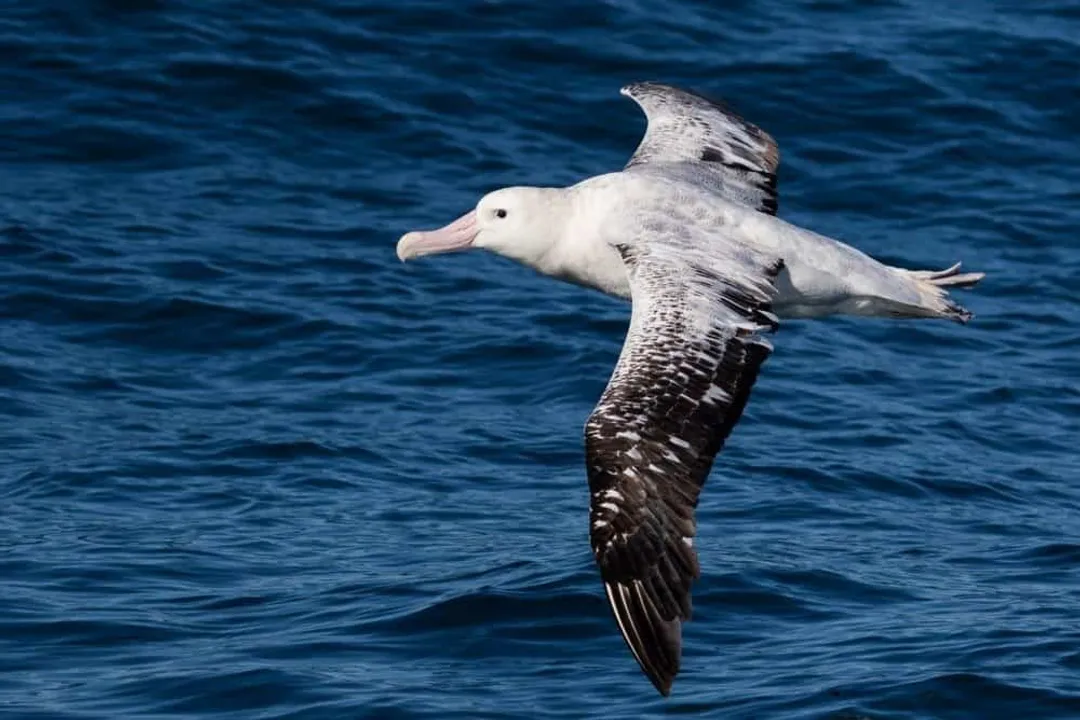
The scientific classification of the Wandering Albatross, Diomedea exulans, places this magnificent seabird precisely within the intricate tree of life, marking its place among the world’s largest flying birds. [2][5] Understanding this hierarchy—from the broadest Kingdom down to the specific epithet—reveals deep insights into its evolutionary relationships and fundamental biological characteristics. [3] The designation itself is a formal, universally accepted language that bridges geographical and linguistic gaps among researchers studying this pelagic giant. [1]
# Taxonomic Placement
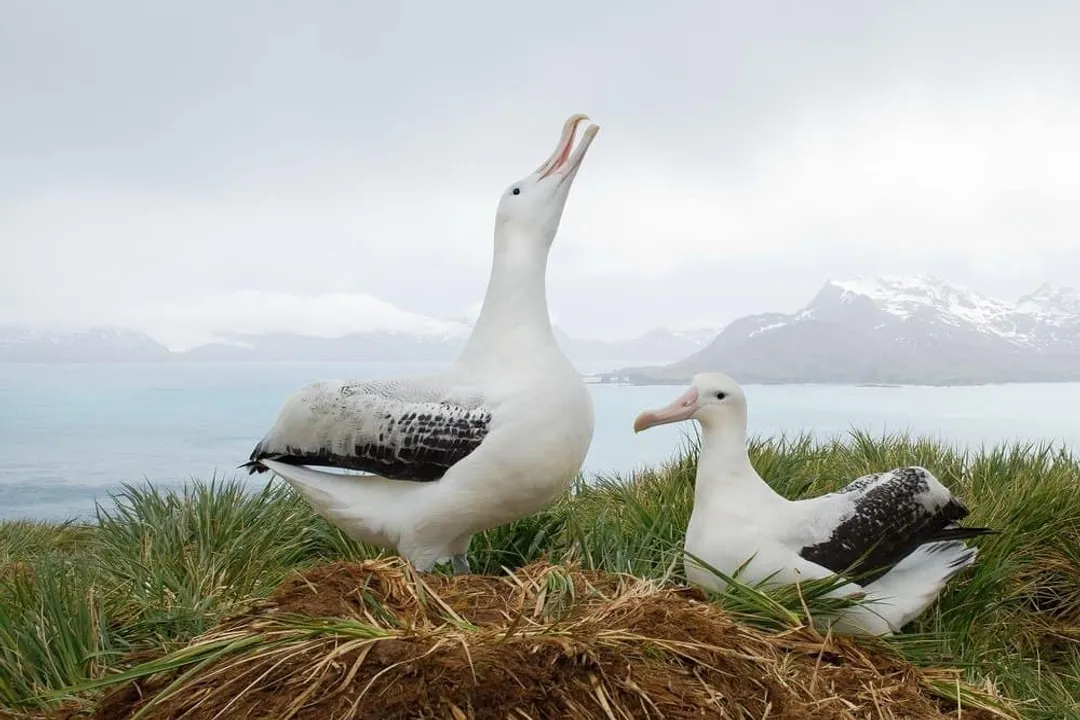
The formal structure used to categorize the Wandering Albatross follows the Linnaean system, beginning with the highest ranks that define its most basic biological nature. [2] At the top, it resides within Kingdom Animalia, signifying it is a multicellular, heterotrophic organism. [2] It belongs to Phylum Chordata, characterized by the presence of a notochord at some stage of development. [2] This places it firmly among the vertebrates. [2]
The next step down is Class Aves, the birds, defined by feathers, wings, and laying hard-shelled eggs. [2][5] These ranks are shared with virtually all other birds, but the order and family reveal the bird's unique evolutionary specialization. [3]
The order Procellariiformes groups the albatrosses with petrels and shearwaters, a classification defined by a very specific anatomical feature: their distinctive nasal tubes used for excreting excess salt consumed from seawater. [2][5] This group is often referred to as the tube-nosed seabirds. [2] Within this order, the Wandering Albatross is situated in Family Diomedeidae, the true albatrosses. [2][3][5] The features separating the Diomedeidae from other Procellariiformes often relate to size, bill structure, and nesting habits. [3]
The accepted scientific consensus places the classification as follows, though synonymy across different databases shows the fluid nature of taxonomy over time: [3][5]
| Rank | Scientific Term | Supporting Source Notes |
|---|---|---|
| Kingdom | Animalia | Multicellular, heterotrophic [2] |
| Phylum | Chordata | Presence of notochord [2] |
| Class | Aves | Presence of feathers [2][5] |
| Order | Procellariiformes | Tube-nosed seabirds [2][5] |
| Family | Diomedeidae | True Albatrosses [2][3] |
| Genus | Diomedea | The great albatrosses [2][5] |
| Species | D. exulans | The Wandering Albatross [2][3] |
# Genus Distinction
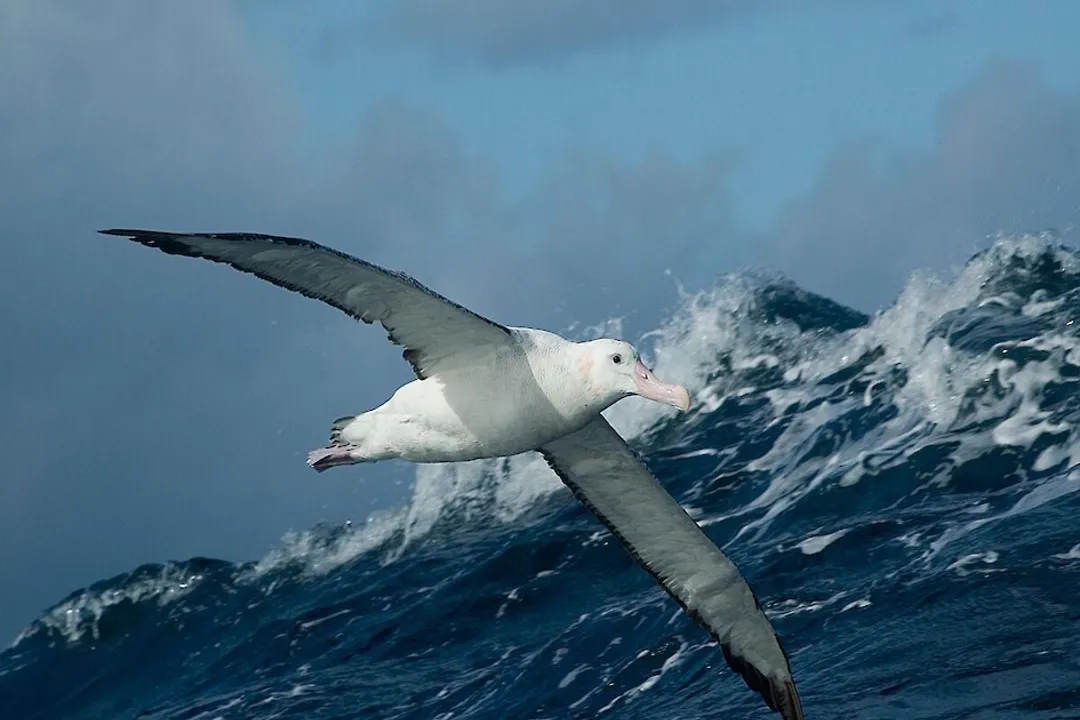
The genus Diomedea specifically identifies the great albatrosses, which are generally characterized by their immense wingspans, often exceeding three meters. [5] This genus separates them from the smaller albatrosses, such as those in the genus Phoebastria (the North Pacific albatrosses) or the mollymawks (Thalassarche). [5]
The species name, exulans, is particularly evocative, derived from the Latin word meaning "wandering" or "exiled". [2] This perfectly encapsulates the bird’s lifestyle, spending the majority of its life airborne over the vast, remote Southern Ocean, only returning to sub-Antarctic islands to breed. [2][1] Considering the sheer scale of their annual peregrinations—covering thousands of kilometers across the globe—the species name is an accurate descriptor of their existence, far removed from stable, terrestrial habitats. [2]
The relationship between Diomedea exulans and other large albatrosses has been subject to revision, often involving splitting populations into distinct species or recognizing them as subspecies based on plumage differences, size variation, and genetics. [5] For instance, Avibase details several subspecies within D. exulans, such as D. e. antipodensis, D. e. gibsoni, and D. e. chionoptera. [5] While some authorities might list these as separate species, their current inclusion under D. exulans implies a close genetic link and shared ancestry, suggesting significant interbreeding or recent divergence. [5] The continued taxonomic debate underscores the challenge in classifying widely dispersed marine species where intermediate morphologies can blur clear species boundaries. [5]
# Navigating Synonyms and Nomenclature
In the realm of taxonomy, synonyms are common, often arising when different naturalists described the same species in different locations before global communication was established, or when new morphological or genetic data suggest a reclassification. [3] The World Register of Marine Species (WoRMS) acts as an authority, typically listing one accepted name and documenting the historical synonyms. [3] For the Wandering Albatross, Diomedea exulans is the currently accepted binomial nomenclature. [3] Previous names or alternate classifications, sometimes used in older literature, might include Diomedea chrysostoma in some contexts, though D. chrysostoma is currently recognized as the Grey-headed Albatross, highlighting the potential for historical confusion between species. [3] It is crucial for researchers to verify nomenclature against current authoritative databases like WoRMS to ensure consistency in global datasets, such as those tracking migratory routes or population sizes. [3]
A point worth noting in the context of classification authority is the difference in approach between systems like Avibase, which focuses heavily on ornithological records and historical nomenclature including subspecies, and WoRMS, which focuses on marine invertebrate and vertebrate taxonomy. [3][5] While both agree on the core Linnaean placement for the Wandering Albatross, the level of detail regarding regional variants—subspecies—can vary, reflecting different scientific priorities. [5]
When we examine longevity data, which is tangentially related to classification as it speaks to species-specific life history traits, the Diomedea exulans is known for extreme longevity, with individuals estimated to live for over 50 years. [7] This long lifespan influences its reproductive rate and, consequently, how swiftly populations can respond to environmental pressures, a factor that sometimes influences conservation status assessment, which, in turn, requires an agreed-upon classification. [4]
# Insight into Classification: The Subspecies Conundrum
The recognition of subspecies like antipodensis or gibsoni within D. exulans speaks volumes about the dynamics of circumpolar life. These populations breed on geographically isolated island groups in the Southern Ocean. [5] While the parent species D. exulans is often associated with the species that has predominantly white plumage as an adult, [1] these subspecies often exhibit subtle but consistent differences in feather coloration, particularly in the amount of dark feathering on the upper wings or body. [5]
Imagine a hypothetical scenario: If ornithologists consistently observe that the antipodensis population, breeding only near the Antipodes Islands, never interbreeds successfully with the gibsoni population from the Crozet Islands, even when their foraging ranges briefly overlap, this reproductive isolation might eventually lead them to be elevated to full species status. The current classification as subspecies implies that gene flow, though perhaps infrequent, still occurs across the Southern Ocean, or that the plumage variations are recent adaptations not yet sufficient to warrant full speciation. This fine-tuning of classification based on geography and slight morphological shifts is essential for accurate conservation management, as localized subspecies might face unique threats not shared by the broader species population. [4]
# Family Characteristics
The Family Diomedeidae, to which the Wandering Albatross belongs, is defined by several shared traits beyond just being tube-noses. [2][3] These birds possess exceptionally long, narrow wings optimized for dynamic soaring, allowing them to fly vast distances using minimal energy by gliding between wind layers. [1] This adaptation is key to their pelagic life. [1] Furthermore, their large size necessitates specific nesting behaviors; they are slow to mature and typically lay only one egg every two years, placing them in the K-selected category of life history strategy. [7] The classification within Diomedeidae groups together these giants of the air, recognizing their shared evolutionary solution to surviving in the harsh, food-scarce, yet wind-rich environment of the sub-Antarctic waters. [4]
# Insight into Classification: The Need for Genomic Precision
While the classical Linnaean hierarchy based on morphology (bill structure, plumage) and geography has served well, the true authority in modern taxonomy often rests with genetics. The historical grouping of all great albatrosses into one species, D. exulans, was based on observable similarities, but modern genomic sequencing can reveal deep divergences that morphological study missed. [2] For instance, DNA barcoding might reveal that the supposed genetic exchange between the populations breeding in the Indian Ocean versus those in the Pacific is actually negligible, suggesting that what we currently classify as subspecies are, genetically speaking, already distinct lineages approaching species status. [5] The power of the current scientific name Diomedea exulans is therefore dual: it honors the historical description and acts as a placeholder until complete genomic consensus might force a split into several recognized, endemic species, each requiring its own tailored conservation plan. [4] This continuous refinement, driven by data unseen by the original namers, is why classification is a dynamic scientific endeavor, not a static label. [3]
In summary, the scientific classification of the Wandering Albatross, Diomedea exulans, anchors it securely within the tube-nosed seabirds (Procellariiformes) and the great albatrosses (Diomedeidae). [2][3][5] This naming system provides the essential foundation for global research, conservation efforts, and a universal appreciation of this remarkable flyer of the high seas. [4]
Related Questions
#Citations
Diomedea exulans - OBIS-SEAMAP Species Profile
Diomedea exulans (wandering albatross) - Animal Diversity Web
World Register of Marine Species - Diomedea exulans Linnaeus, 1758
Wandering Albatross (Diomedea exulans) | U.S. Fish & Wildlife ...
Diomedea exulans (Snowy Albatross) - Avibase
Wandering Albatross Bird Facts - Diomedea exulans - A-Z Animals
Wandering albatross (Diomedea exulans) longevity, ageing, and life ...
Wandering albatross - Australian Antarctic Program
Wandering albatross species complex (Complex Diomedea exulans)