Vermilion Flycatcher Locations
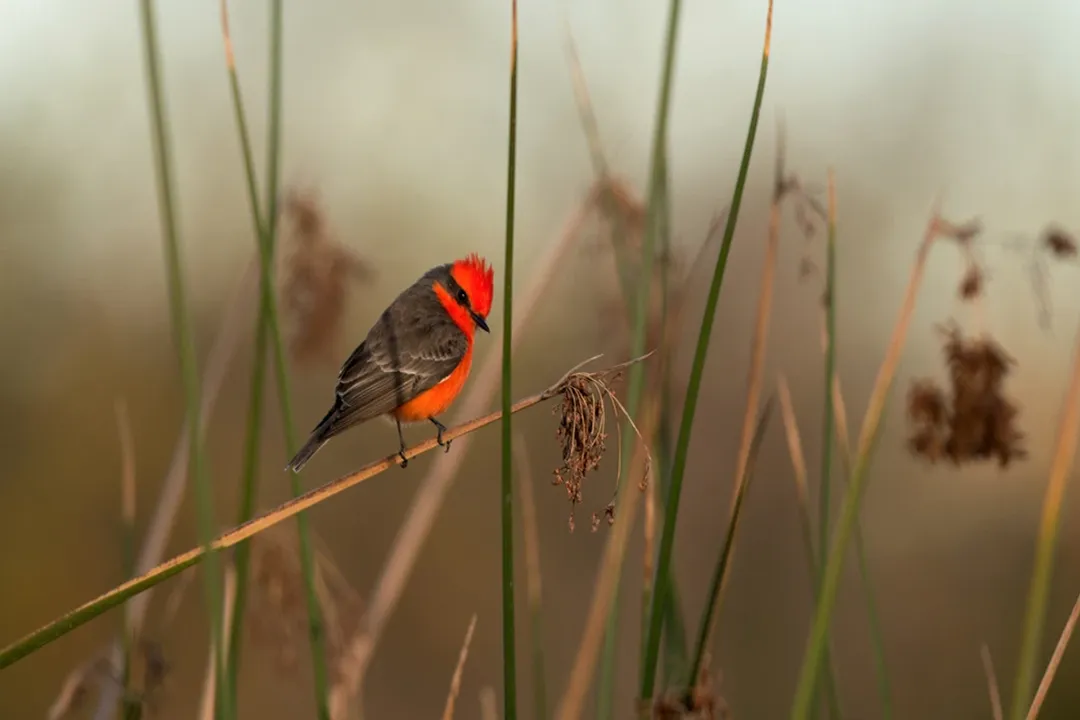
The Vermilion Flycatcher, a dazzling exception to the generally muted palette of the tyrant flycatcher family, captures the eye of any birder lucky enough to spot its vibrant male. Its genus name, Pyrocephalus, fittingly translates to "fire-headed". [5] While this striking species has a massive range spanning from the southwestern United States well into South America, pinpointing where you might find them requires understanding the nuances of their specific habitat needs across those vast distances. [2][5]
# Global Distribution
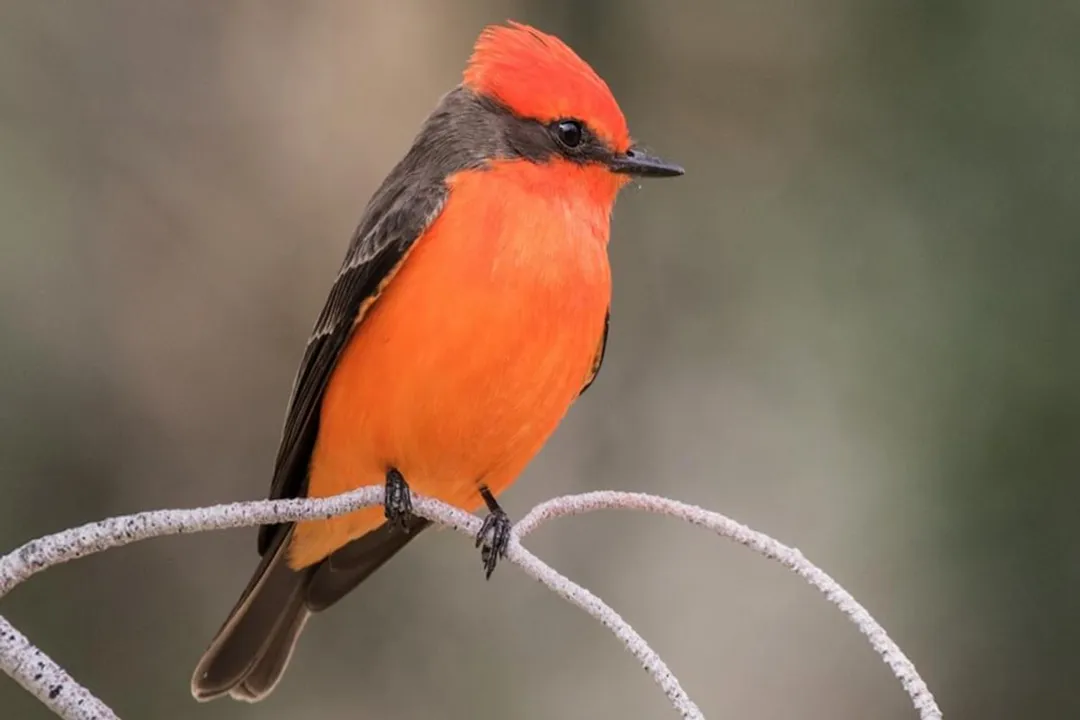
The overall distribution of the Vermilion Flycatcher (Pyrocephalus obscurus or Pyrocephalus rubinus, depending on the taxonomic interpretation) covers nearly all of Mexico, extending north into the southern reaches of the United States, and south through scattered parts of Central America and into northwestern and central South America. [2][5] This widespread colonization of the Americas is likely aided by the species’ ability to migrate. [2] Despite this broad coverage, in North America, the bird is most conspicuous and common in the Southwest. [5] Historically, vagrants have been recorded as far north as Canada. [2]
# North American Strongholds
In the United States, the breeding range is generally confined to the arid and semi-arid regions of the Southwest. [2][6] The primary breeding locations include southeastern California, southern Arizona, southern New Mexico, and west-central Texas. [6] The bird is known for frequenting open areas near water, sitting on exposed perches low to the ground, often within about 10 feet of the surface, making them relatively easy to spot in their preferred open country. [5] In Arizona, especially around Tucson, the species reaches its highest density in the US, inhabiting urban parks adjacent to riparian areas. [8] For those hoping to find them at the northern edge of their distribution, Montana only holds a single historic winter sighting, underscoring how localized the species is to warmer climates. [6]
# Texas Hotspots
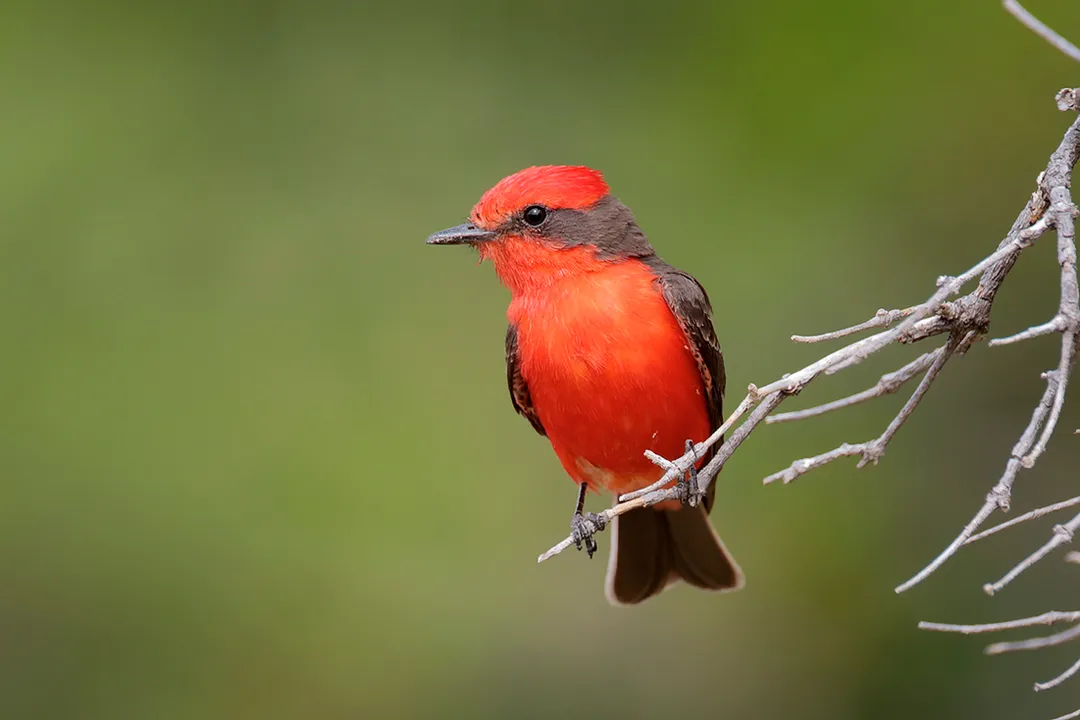
Texas represents a significant portion of the species’ northern range, though its presence here is complex and somewhat irregular near the far northern and eastern limits. [1] Breeding territory generally encompasses the southern two-thirds of the Trans-Pecos region, reaches the Edwards Plateau as far north as Midland and Abilene, and covers most of South Texas. [1] The greatest concentrations of pairs in Texas are typically found in the western Edwards Plateau and the brushlands of South Texas. [1] The Balcones Escarpment forms the approximate eastern boundary, though the bird tends to avoid the heavily wooded canyonlands just west of Interstate 35 between Austin and San Antonio. [1] Interestingly, the more humid coastal areas, like the Coastal Bend, generally lack regular breeding pairs, save for isolated spots in southern Kenedy, Willacy, and eastern Cameron counties. [1] The species withdraws in late summer to winter primarily along the Rio Grande and eastward along the coast, though migratory routes are not well-defined, and they are exceptionally prone to vagrancy throughout the rest of the continent. [1]
# California Patterns
California offers a case study in habitat alteration and range contraction, though local pockets of activity remain. The historical breeding core was the Colorado Desert, including the Imperial Valley and the lower Colorado River valley, where they were once considered "fairly common". [7] However, changes to water management and massive loss of cottonwood-willow riparian habitat have caused sharp declines in the lower Colorado River valley, though the area remains the species’ stronghold in the state. [7] In the Coachella Valley, breeding has ceased entirely, and the Imperial Valley now only supports them as a "rare" breeder. [7] Simultaneously, the range has expanded locally into the Mojave Desert and the southern coast, with recent nesting records at locations like golf courses in Victorville and isolated ranch yards. [7] When looking for these flycatchers in the periphery of their known range, whether in the expanding Mojave or at the edges of their Texas range, remembering their absolute requirement for water is key; focus your search on isolated ponds, water tanks, or even troughs on ranchlands, as these local features often create the necessary micro-habitat islands where they will settle even if the larger, natural riparian corridors are gone. [1][7] Furthermore, a few individuals from the northern US population do winter along the California coast, particularly in San Diego County. [4][7]
# Residency Migrations
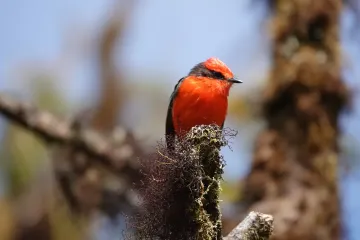
A key difference in location behavior relates to latitude. North American populations are largely resident, though birds at the northern edge of the US range will migrate south into Mexico for the winter. [4] A few individuals might linger along the Gulf or California coasts during winter. [3][4] In contrast, the South American populations, particularly those farther south, undertake substantial migrations northward during the austral winter, sometimes traveling up to 4,000 km to avoid temperatures dipping below freezing. [2] This results in a fascinating pattern where the bird is found year-round in the core of its US range (Arizona, southern Texas), yet farther south on its continent, it behaves as a long-distance migrant. This difference in movement likely reflects localized environmental pressures—the reliable, if arid, US desert setting fosters residency near permanent water, whereas the extensive South American dry season forces a massive northward retreat. [2]
# Habitat Requirements
Regardless of whether they are breeding in Arizona, Texas, or farther south, the habitat requirements remain strikingly consistent: woodland groves near water. [1] They favor open areas, avoiding dense forest growth. [7] Look for them in savannas, arid scrub, agricultural fields, or riparian corridors lined with trees like cottonwood, willow, or mesquite, as long as surface water is immediately accessible. [5][8] Even in developed areas like parks or golf courses, they require trees with horizontal forks near a pond or stream edge for nesting and foraging perches. [3][7] For the observer hoping to see the spectacular red male, finding the right intersection of aridity, openness, and surface water is more critical than the exact state or county line.: [1] https://txtbba.tamu.edu/species-accounts/vermilion-flycatcher/: [2] https://en.wikipedia.org/wiki/Vermilion_flycatcher: [3] https://www.audubon.org/field-guide/bird/vermilion-flycatcher: [4] https://www.allaboutbirds.org/guide/Vermilion_Flycatcher/maps-range: [5] https://www.allaboutbirds.org/guide/Vermilion_Flycatcher/overview: [6] https://fieldguide.mt.gov/speciesDetail.aspx?elcode=ABPAE36010: [7] https://nrm.dfg.ca.gov/FileHandler.ashx?DocumentID=10412: [8] https://tucsonbirds.org/bird_profile/vermilion-flycatcher/
Related Questions
#Citations
Vermilion Flycatcher Range Map - All About Birds
Vermilion Flycatcher | Audubon Field Guide
Vermilion flycatcher - Wikipedia
Vermilion Flycatcher - Montana Field Guide
[PDF] Vermilion flycatcher (Pyrocephalus rubinus)
Vermilion Flycatcher - Tucson Bird Alliance
VERMILION FLYCATCHER | The Texas Breeding Bird Atlas