What constitutes the primary non-breeding habitat for this species when not nesting?
Answer
The Southern Ocean
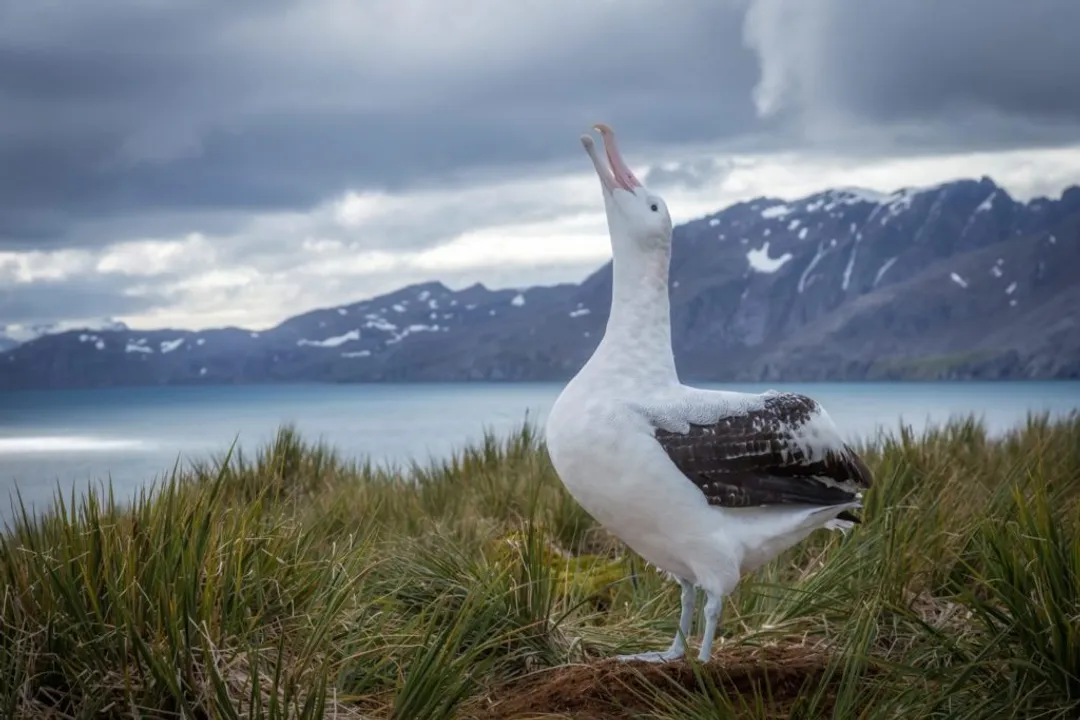
When the demands of tending to a nest and chick are finished, the Wandering Albatross transitions fully into its life as a pelagic wanderer. Its home range during these non-breeding periods is defined by the vast expanse of the Southern Ocean. Tracking data confirms that individuals widely distribute themselves across the Atlantic, Indian, and Pacific sectors of this ocean. While they often remain south of $50^ ext{o}$ S, their foraging routes are dynamic, leading them globally within this preferred southern zone, sometimes venturing close to the ice edge and other times much further north depending on local food sources like upwellings.
Related Questions
What is the maximum wingspan achieved by the Wandering Albatross?Which specific oceanographic boundary dictates the waters surrounding Wandering Albatross breeding colonies?Which island group is confirmed as a key breeding location for the Wandering Albatross?What is the approximate frequency for raising a single chick by an adult Wandering Albatross?What latitude bands define the strong westerly winds utilized by the Wandering Albatross for gliding?What constitutes the primary non-breeding habitat for this species when not nesting?Where is the highest probability for observers to spot a Wandering Albatross at sea?What is the characteristic nesting fidelity displayed by an adult Wandering Albatross?What sea condition increases the chance of an offshore encounter with the Wandering Albatross?How does the geographical scope of Wandering Albatross foraging contrast with its land-based reproductive area?