Wandering Albatross Evolution
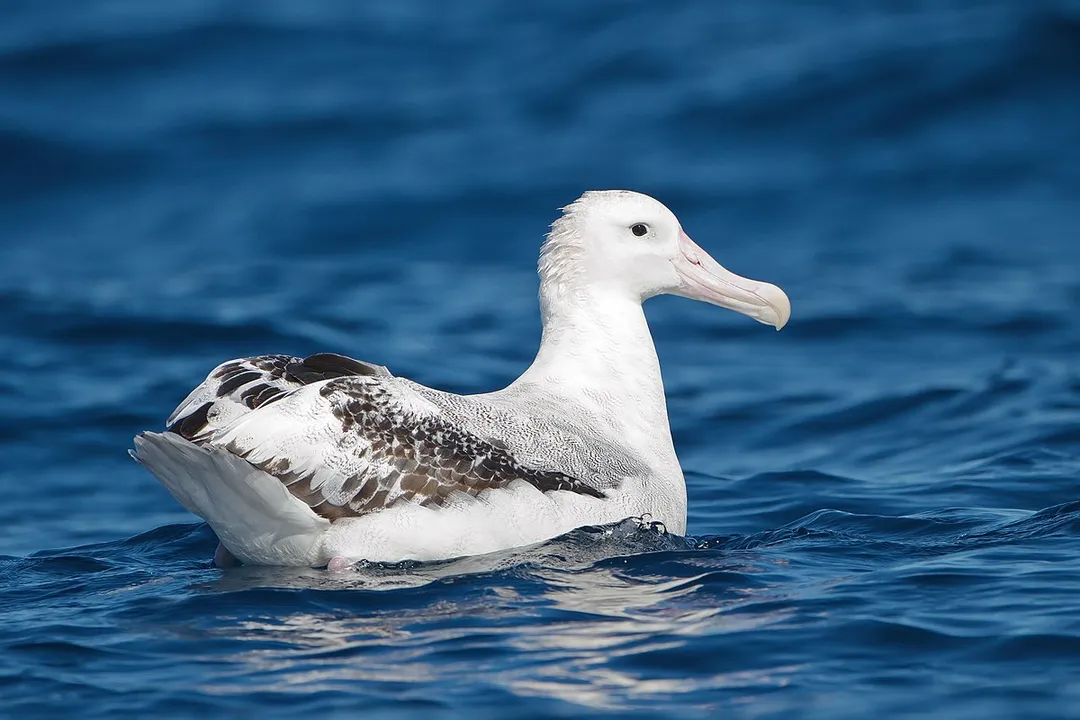
The life of the Wandering Albatross (Diomedea exulans) represents one of nature’s supreme achievements in aerodynamic efficiency, a testament to millions of years of adaptation to the planet’s most extreme oceanic environment. With a wingspan that can stretch to an astonishing $3.5$ meters, this giant is perfectly engineered for the relentless winds of the Southern Ocean, spending the majority of its life airborne over the vast expanse of the globe. [1][4] However, looking closely at this seemingly unified species reveals a complex evolutionary history marked by subtle yet significant differences in plumage, breeding cycles, and geography, prompting scientists to question where the boundaries of this magnificent bird truly lie.
# Species Delimitation
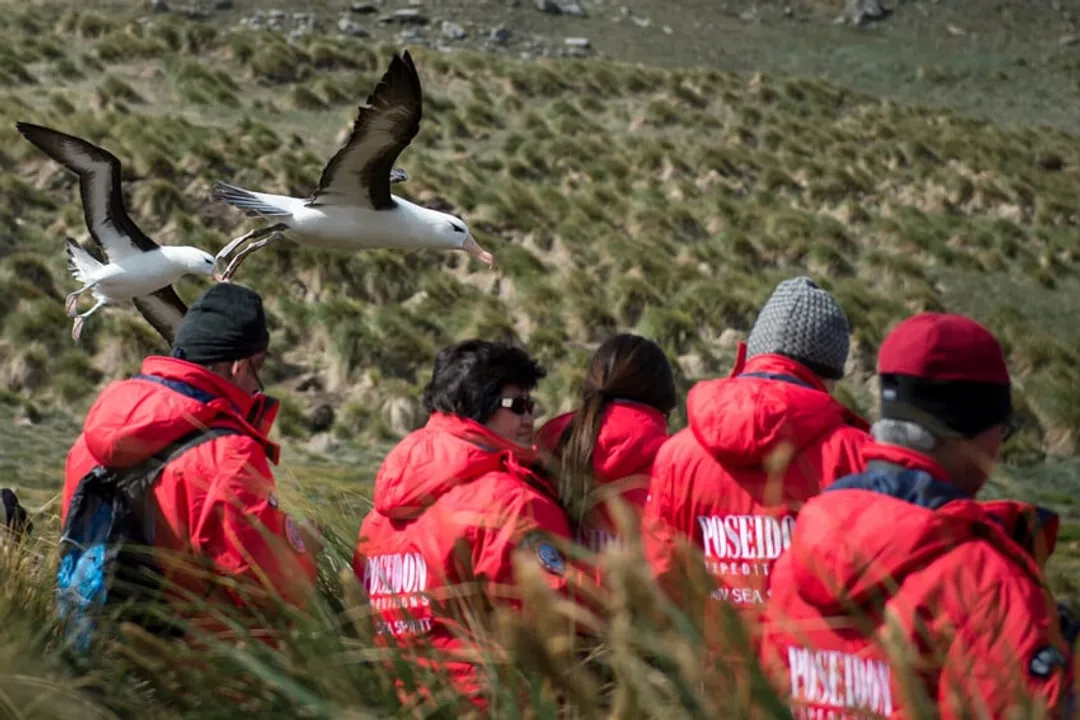
For decades, the name Diomedea exulans served as a blanket term for the largest albatrosses found circumpolarly across the Southern Ocean. [3] This traditional view encompassed a wide spectrum of individuals, from near-white adults to heavily mottled juveniles. More recent genetic and morphological investigations, however, suggest that this single species designation might mask several distinct evolutionary lineages facing different ecological pressures. [6]
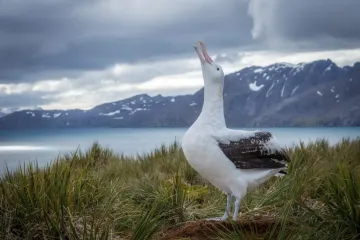
The most significant point of contention centers on the recognition of the Snowy Albatross (Diomedea antipodensis or sometimes Diomedea exulans antipodensis) as a separate species. [2] The physical distinctions are clear indicators of divergent evolution. The classic Wandering Albatross typically exhibits extensive dark coloration on the wings, particularly prominent black tips, and maintains a biennial breeding cycle—nesting every two years. [2] In contrast, the Snowy Albatross is far whiter, particularly the females, and critically, it has evolved to breed on an annual cycle. [2] Furthermore, the Snowy Albatross generally possesses a smaller wingspan, averaging around $3.1$ meters, compared to the Wandering Albatross's maximum of $3.5$ meters or more. [2][4]
This difference in breeding frequency is not a minor detail; it suggests substantial ecological divergence. A biennial breeder, like the traditional Wandering Albatross, must prioritize foraging efficiency and survival during the long gap between breeding seasons, perhaps investing more in flight efficiency across wider feeding grounds. An annual breeder, conversely, is under intense pressure to return and reproduce quickly, which might favor more localized, predictable foraging strategies or require different physiological investment in egg production. [2] The classification proposal stemming from this complex suggests recognizing up to four distinct species within what was once D. exulans, including D. antipodensis and D. gibsoni, based on these plumage and breeding differences. [6] This active re-evaluation speaks directly to the ongoing process of evolutionary change and species formation within the group.
# Plumage Evolution
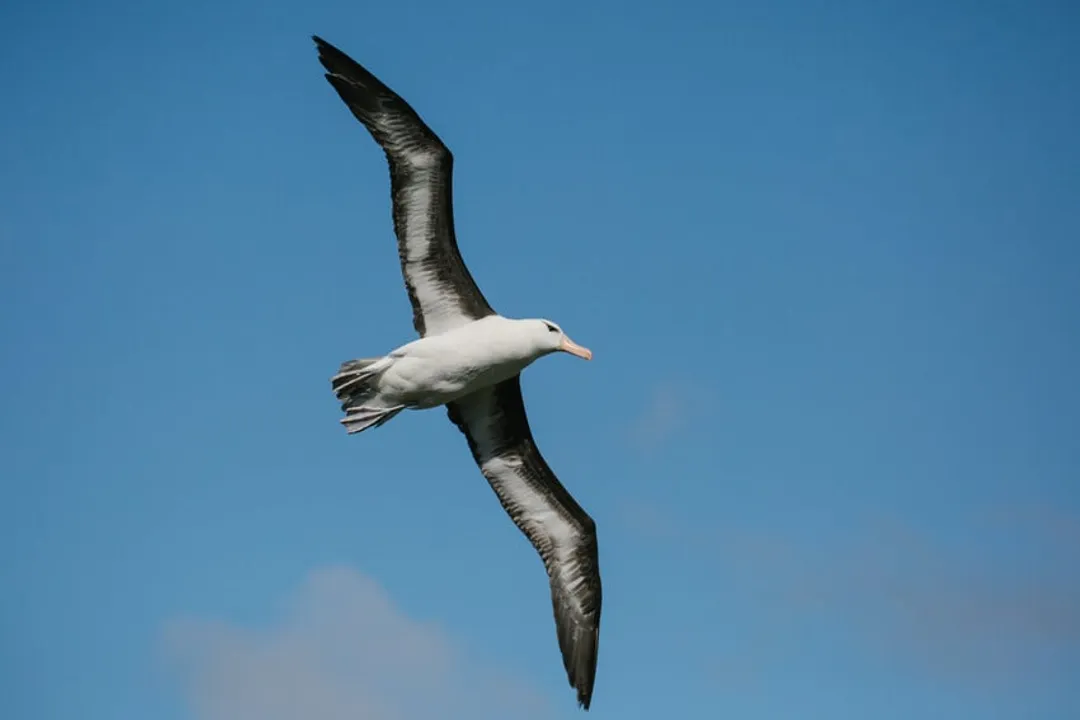
The striking variation in feather coloration, from dark brown with white flecks in younger birds to almost entirely white in older males, has long fascinated ornithologists. This age-related darkening and lightening process is not random; it appears tightly linked to the bird's life history and foraging success. [8]
Studies analyzing the relationship between bill size, feather pigmentation, and life history traits suggest that plumage pattern plays a role in the bird’s ecological niche. [5] While the most visible change is maturation—the development of lighter plumage correlated with age—the underlying advantage conferred by specific feather darkness remains an area of significant interest. One analysis suggests a correlation between darker plumage and greater foraging efficiency, though the exact mechanism driving this evolutionary advantage needs further clarification, perhaps relating to age, maturity, or specific feeding ground preferences. [5][8] Imagine a young bird, still honing its vast-circle soaring skills, sporting darker feathers that somehow aid navigation or camouflage against the water’s surface during its initial years of independence, while older, more experienced birds gain lighter plumage as a display of reproductive fitness. [8]
When comparing the D. exulans complex, the differences in pigmentation become species-level markers. The Snowies (D. antipodensis) are dramatically lighter overall compared to the standard Southern Ocean Wanderers, indicating that selective pressures in their specific breeding zones (like the Antipodes and Auckland Islands) have favored a phenotype that diverges significantly from the heavily mottled southern populations. [2]
# Mastery of Flight

The evolutionary success of the Wandering Albatross is inextricably linked to its specialized flight mechanism, known as dynamic soaring. This technique allows the bird to gain energy by exploiting the wind shear gradient just above the ocean's surface, utilizing the difference in wind speed between the air near the water and the air higher up. [4]
This ability is not just about having long wings; it requires precise biomechanical control and an innate understanding of atmospheric physics. The sheer aspect ratio—the long, narrow shape of the wing—is the physical manifestation of this adaptation, minimizing induced drag essential for covering thousands of kilometers with minimal caloric expenditure. [3] The evolution of this specialized flight mode has opened up the entire circumpolar Antarctic Ocean as a viable foraging habitat, a massive resource base unavailable to less efficient flyers.
Thinking about this incredible efficiency reveals an interesting evolutionary constraint. A species so perfectly adapted to low-energy, long-duration flight might be slower to adapt to sudden, dramatic environmental shifts. For instance, if prey distribution drastically changes due to climate warming, the energy cost associated with rerouting a search pattern—even for a supremely efficient flyer—is immense compared to a bird that relies more on active flapping or less expansive search areas. Their evolutionary specialization creates a high initial performance but potentially low flexibility when faced with unprecedented, rapid environmental heterogeneity. [1]
# Population Structure and Isolation

While the Wandering Albatross is famous for its global range, tracking studies reveal that populations, even within the general D. exulans group, do not mix freely. This philopatry—the tendency to return to the place of birth to breed—is a fundamental mechanism driving evolutionary divergence, as it leads to localized gene pools facing unique environmental challenges. [7]
Recent tracking data highlights fascinating differences even between islands relatively close to one another in the Southern Indian Ocean. For example, birds banded on the Crozet Islands have demonstrated migratory patterns that differ markedly from those originating at the Kerguelen Islands. [7] While both groups inhabit the broader Southern Ocean, their precise foraging grounds and the extent of their oceanic wanderings appear distinct. The Crozet birds might favor certain sectors of the Atlantic or Pacific, while the Kerguelen birds stay more consistently within the Indian Ocean basin, or at least display different average route preferences. [7]
If these migratory routes translate into different resource bases or different exposure levels to persistent threats like fisheries bycatch, this localized behavior acts as a reproductive barrier, even without a physical ocean separating them. Over evolutionary time, this isolation can lead to the formation of distinct subspecies or even full species, mirroring the split seen with the Snowy Albatross. [6][7] The evolution here isn't a grand, singular sweep, but rather a collection of small, independent adaptations occurring across widely separated colonies responding to subtle, regional oceanographic variations.
# Life History Trade-offs
The Wandering Albatross possesses one of the slowest reproductive schedules of any bird. They typically take about five to six years to reach sexual maturity, and they breed only every other year, spending an entire year recovering and preparing for the next reproductive effort. [4] This low reproductive output is the evolutionary trade-off for their immense lifespan and phenomenal survival rate while at sea.
This slow life history strategy is another evolutionary marker. It suggests that natural selection has historically favored longevity and survival over fecundity (the number of offspring produced). In the stable, resource-rich, but vast Southern Ocean, ensuring an individual bird lives long enough to successfully breed over many decades was a more successful strategy than producing many chicks that might succumb to early mortality. [4]
However, this successful ancient strategy becomes a profound vulnerability in the modern era. When faced with new, sharp threats—like longline fishing mortality—the slow turnover rate means populations take decades, sometimes centuries, to recover from significant declines. This constraint shapes how the species responds to anthropogenic change; unlike a species that reproduces annually, the D. exulans complex has evolved a very low capacity for rapid demographic rebound, making conservation efforts intrinsically challenging. [1][4] The evolutionary path that favored maximizing individual life length now risks preventing the persistence of the lineage itself.
The study of the Wandering Albatross evolution, therefore, is less about tracing a single branching path from a common ancestor millions of years ago and more about observing speciation and adaptation in process today. From the ancient perfection of dynamic soaring to the contemporary debate over species boundaries based on breeding cycles, this bird serves as a living example of how extreme specialization shapes a lineage over time, setting the stage for both unparalleled success and unique modern fragility. [5][6]
| Trait | Wandering Albatross (D. exulans sensu stricto) | Snowy Albatross (D. antipodensis) | Evolutionary Implication |
|---|---|---|---|
| Average Wingspan | Up to | Approximately | Size divergence reflecting potential different oceanic zones or foraging demands. [2][4] |
| Plumage | Heavily mottled/darker wings, especially when younger | Predominantly white | Different selective pressures on camouflage or signaling across regions. [2][5] |
| Breeding Cycle | Biennial (every two years) | Annual | Major life history divergence indicating differential pressure on reproductive timing. [2] |
This complex of giant petrels demonstrates how habitat specialization—in this case, the entire Southern Ocean—can lead to subtle differentiation across populations that remain geographically connected via shared airspace but functionally separated by breeding site fidelity and subtle behavioral differences. [7]
Related Questions
#Citations
[PDF] The Wandering Albatross
Snowy albatross - Wikipedia
Wandering Albatross Facts - Poseidon Expeditions
Wandering albatross - Australian Antarctic Program
Patterns of aging in the long-lived wandering albatross - PMC
Split Diomedea exulans into four species
Travel, or rather stay at home? Wandering Albatrosses from the ...
Lifetime foraging patterns of the wandering albatross
Albatrosses - Seabird Tracking Database