What is the typical coloration of the plumage displayed by juvenile Wandering Albatrosses when they fledge?
Answer
Largely covered in dark, sooty brown or almost black plumage
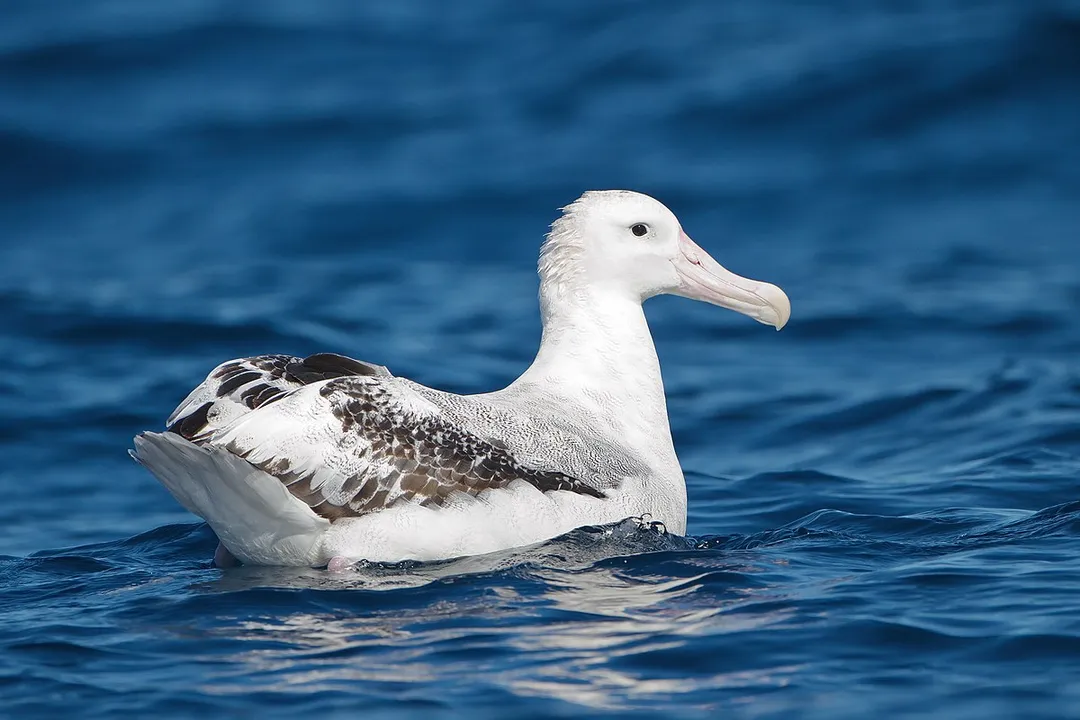
Upon fledging, the juvenile Wandering Albatross exhibits a striking contrast to the iconic adult appearance. Its entire body is generally covered in dark, sooty brown or nearly black feathers. This dark coloration serves a purpose, potentially offering protective camouflage against potential predators in the early stages of life, or it may simply reflect the initial high saturation of melanin before the demanding physiological process of maturation and sustained flight begins to transition the feathers toward lighter hues. This dark phase is temporary, as the bird undergoes a slow molt over several years.
Related Questions
What measurement places the Wandering Albatross in the record books regarding its wingspan?What technique allows the Wandering Albatross to travel vast distances without flapping its wings for hours or days?What is the typical coloration of the plumage displayed by juvenile Wandering Albatrosses when they fledge?What specific feature of the Wandering Albatross bill provides the necessary grip for feeding on carrion or prey?What is the heaviest recorded weight, in kilograms, cited for a Wandering Albatross specimen?How do the legs and feet of the *Diomedea exulans* primarily differ in design purpose compared to walking birds?What term describes the ratio of wingspan to wing chord mentioned in relation to the albatross's flight efficiency?What distinguishes the body length measurement of 107 to 130 centimeters on the Wandering Albatross?How does the plumage of mature male Wandering Albatrosses typically differ from that of mature females?What characteristic hue is given to the robust bill of the Wandering Albatross?