What key adaptation serves a dual purpose for D. viridis in the canopy environment?
Answer
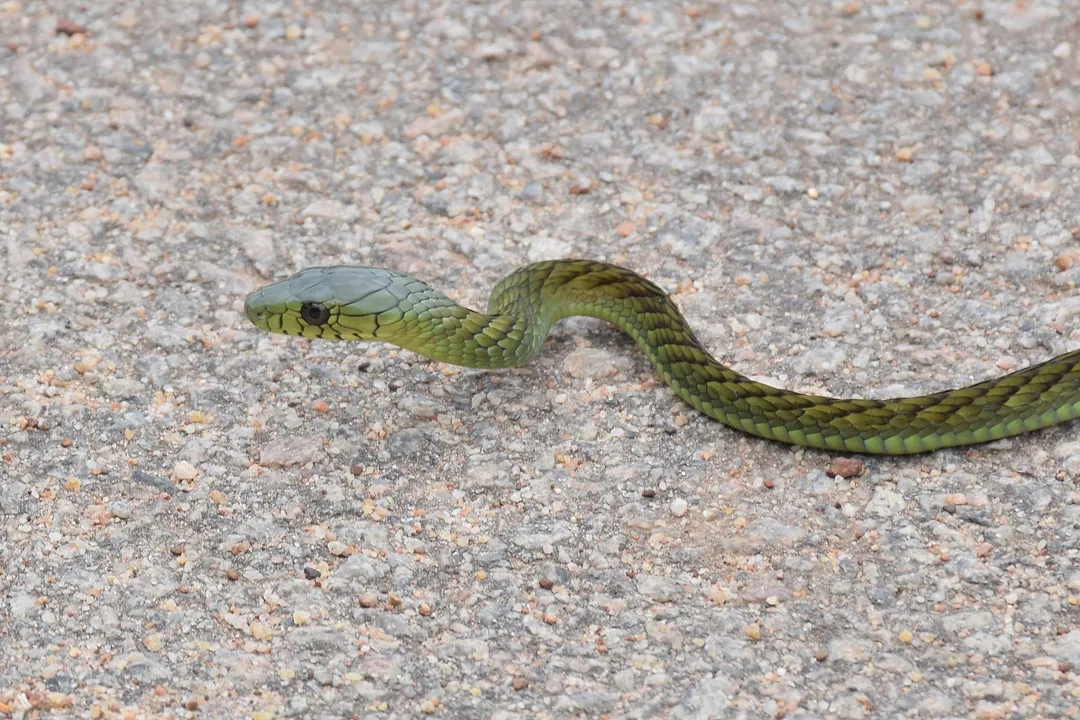
The evolution of near-perfect green camouflage
The vibrant green coloration possessed by *Dendroaspis viridis* is not merely an aesthetic trait but a critical evolutionary adaptation serving multiple vital functions within its ecosystem. Firstly, it is essential for ambush predation, allowing the snake to blend seamlessly with the foliage while waiting for arboreal prey such as birds or squirrels. Secondly, this same camouflage mechanism serves as a primary defense strategy, allowing the snake to evade detection by visual hunters, such as raptors or larger canopy carnivores, thereby increasing survival rates for both adults and more vulnerable juveniles.
#Videos
GREEN MAMBA MADNESS + @BrianBarczyk!!! - YouTube
Related Questions
How does Dendroaspis viridis habitat preference differ from Dendroaspis polylepis?What coloration characteristic contrasts D. viridis with the terrestrial Black Mamba?What does the genus name Dendroaspis roughly translate to?What primary physiological system is targeted by the neurotoxic venom of D. viridis?Which nation is specifically listed as part of the West African distribution map for Dendroaspis viridis?What evolutionary pressure shapes the specialized musculature of D. viridis for movement?What key adaptation serves a dual purpose for D. viridis in the canopy environment?What is the likely implication of the consistent bright green coloration across the wide West African range of D. viridis?Which food sources are primarily noted as composing the diet of the Western Green Mamba?What change in appearance is noted for juvenile D. viridis individuals compared to adults?