Western Green Mamba Evolution
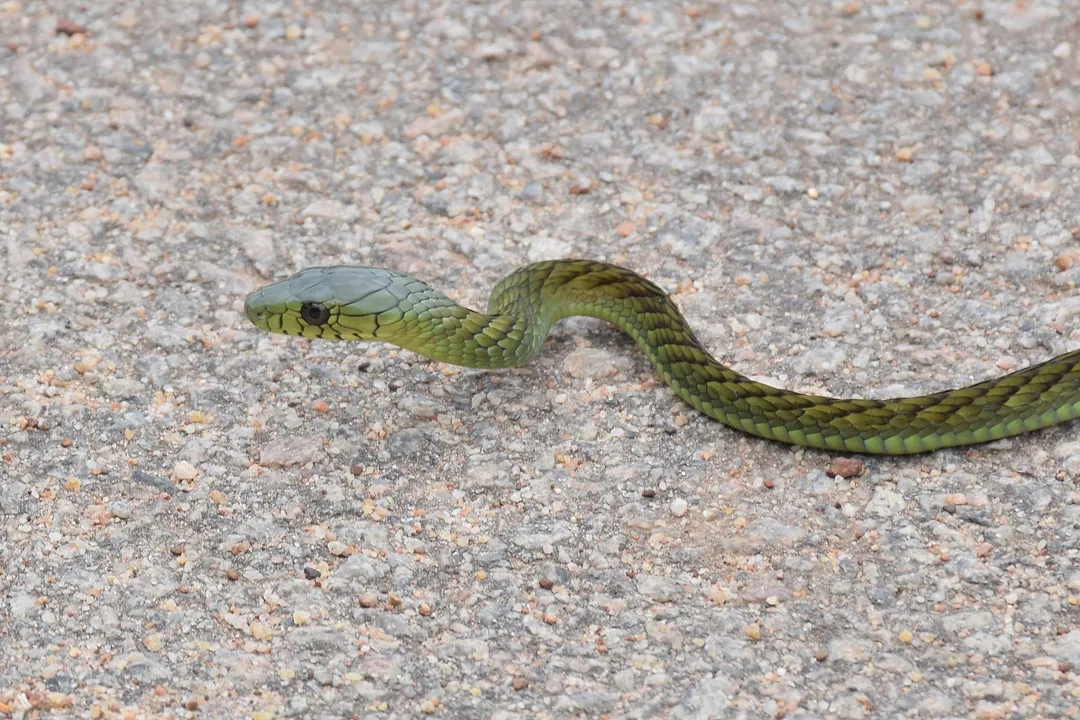
The Western Green Mamba, Dendroaspis viridis, occupies a specialized niche within the elapid family, sharing the genus Dendroaspis with its more infamous relatives, the Eastern and Black Mambas. [1][2] While often overshadowed by the notoriety of its cousins, the study of D. viridis provides insight into how evolutionary pressures shape morphology, behavior, and venom profile within a closely related group. [1] This species is characterized by its distinct coloration, which contrasts with the typically drab appearance of many other terrestrial African snakes, suggesting a strong reliance on its arboreal existence for survival. [4]
# Snake Kinship
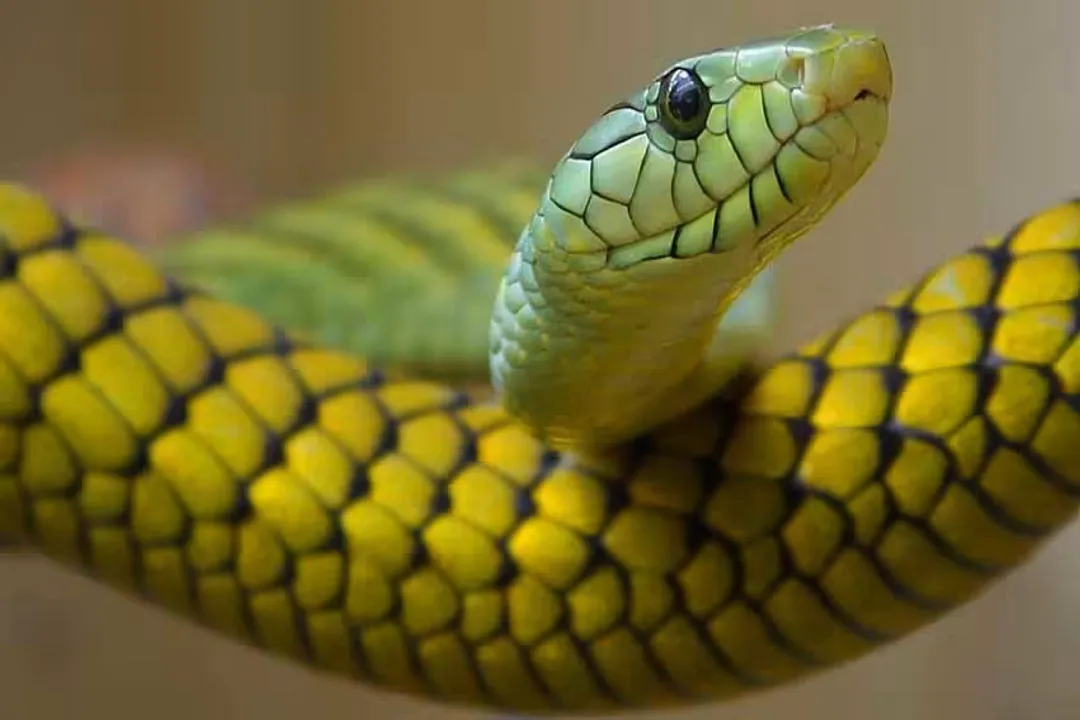
The classification of the Western Green Mamba places it firmly within the genus Dendroaspis, which translates roughly to "tree snake" or "tree cobra," highlighting the ancestral link to arboreal life shared by the genus members. [2][5] Despite this shared lineage, D. viridis is separated taxonomically from the Eastern Green Mamba (D. angusticeps) and the Black Mamba (D. polylepis), indicating significant divergence over evolutionary time. [1] This divergence likely stems from geographic isolation and subsequent adaptation to differing habitats and prey bases across the African continent. [4] While all mambas possess potent venom, the specific composition and efficacy often vary between species, a reflection of differing co-evolutionary dynamics with their local prey fauna. [6]
The common name itself, "Western Green Mamba," anchors its identity to its primary distribution area in West Africa, differentiating it from the East African populations that host the Eastern Green Mamba. [1] This geographical separation is the fundamental driver behind the distinct evolutionary paths taken by these species after their common ancestor split. [6]
# Western Range
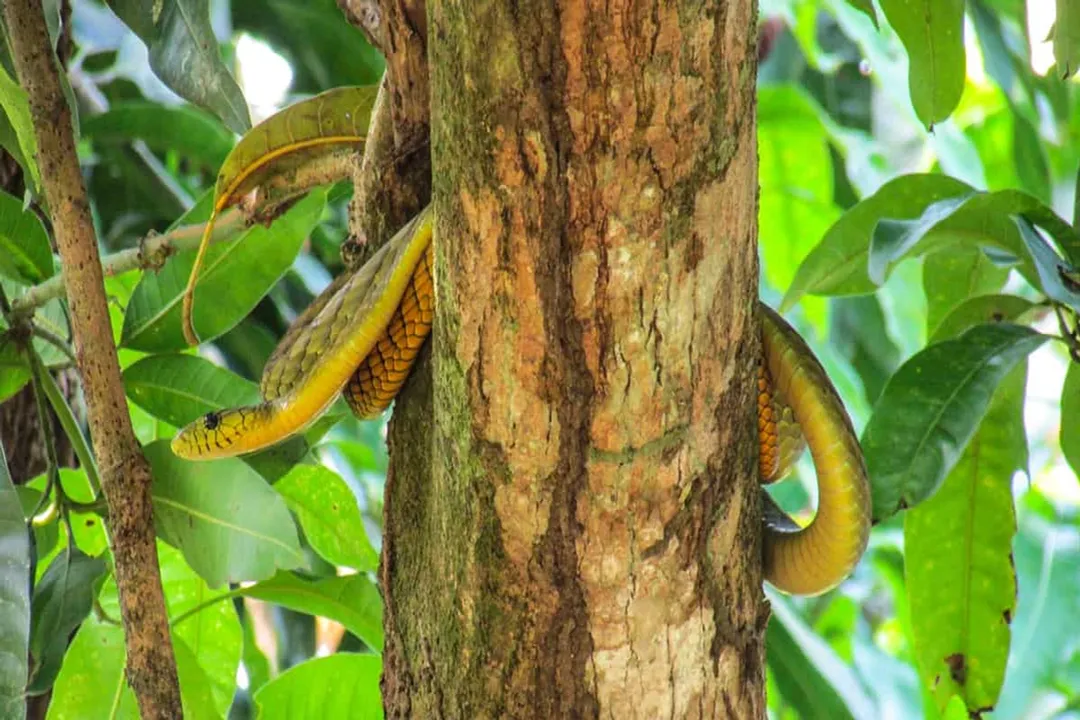
The distribution map for Dendroaspis viridis clearly delineates a region spanning West Africa, encompassing countries such as Sierra Leone, Liberia, Guinea, Ivory Coast, Ghana, and Nigeria. [1][6][9] This range is characterized by dense, moist forests and heavily wooded areas. [1] Unlike the highly adaptable Black Mamba, which has successfully colonized drier savanna environments across a vast swath of sub-Saharan Africa, the Western Green Mamba appears more restricted to the tropical rainforest belt. [1][6] This adherence to dense canopy suggests that its physiology and behavior are finely tuned to an arboreal lifestyle, offering limited selective advantage in more open, arid settings. [4]
The consistency of the bright green coloration across this wide West African range is noteworthy. It suggests either a relatively recent divergence within this population or, alternatively, strong stabilizing selection pressures related to camouflage that function effectively across the various types of dense, sun-dappled West African canopy environments. If the habitat varied significantly, one might expect to see more pronounced pattern or color mutations emerging across the subspecies, similar to variations observed in other widely distributed arboreal reptiles. [1][4]
# Coloration Details
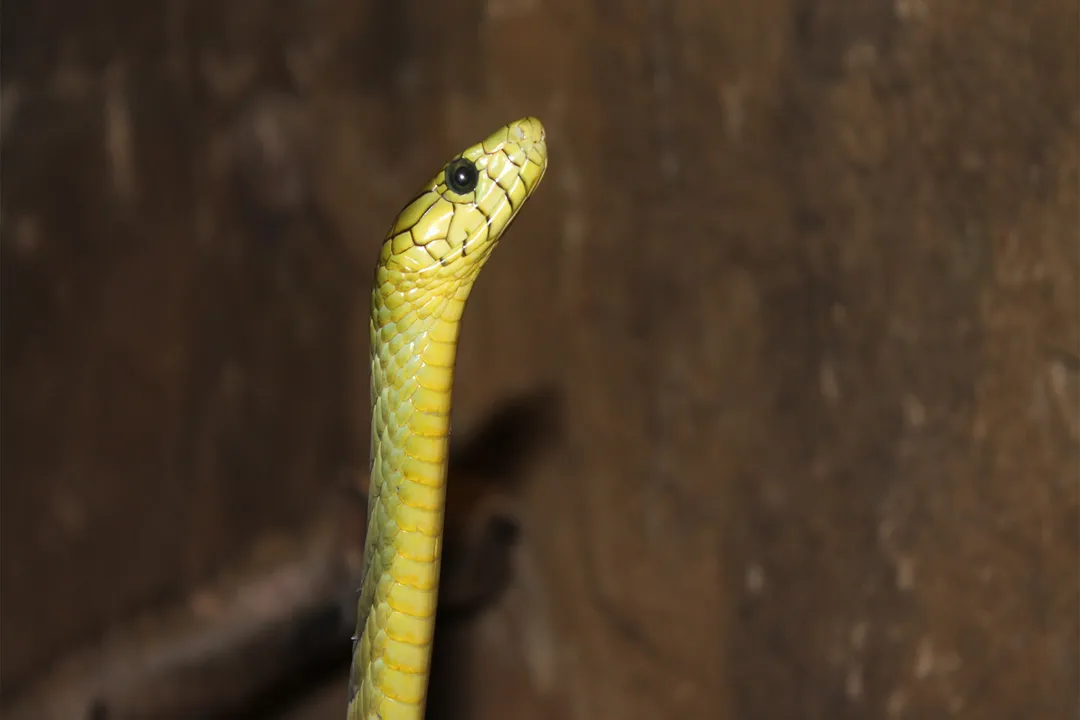
Perhaps the most immediately striking feature of Dendroaspis viridis is its vibrant, uniform green hue, which serves as exceptional camouflage amongst foliage. [4][5] This contrasts sharply with the black or brown coloration that characterizes the terrestrial Black Mamba. [1] The intensity of the green can sometimes vary, occasionally presenting as a more yellowish-green or displaying slight darker mottling, especially in younger individuals or under certain lighting conditions. [4][5]
A key aspect of its appearance, noted by those observing the species in captivity, is the change in appearance as the snake matures. [10] While juveniles might exhibit slight variation, the adult coloration solidifies into the characteristic bright green, optimizing its visual blending within the high branches where it spends the majority of its time. [4] This reliance on visual camouflage is a direct result of selection favoring individuals whose appearance allowed them to ambush prey or evade larger canopy predators undetected. [3]
# Arboreal Specialization
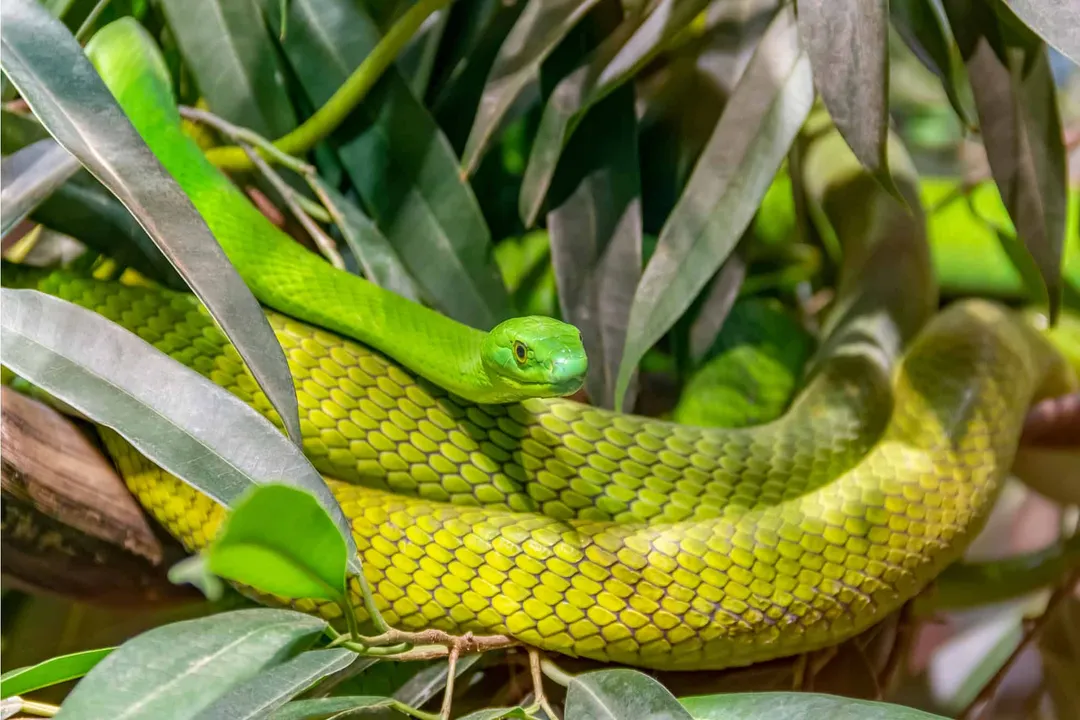
The Western Green Mamba is fundamentally an arboreal species, a trait heavily favored by the evolutionary pressures of the dense rainforest ecosystem. [1][4] It possesses a slender, elongated body, which contributes to its agility in the trees. [4][5] This body plan is indicative of a life spent navigating thin branches and making long leaps between foliage, demanding specialized musculature and coordination. [1]
When considering the kinetic demands of this habitat, one can infer that successful survival and hunting success rely heavily on the swift generation of vertical and horizontal velocity from tree to tree. This implies that the musculature and skeletal structure of D. viridis have been shaped by strong selection favoring explosive speed over sustained terrestrial locomotion, differentiating its energetic requirements from ground-dwelling snakes in the same biome. [6] Furthermore, the grip and stability required for rapid movement through the canopy necessitate adaptations in its scales or musculature that aid purchase on slick or narrow surfaces, even if not explicitly listed as major diagnostic features.
# Danger Profile
Like all members of its genus, the Western Green Mamba is venomous, possessing a potent neurotoxic venom. [6][9] Bites are rare, given the snake’s preference for remaining high in the trees and its generally shy, reclusive nature when compared to the more overtly defensive Black Mamba. [6][4] However, when threatened or cornered, it will adopt an intimidating posture, often raising the front third of its body off the ground. [6]
The venom contains neurotoxins that affect the nervous system, causing symptoms like headache, nausea, vomiting, and potentially rapid collapse or respiratory failure if untreated. [6][9] The bites inflicted by D. viridis are medically significant, yet the availability of appropriate antivenom in its native West African range is a critical factor influencing clinical outcomes. [6][9] While the toxicity level can be severe, encounters are infrequent due to the snake's preference for avoiding human contact. [4] Information gathered from keepers who handle captive specimens occasionally notes that while they are fast and striking accurately, their primary defensive strategy seems geared toward retreat rather than confrontation, a behavioral trait likely reinforced by natural selection where unnecessary fights expend valuable energy. [3]
# Taxonomy Table
To better illustrate the context of this species within its immediate group, a brief comparative summary using established taxonomic identifiers is helpful.
| Feature | Dendroaspis viridis | Dendroaspis angusticeps | Dendroaspis polylepis |
|---|---|---|---|
| Common Name | Western Green Mamba | Eastern Green Mamba | Black Mamba |
| Primary Color | Green | Green/Yellowish | Brown to Black |
| Range | West Africa | East Africa (Coastal) | Wide Sub-Saharan Africa |
| Habitat Preference | Dense Forest Canopy | Coastal Forest/Woodland | Varied (Forest, Savanna) |
| Genus | Dendroaspis | Dendroaspis | Dendroaspis |
| Source | [1][4][6] | [1][4] | [1][6] |
# Ecological Pressures
Evolutionary success for the Western Green Mamba hinges on its ability to exploit the forest canopy niche effectively. [4] Its diet is primarily composed of birds and tree-dwelling mammals like squirrels and primates, supplemented by frogs and lizards found within the branches. [1][5] This specialized diet drives co-evolutionary arms races; the snake must evolve effective toxins and hunting techniques to subdue agile, fast-moving arboreal prey, while the prey species simultaneously evolve evasion tactics. [4]
The snake’s survival is not just about eating; it is also about avoiding predation. While few predators actively hunt adult mambas in the wild, young snakes are more vulnerable to raptors or larger arboreal carnivores. [1] The evolution of a near-perfect green camouflage is thus a dual-purpose adaptation: it aids in ambush predation while simultaneously serving as a primary defense mechanism against visual hunters above and below. [4]
# Conservation Context
While the Western Green Mamba is generally described across sources as being widespread within its specific region, its long-term evolutionary viability is intrinsically linked to the health of the West African rainforest ecosystem. [1][5] Habitat loss due to deforestation and agricultural expansion poses a direct threat to species heavily dependent on closed-canopy environments. [6] For a species so specialized in its environment, fragmentation of its habitat can lead to localized extinctions and genetic isolation, potentially slowing the rate at which local populations can adapt to new pressures, whether climatic or direct human impact. [1] Understanding the baseline biology and geographic spread, as documented across these various sources, forms the essential groundwork for any future conservation strategies aimed at preserving this particular branch of the Dendroaspis lineage. [9]
#Videos
GREEN MAMBA MADNESS + @BrianBarczyk!!! - YouTube
Related Questions
#Citations
Western green mamba - Wikipedia
Western Green Mamba (Dendroaspis viridis) - iNaturalist
USCBB Western green mamba (Dendroaspis viridis) - Reddit
Green Mamba Animal Facts
Western Green Mamba | GavenLovesAnimals' Animal Kindom Wiki
West African Green Mamba - African Snakebite Institute
Western green mamba facts, distribution & population - BioDB
West African Green Mamba Attraction | Central Florida Zoo Animals
Western Green Mamba - Eswatini Antivenom Foundation
GREEN MAMBA MADNESS + @BrianBarczyk!!! - YouTube