Western Green Mamba Facts
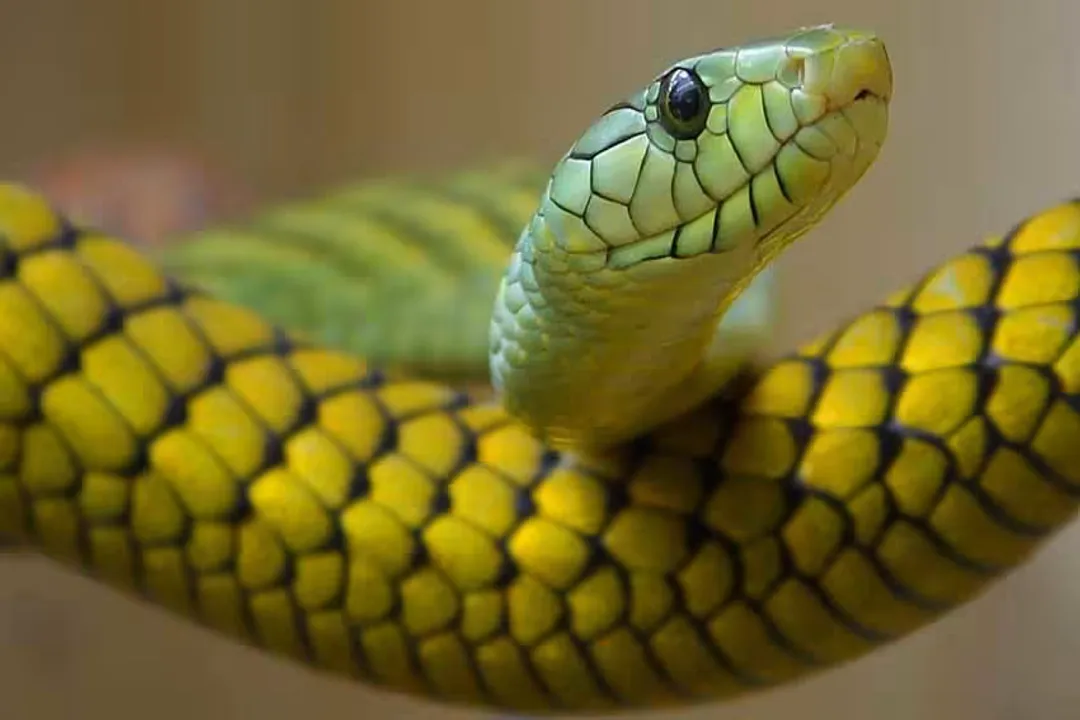
The Western Green Mamba, Dendroaspis viridis, [6] presents an image of breathtaking, vibrant color, often leading to fascination mixed with significant caution. Unlike its more frequently discussed relatives, this species tends to inhabit the dense forests of West Africa, maintaining a relatively secretive, arboreal existence. [1][4] While its name rightly places it within the deadly elapid family, understanding its specific habits and characteristics helps paint a fuller picture of this agile serpent beyond its reputation. [2]
# Species Name
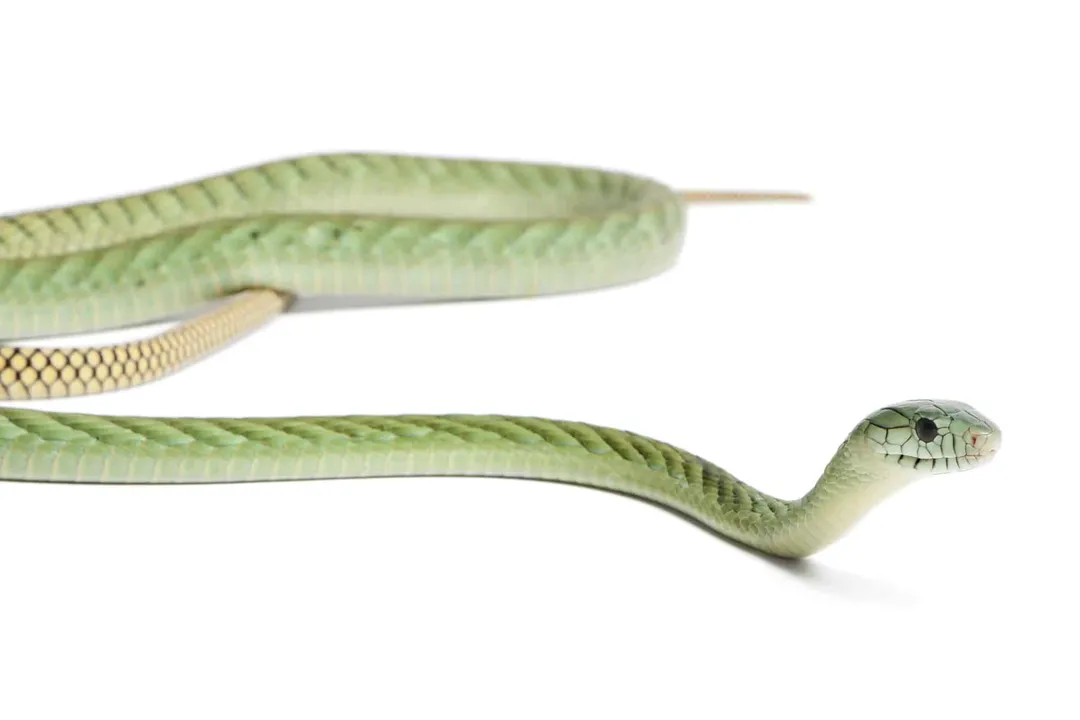
Formally recognized under the binomial nomenclature Dendroaspis viridis, the Western Green Mamba belongs to the genus Dendroaspis, which also includes the Eastern Green Mamba and the famous Black Mamba. [6][1] The common name clearly links it to the other green species, although distinctions in range and slight morphological features separate them in the field. [4] It is sometimes also referred to as the West African Green Mamba. [4] For those tracking observations in the field or in captive collections, knowing the correct taxonomy is essential for accurate record-keeping and understanding conservation needs. [6]
# Size Color
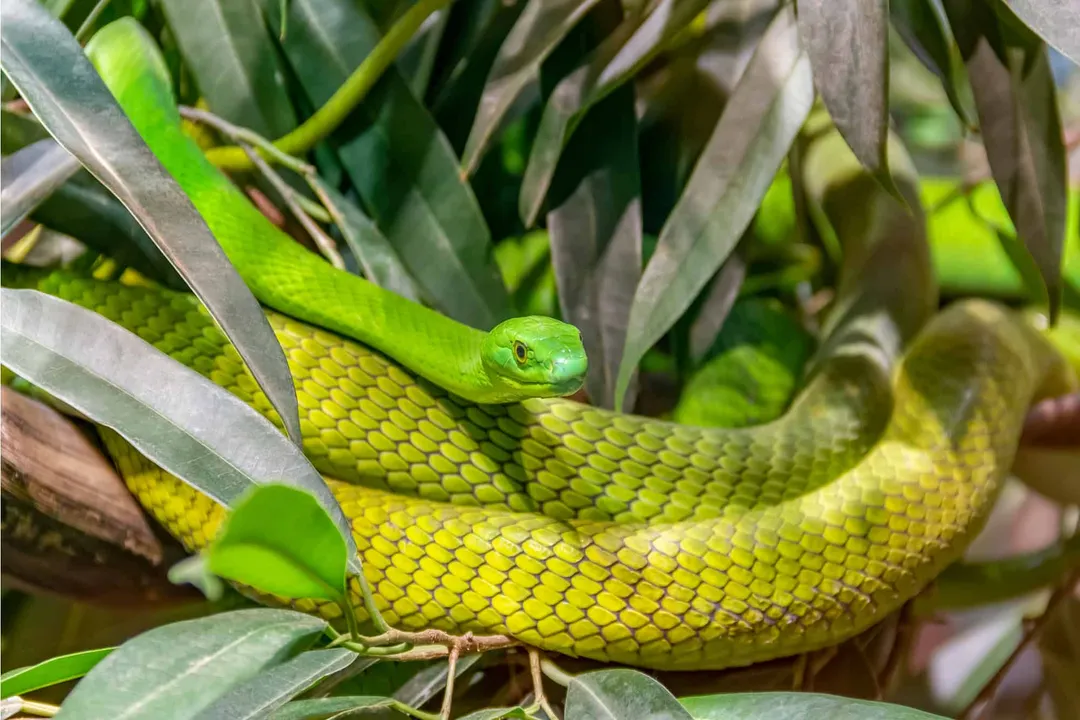
The adult length of the Western Green Mamba typically falls between 1.4 to 1.8 meters (about 4.6 to 5.9 feet). [1][3] However, like many snakes, there is always the potential for larger individuals; some reports suggest they can exceed 2.5 meters (over 8 feet) in length, though these larger specimens are less frequently documented. [1][3]
Coloration is perhaps its most defining visual feature. The body is generally a brilliant, striking green, providing excellent camouflage within the foliage of its treetop home. [1][3] Some specimens may exhibit slight variations, sometimes showing a subtle bluish tint to the green scales. [1] This uniform green contrasts sharply with the black mambas, which are uniformly dark or greyish. [3] It is interesting to note that juveniles often display a different pattern entirely; young Western Green Mambas usually sport dark bands or spots across their green bodies, which fade as they mature into the characteristic solid green of the adult. [1] If you encounter a banded green snake in the appropriate range, you are almost certainly looking at a juvenile specimen that has not yet reached full maturity. [1] When comparing the average adult length to the rare maximum documented size, it’s prudent for anyone managing a captive snake or working in conservation to prepare for the larger potential size, knowing that the vast majority of encounters will involve snakes closer to the 5-foot mark. [3]
# Geographic Range
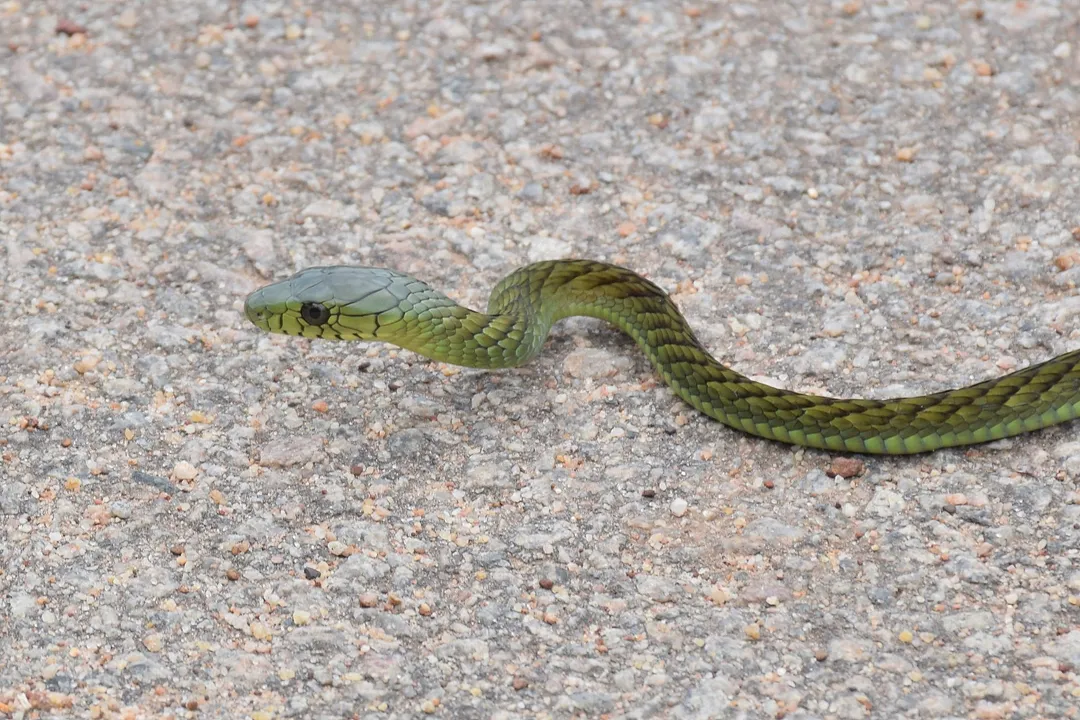
The distribution of Dendroaspis viridis is firmly anchored in West Africa. [4][5] It inhabits a broad swath of countries along the Gulf of Guinea, often found in regions with dense, humid forest cover. [1] Countries such as Sierra Leone, Liberia, Ivory Coast, Ghana, and Nigeria are known parts of its habitat. [1][4] It is important to differentiate its range from the Eastern Green Mamba, which has a distribution further east and south in central and eastern Africa. [1]
This snake prefers dense, humid woodland, rainforests, and gallery forests. [4] Its presence is highly dependent on continuous tree cover, which limits its occurrence in open savannas or drier areas. [1] For ecological studies in West Africa, mapping the presence of this specific mamba species can act as an indicator for the health and integrity of the local primary forest ecosystems. [4]
# Arboreal Habits
The Western Green Mamba is primarily an arboreal species, meaning it spends the vast majority of its life in trees. [1][4] This vertical lifestyle explains both its striking green camouflage and its incredible speed when moving through branches. [1] They are diurnal, meaning they are most active during the day, hunting and basking in the filtered sunlight found high in the canopy. [1]
Their diet reflects their elevated environment. They are carnivorous and prey upon small mammals, birds, and their eggs. [2][3] They are efficient, active hunters that rely on stealth and rapid striking when necessary. [1] While they are capable of moving swiftly on the ground, this is rare, usually only occurring when traversing between trees or searching for a new territory. [1] Their agility in the trees is exceptional, allowing them to navigate complex three-dimensional environments with apparent ease. [4]
# Toxin Potency
As an elapid, the Western Green Mamba possesses potent venom capable of causing serious medical harm to humans. [2][5] The venom is predominantly neurotoxic, meaning it attacks the central nervous system. [5] Symptoms following a significant bite can rapidly progress to include severe pain, blurred vision, sweating, vertigo, and eventually paralysis, which can lead to respiratory failure if not treated promptly. [5][2]
Although its venom is considered medically significant and dangerous, the Western Green Mamba is generally considered less aggressive than its larger cousin, the Black Mamba. [5][2] Encounters leading to bites in humans are less common because this species is shy, reclusive, and spends most of its time high in the forest canopy, away from human pathways. [1] If you are working in areas where this snake resides, understanding this behavioral trait provides context: the danger lies in accidental disturbance rather than active hunting directed toward humans. [5] While antivenom exists for the bite, immediate medical attention remains non-negotiable given the fast-acting nature of the neurotoxins. [5]
# Reproductive Facts
Reproduction in the Western Green Mamba follows the pattern common to many elapids, as they are oviparous, meaning they lay eggs rather than giving live birth. [1] Females lay clutches typically consisting of between six and sixteen eggs. [1] These eggs are usually deposited in a secluded, safe location, often hidden within tree hollows, dense vegetation, or sometimes in termite mounds or logs on the ground if the snake has descended. [1] The female does not typically guard the eggs after laying them, leaving the incubation period to the natural ambient temperature of the environment. [1] The hatchlings, as mentioned earlier, emerge with their distinct juvenile banding, signaling their developmental stage to observers in the wild. [1]
Related Questions
#Citations
Western green mamba - Wikipedia
Western Green Mamba - Facts, Diet, Habitat & Pictures on ... - Animalia
Western Green Mamba Animal Facts - Dendroaspis viridis
West African Green Mamba Attraction | Central Florida Zoo Animals
Western Green Mamba - Eswatini Antivenom Foundation
Western Green Mamba (Dendroaspis viridis) - iNaturalist
Western green mamba facts, distribution & population - BioDB
GREEN MAMBA – National Zoological Garden, Pretoria
Western green mamba Facts for Kids