Western Green Mamba Scientific Classification
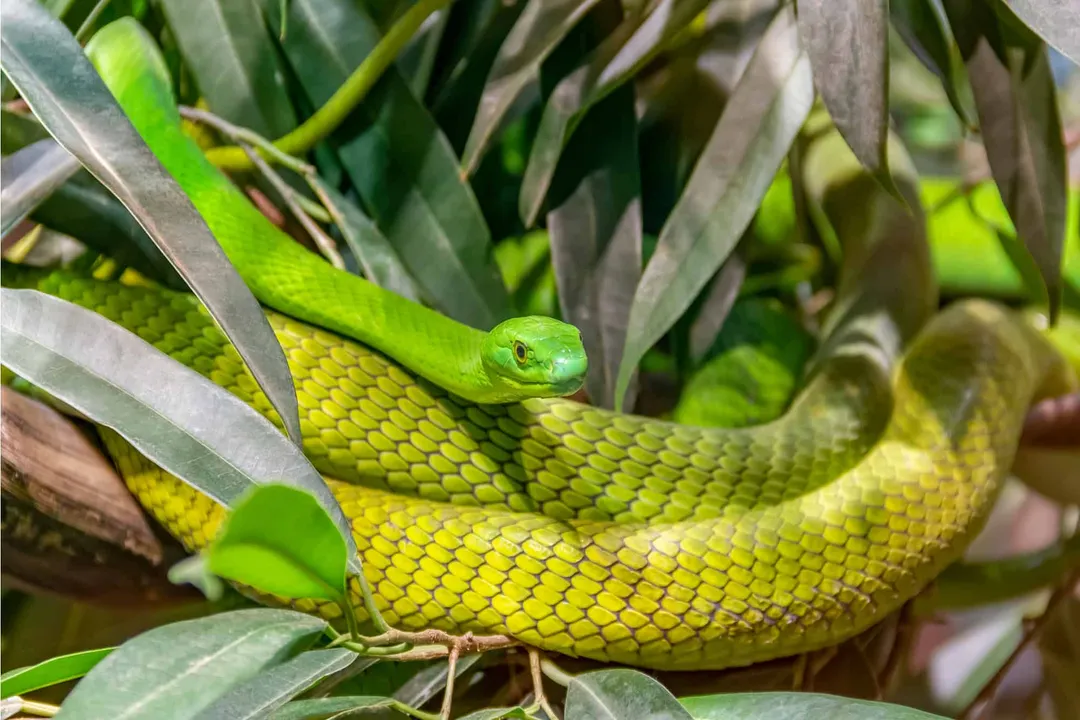
The journey to understanding any wild creature begins by placing it precisely within the grand catalog of life, a system developed over centuries to describe relationships and shared ancestry. For the Western Green Mamba, scientifically known as Dendroaspis viridis, this classification process reveals a fascinating story about its evolutionary position among the world’s reptiles. This snake, sometimes called the West African Green Mamba, is instantly recognizable, but its scientific name tells us much more than just its color and general location.
# Kingdom Animalia
At the broadest level, the Western Green Mamba resides in the Kingdom Animalia. This simply means it is a multicellular, eukaryotic organism that obtains its food by ingesting other organisms—it is a heterotroph. In the context of large-scale biology, this group contains everything from the smallest invertebrates to the largest whales, placing the mamba firmly within the world of conscious, moving life.
# Phylum Chordata
Moving down one step, we find the Phylum Chordata. Snakes, including this arboreal viper relative, belong here because they possess, at some stage in their development, a notochord, a dorsal hollow nerve cord, pharyngeal slits, and a post-anal tail. While the adult snake has lost the external tail structure typical of many other vertebrates, its embryonic development confirms its placement within this phylum, sharing this heritage with birds, fish, and mammals.
# Class Reptilia
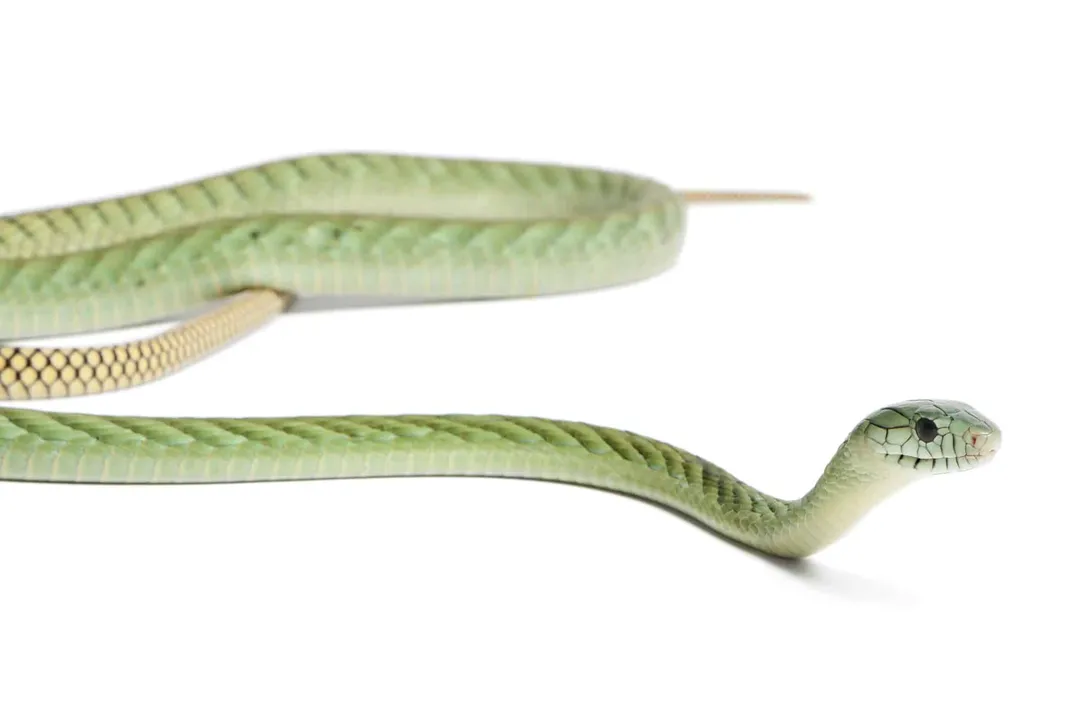
The Class Reptilia groups together cold-blooded vertebrates characterized by breathing air with lungs, having scales or scutes, and typically laying amniotic eggs (though live birth occurs in some species). The Western Green Mamba is undeniably a reptile, its dry, overlapping scales providing protection and preventing desiccation in its humid environment. Snakes are grouped within the reptiles alongside lizards, crocodiles, turtles, and tuataras, a testament to their shared evolutionary blueprint.
# Order Squamata
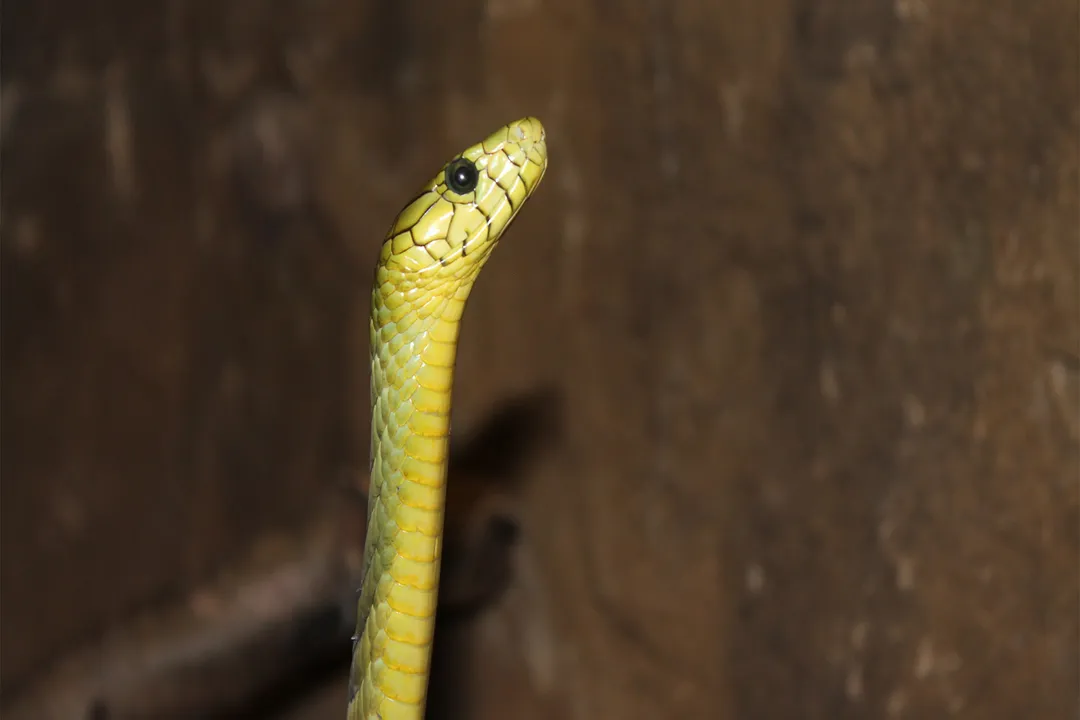
Within the reptiles, the Order Squamata is the largest, encompassing all lizards and snakes. The name itself comes from the Latin word for "scaly". This order is characterized by the shedding of skin, a process vital for growth and maintenance in snakes. The fact that D. viridis is a squamate immediately tells us it belongs to the lineage that relies on scales for its primary external structure and protection.
# Family Elapidae
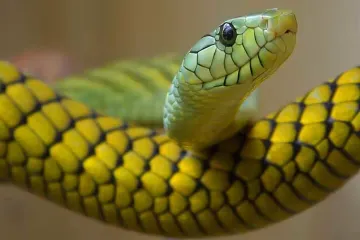
This is where the classification starts to become much more significant for human understanding and safety. The Western Green Mamba belongs to the Family Elapidae. This family is famous—or perhaps infamous—as it contains the cobras, kraits, coral snakes, and sea snakes. What unites them all? They possess fixed front fangs used to inject venom. Unlike vipers, which have hinged, retractable fangs, elapids deliver their venom through shorter, non-movable structures. Understanding that D. viridis is an elapid immediately signals that it is a highly venomous species, sharing that dangerous characteristic with the king cobra and the black mamba. The venom composition and delivery mechanism are hallmarks of this family.
# Genus Dendroaspis
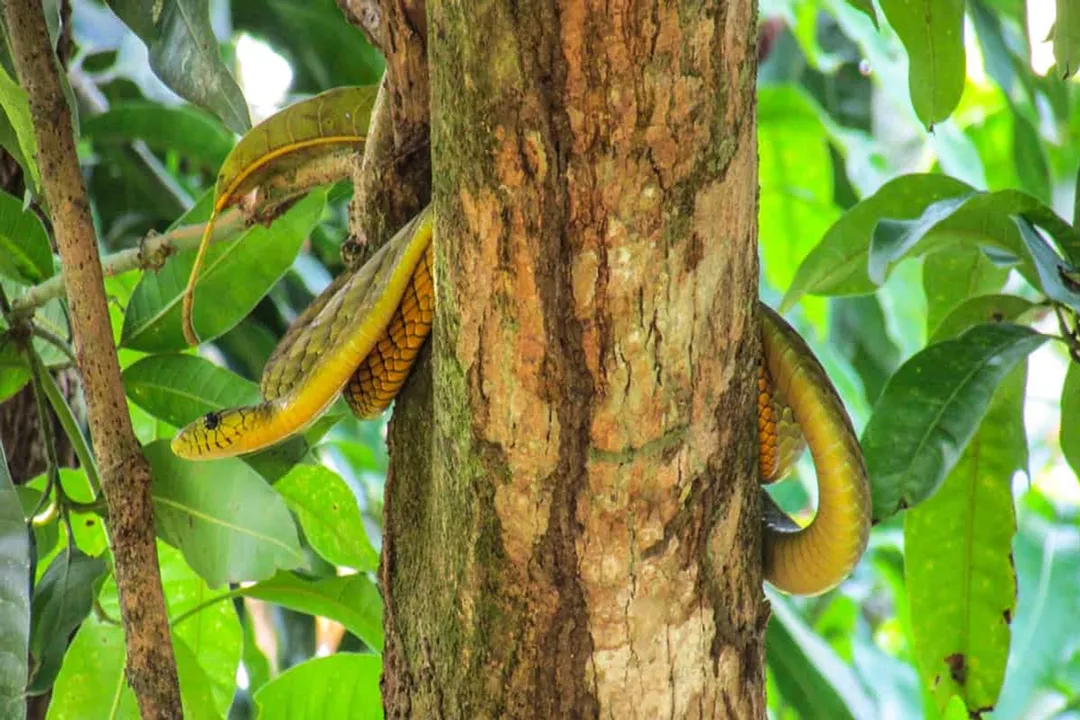
The Genus Dendroaspis narrows the focus considerably. This genus name is derived from Greek words meaning "tree-dwelling snake," or "tree cobra" (dendron meaning tree and aspis meaning shield or cobra). This name perfectly reflects the primary lifestyle of the members within it, as they are predominantly arboreal.
This genus contains the four recognized mamba species: the Black Mamba (D. polylepis), the Eastern Green Mamba (D. angusticeps), the Jameson's Mamba (D. jamesoni), and, of course, our subject, the Western Green Mamba (D. viridis). The distinction between the green species is often subtle in appearance but significant ecologically and geographically. While the Eastern Green Mamba is often found in eastern Africa, D. viridis is geographically restricted, primarily inhabiting the forests stretching from Sierra Leone to Liberia, and extending into Ivory Coast, Ghana, and Togo. This geographic isolation strongly supports its classification as a distinct species within this specialized genus.
If one were tracking specimens for a comparative venom study across the genus, a crucial insight emerges: while all are Dendroaspis, the specific neurotoxic cocktail delivered by D. viridis will differ measurably from that of D. polylepis, reflecting their separate evolutionary paths despite shared arboreal adaptations. The green mambas (D. viridis, D. angusticeps, D. jamesoni) share a more recent common ancestor with each other than they do with the ground-dwelling, highly aggressive Black Mamba.
# Species Dendroaspis viridis
Finally, we arrive at the species level: Dendroaspis viridis. The specific epithet viridis is Latin for green, describing its striking coloration. This species is often noted for its bright, vibrant green hue, which serves as excellent camouflage within the forest canopy. Despite the common name, coloration can vary; some individuals might appear yellowish-green or even have slight black speckling.
The morphological characteristics that definitively separate D. viridis from its close relatives often rely on scale counts and subtle differences in head shape, though for the lay observer, habitat and location are the primary identifiers. For instance, while the Eastern Green Mamba averages around 1.8 meters in length, the Western Green Mamba is generally considered one of the smaller members of the genus, though specific maximum lengths vary depending on the source data—one source suggests an average length around 1.5 meters, while others might imply slightly larger specimens are common. When looking at conservation status, the Western Green Mamba is currently categorized as Least Concern by some tracking systems, though data is not always as frequently updated as for more widespread or threatened species. This contrasts sharply with the Black Mamba, which, while not endangered, occupies a different conservation niche due to its greater human interaction in drier regions.
# Venom Profile Implications
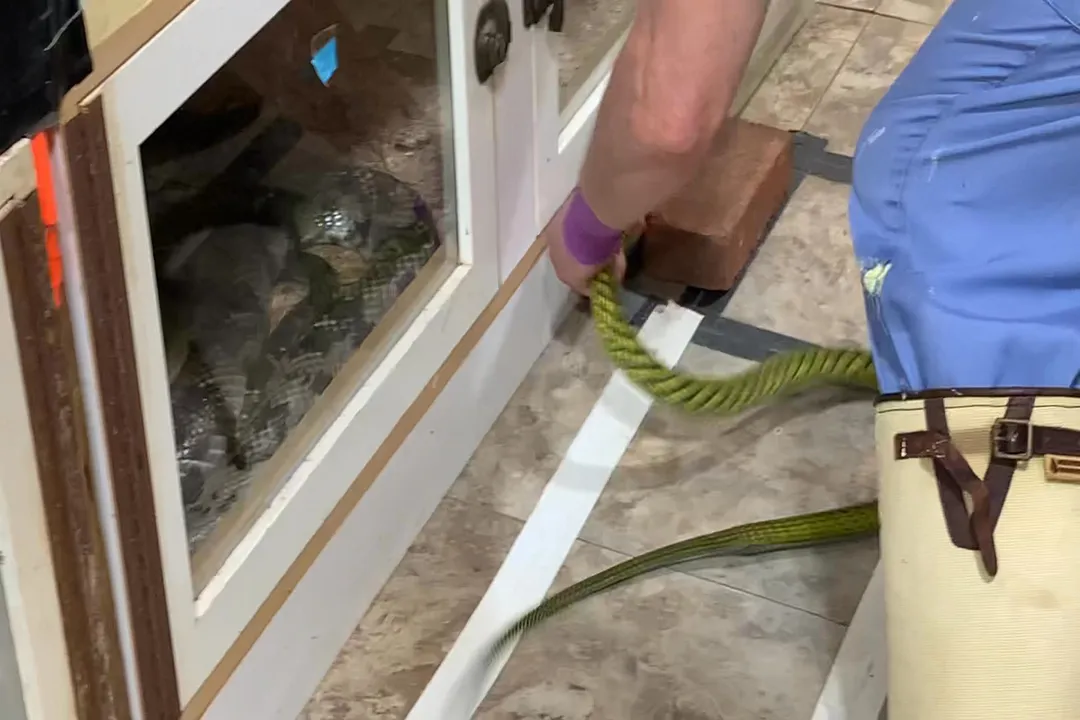
Being classified as Dendroaspis viridis carries significant weight concerning its biological defense mechanism. As an elapid with fixed fangs, its venom is primarily neurotoxic. This means the toxins primarily target the nervous system, leading to paralysis and respiratory failure if left untreated. While all mamba venoms are potent, the specific composition found in D. viridis venom—often extracted for antivenom production—is unique to this species. Zoos, such as those housing this species for educational purposes or venom extraction, rely on this precise classification to manage risk and research. For example, a venom sample taken from a captive D. viridis at the Kentucky Reptile Zoo for venom extraction confirms the need for specific antivenom formulation, as cross-reactivity between different elapid venoms is not always guaranteed. If a specimen at the Central Florida Zoo exhibits this species designation, keepers know they are dealing with a highly specialized arboreal neurotoxin delivery system, different from the more terrestrial venom profiles seen in other elapids like cobras.
This leads to a slightly deeper analysis of its niche. While the genus name suggests tree-dwelling life, the specific habitat preference within West Africa influences its interaction with human populations. Reports confirm that D. viridis is quite shy and generally prefers dense forest cover. Its classification under Dendroaspis suggests it spends most of its life off the ground, which reduces encounters compared to a species that frequently hunts or basks on the ground, even though it can move quickly on the forest floor if necessary. The very structure of its classification—Genus Dendroaspis species viridis—tells a story of an agile, cryptic predator perfectly adapted to a specific, moisture-rich West African forest environment.
# Comparative Taxonomy
To truly appreciate where D. viridis sits, a brief look at how it compares to a closely related species in the same genus can be instructive. Consider a simplified taxonomic comparison between the Western Green Mamba and the Black Mamba (D. polylepis), both sharing the Dendroaspis genus but belonging to different species groups within it:
| Taxonomic Rank | Dendroaspis viridis (Western Green Mamba) | Dendroaspis polylepis (Black Mamba) | Implication |
|---|---|---|---|
| Kingdom | Animalia | Animalia | Both are animals. |
| Family | Elapidae | Elapidae | Both possess fixed front fangs and potent venom. |
| Genus | Dendroaspis | Dendroaspis | Both are primarily tree-dwelling snakes (though behavior differs). |
| Species | viridis | polylepis | Distinct species due to morphology, genetics, and geography. |
| Color/Habitat | Green, West African forests. | Grey/Brown, Sub-Saharan savannas/woodlands. | Major ecological difference influencing encounter rates. |
This table highlights that while the family and genus tie them together through shared venom delivery methods and arboreal ancestry, the species-level distinction is what separates the green, forest-dwelling snake of the west from its larger, famously fast, savanna-dwelling cousin. For researchers studying venom evolution, D. viridis represents the divergence towards a purely arboreal niche in a highly wet environment, whereas D. polylepis adapted to drier, more open woodlands, illustrating how environmental pressures shape even closely related species within the same genus.
# Scientific Record Keeping
The maintenance of this precise scientific classification is vital for global biodiversity tracking, which is often managed through databases like iNaturalist. When an observer logs a sighting of a snake matching the description—a slender, green snake from, say, Ghana—the initial identification points toward Dendroaspis viridis. This data then contributes to population estimates and range mapping, essential information for wildlife management agencies. Without this universally accepted Linnaean system, recognizing patterns in distribution, like the known range stretching from Sierra Leone to Togo, would be impossible, making conservation efforts purely localized and ineffective on a broader scale. The consistency in naming ensures that when a research paper references D. viridis, scientists in South Africa, the US, or Europe all know exactly which of the four mamba species is being discussed.
The continued effort by institutions, whether they are maintaining zoological exhibits like the one mapped at the OKC Zoo or managing conservation tracts, depends on adhering to these established taxonomic standards. It is this systematic approach, starting from Animalia and drilling down to the specific epithet viridis, that allows us to categorize, study, and respect the biological complexity of this beautiful but dangerous arboreal reptile.
Related Questions
#Citations
Western Green Mamba (Dendroaspis viridis) - iNaturalist
West African Green Mamba Attraction | Central Florida Zoo Animals
Western Green Mamba (Dendroaspis viridis) | U.S. Fish & Wildlife ...
Western Green Mamba - Snakeepedia Wiki - Fandom
Western Green Mamba Animal Facts - Dendroaspis viridis
[PDF] Dendroaspis viridis | Viper Brothers
Western Green Mamba - Facts, Diet, Habitat & Pictures on ... - Animalia
West African Green Mamba
Western green mamba ( Dendroaspis viridis) during venom extraction.