Western Green Mamba Locations
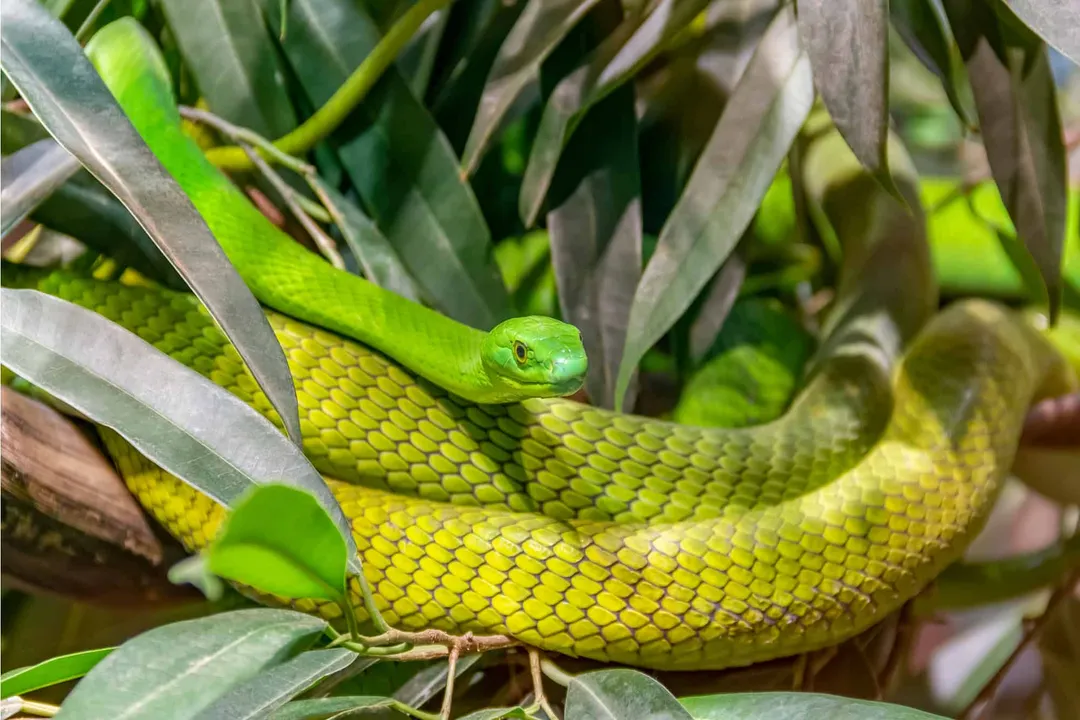
The distribution of the western green mamba (Dendroaspis viridis) paints a clear picture of a snake deeply rooted in the humid environments of West Africa. Unlike some other widely dispersed reptiles, this species maintains a relatively tight geographical focus, primarily within the coastal tropical rainforests and associated woodlands of the region. To understand where to find this highly venomous, arboreal specialist, one must first look at the band of nations stretching along the Gulf of Guinea and slightly inland.
# West Africa Span
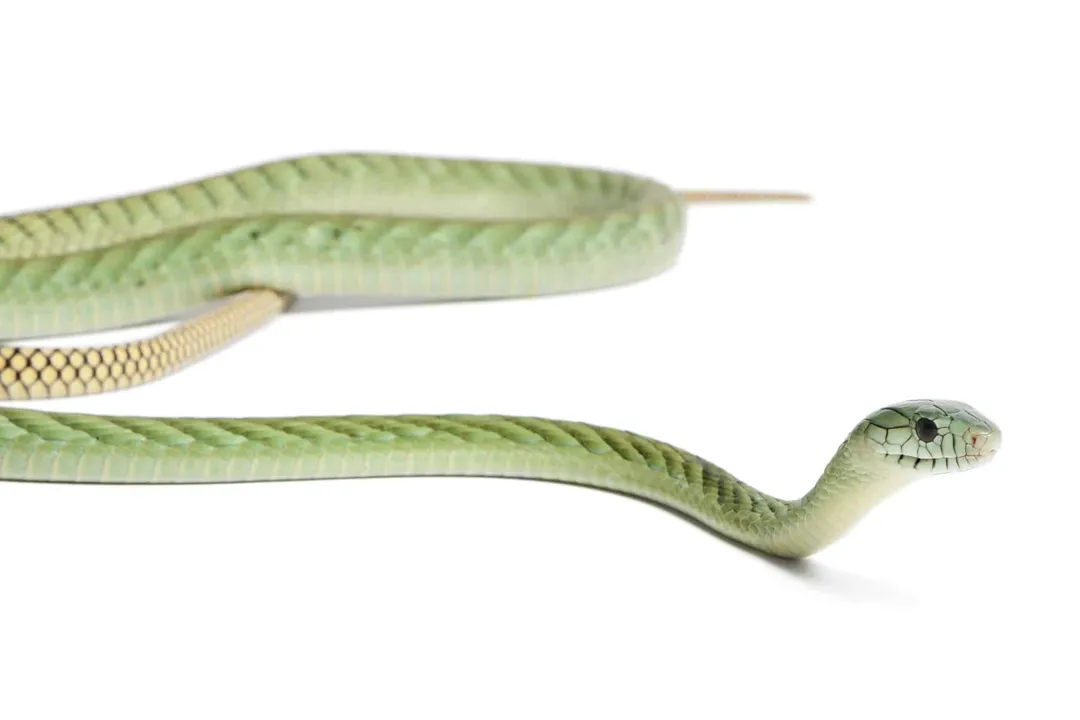
The core distribution area for the western green mamba begins in the west, extending from the nations of Gambia and southern Senegal. From there, its range weaves eastward, encompassing Guinea-Bissau, Guinea, Sierra Leone, Liberia, Côte d'Ivoire (Ivory Coast), Ghana, and finally reaching Benin. This delineation essentially covers the countries that form the western "bulge" of the African continent. The scientific name for this snake, Dendroaspis viridis, reflects its nature—Dendroaspis meaning "tree asp," and viridis meaning green. The fact that this species is restricted to this western segment immediately differentiates it from its close relative, the Eastern Green Mamba, which occupies the eastern portion of the continent.
Within this swath of territory, the species is generally considered common in many areas, and the IUCN currently classifies its population status as Least Concern. However, relying solely on national borders can be misleading when discussing habitat specialists like the western green mamba. For instance, in Togo, the species is reported as common, and its confirmed presence extends as far north as the Alédjo Wildlife Reserve. Furthermore, there is a theoretical possibility of its presence in the Sarakawa and Djamdé forests located within Togo’s Kara Region.
# Habitat Specificity
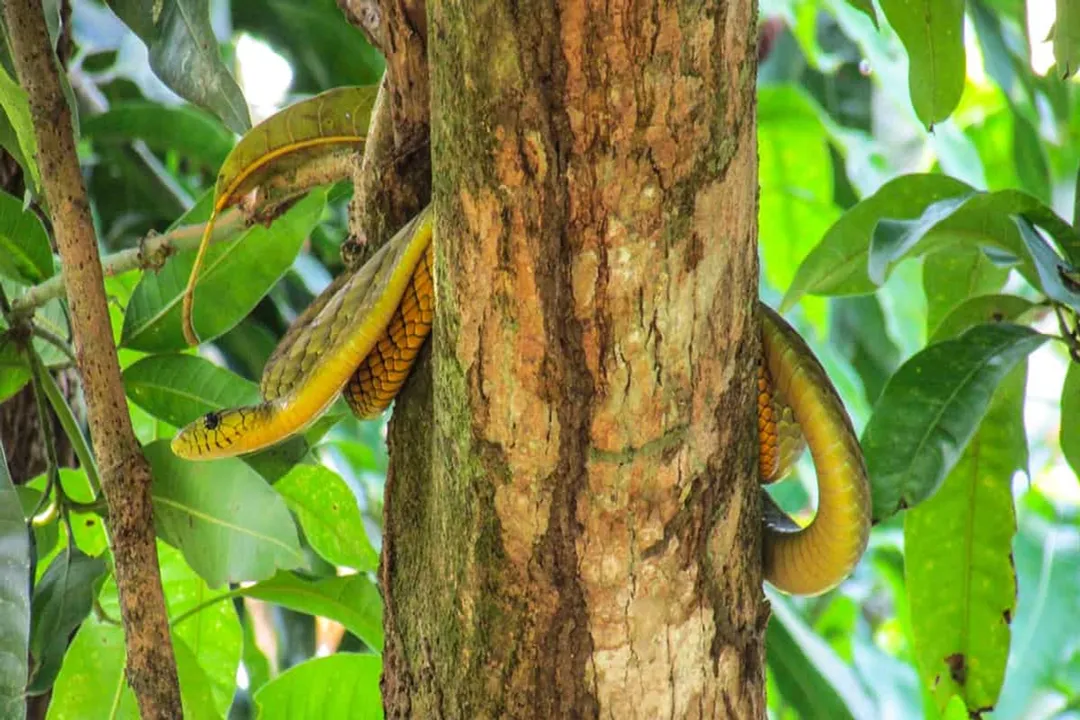
The location of the western green mamba is inseparable from its preferred habitat structure. These snakes strongly favor the coastal tropical rainforest, dense thicket, and woodland zones. A significant ecological marker for their distribution seems to be precipitation; they are largely confined to regions where annual rainfall exceeds approximately 1,500 millimeters (about 60 inches). This reliance on high-humidity, dense vegetation is typical for a highly arboreal species that hunts by sight from the canopy.
The ecological tolerance of D. viridis is slightly wider than this narrow definition might suggest. While the majority of records originate from continuous forest tracts, populations persist even where significant tree cover has been lost, provided that adequate hedges and thicket remain. This adaptability allows them to occupy somewhat modified environments, occasionally turning up in suitably vegetated suburbs, parklands, and towns within their range. This ability to utilize edge habitats—the transitional areas between deep forest and cleared land—is crucial for understanding how localized populations survive encroachment.
In contrast to the general rainforest preference, the habitat profile in the northern parts of its range, specifically in Togo, displays more variety. Here, the mamba's range seems to stretch into the drier open forests to the north, the Guinean savannas to the west, and the littoral zone. This variation suggests that while the species needs significant vegetative cover, it is not strictly limited to the wettest rainforest biome throughout its entire extent.
It is important to note certain geographical areas where its presence is less certain. Reports suggesting the western green mamba exists in Nigeria are considered dubious, and any sightings reported from the Central African Republic are more likely to be mistaken identity cases involving the closely related Jameson's mamba. This distinction is important for anyone mapping the true extent of D. viridis's native territory.
# The Human-Scale Distribution
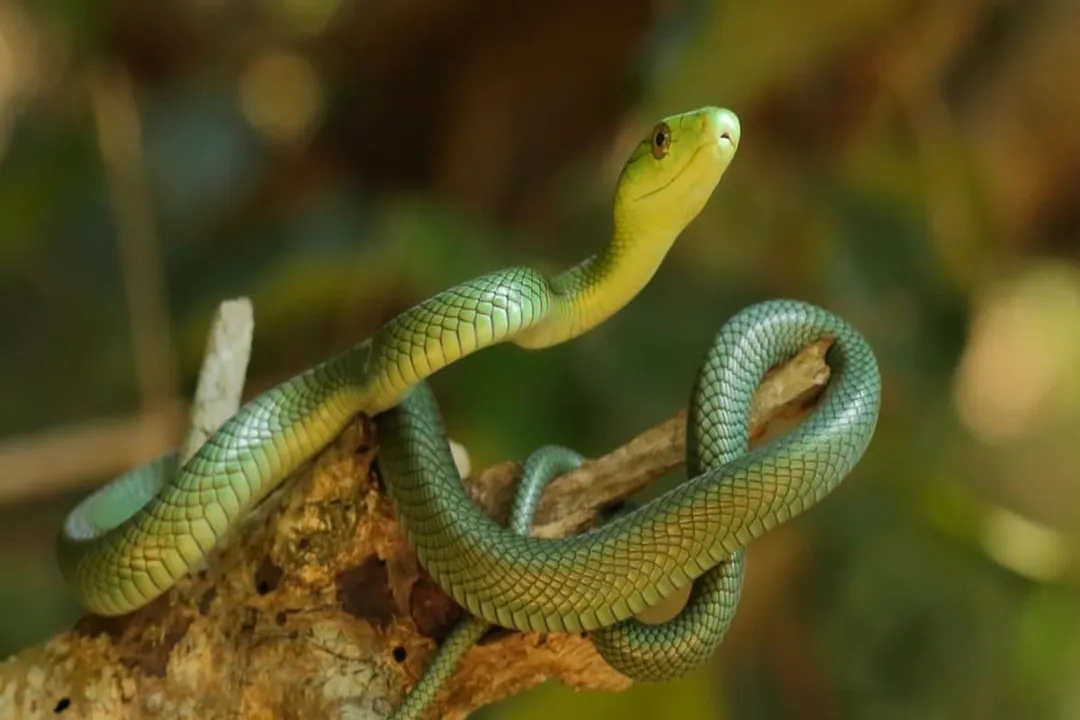
When considering where one might encounter a wild western green mamba, the vertically oriented nature of the snake becomes a key factor in the perceived risk of location. They are primarily diurnal, spending their days coiled on tree branches, often hiding amongst dense leaf cover, resting in tree hollows, or waiting for prey. They are generally shy and prefer to escape when threatened, meaning active searching for them in their natural habitat is unlikely to yield a sighting unless one is observing carefully in the trees.
Their movement between the canopy and the ground also dictates their location at different times. While they spend most of their time up high—sometimes remaining in the same tree for days—they readily descend to the forest floor to pursue prey, look for water, or seek mates. Therefore, a location that offers dense canopy cover over an area with plentiful ground-level prey (like rodents) provides an ideal micro-location for this snake. Their speed, particularly in the trees, is legendary; they can move through branches swiftly, often utilizing their slightly prehensile tails to maintain balance and grip.
The presence of suitable cover remains the strongest indicator of a viable location, regardless of whether the area is a pristine national park or a well-vegetated urban edge. If the essential thicket and vertical structure are present, the mamba is likely to persist, even if the surrounding area has been cleared for human use.
An interesting consideration for those tracking or studying populations across this West African corridor is the implication of habitat fragmentation. While the overall species range appears continuous across several nations, the records from isolated forests in Gambia and Guinea-Bissau suggest that the mamba’s survival hinges on patch quality rather than broad continental coverage. This leads to an important realization: the effective range is determined by the connectivity and density of suitable forest patches, not just the political map outlines. A large tract of unsuitable savanna separating two patches of good forest acts as a hard barrier, potentially leading to genetic isolation in those specific locales, even if the IUCN status remains stable overall [editor's insight].
# Locations Under Human Care
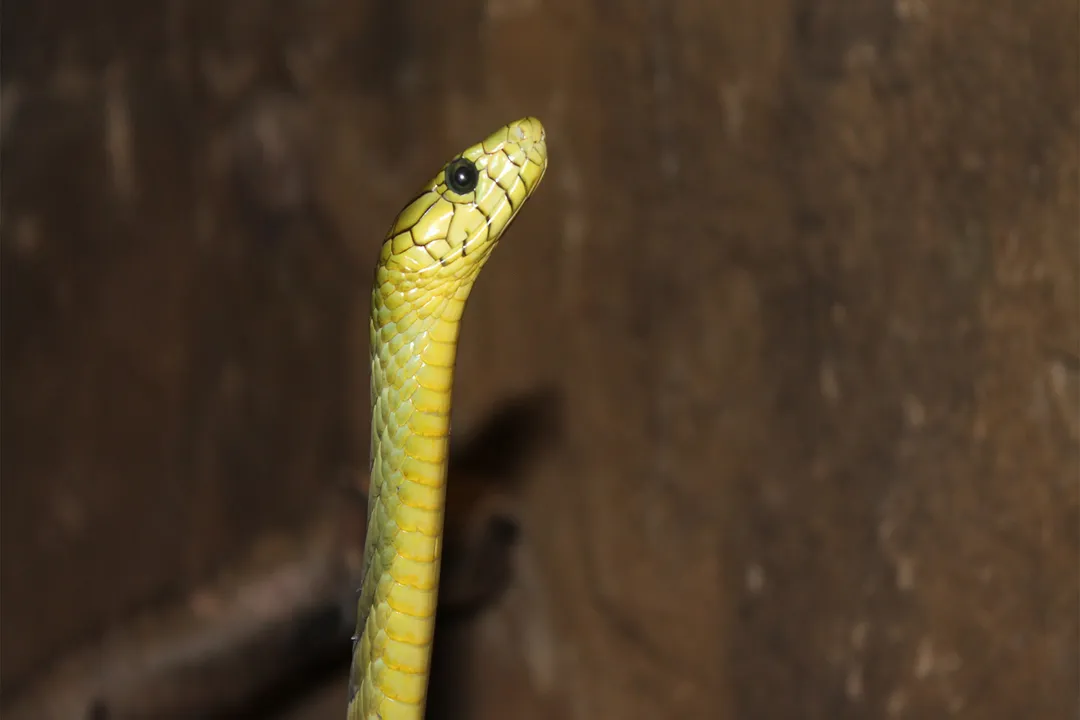
While the primary interest lies in the wild distribution, established captive populations in zoos provide fixed, verifiable locations for public viewing and study. These institutions house the snake for educational and conservation purposes, allowing people outside the endemic range to observe the species. Institutions like the Central Florida Zoo & Botanical Gardens house the snake, where their materials note its scientific name translates roughly to "green tree asp". Other North American facilities known to exhibit the species include the Los Angeles Zoo and the Oklahoma City Zoo. The presence of D. viridis in collections such as those at the Indianapolis Zoo further confirms that, despite being a species of medical importance, it is successfully maintained in controlled environments.
This captive existence brings forth a secondary consideration regarding location pressures. Given that western green mambas are among the more expensive African snake species sought after in the exotic pet trade, the pressure on local wild populations, especially in isolated areas, might be driven less by habitat loss alone and more by selective removal for commerce. This means that even small, seemingly healthy forest patches might be locally extirpated by collectors, a factor that isn't always reflected in standard, range-wide conservation assessments that rely on habitat availability metrics [editor's insight].
To summarize the necessary conditions for a location to host a western green mamba population, one must look for areas characterized by: high rainfall, a combination of significant trees for canopy living, and sufficient understory or thicket for terrestrial foraging and cover. The habitat is less about latitude and more about the specific interplay between humidity, vegetation structure, and minimal human disturbance that allows for the necessary vertical stratification of its environment.
Related Questions
#Citations
Western Green Mamba Animal Facts - Dendroaspis viridis
West African Green Mamba Attraction | Central Florida Zoo Animals
Western Green Mamba | GavenLovesAnimals' Animal Kindom Wiki
West African Green Mamba
Western green mamba Facts for Kids
Western Green Mamba - Facts, Diet, Habitat & Pictures on ... - Animalia