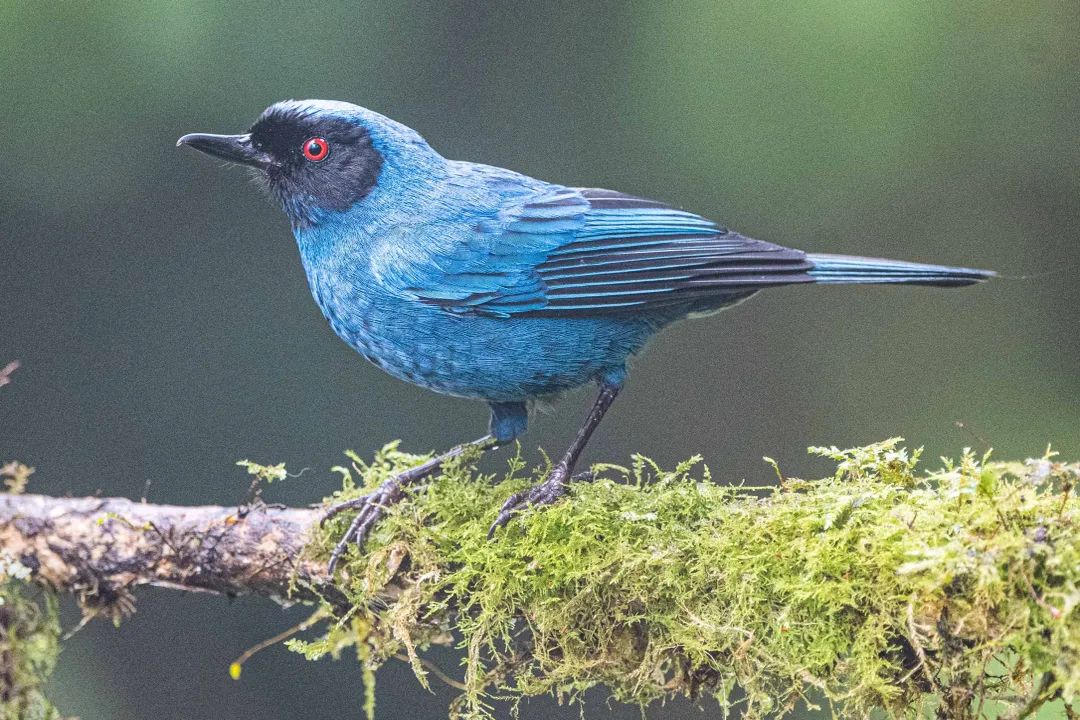
What is the evolutionary implication of the Black-and-Yellow Tanager's diet of fruits and insects?
The mixed foraging strategy provides an evolutionary buffer against environmental change by offering flexibility in sustenance.
The diet of the Black-and-Yellow Tanager, centered on a combination of fruits and insects, constitutes a mixed foraging strategy that grants significant evolutionary advantages, particularly stability in fluctuating environments. Insects are crucial as they supply necessary animal protein, which is vital for the rapid growth requirements of nestlings during breeding seasons. Conversely, fruits deliver high-energy carbohydrates, serving as essential sustenance during non-breeding periods. This duality allows the species flexibility; if one food source becomes temporarily scarce due to environmental variation, the reliance shifts to the other component, acting as an important evolutionary buffer against abrupt environmental shifts or resource shortages. Moreover, the bird likely participates in a co-evolutionary relationship with local flowering plants, often acting as a primary seed disperser, leading to specialized beak morphology suited for local fruit consumption over millennia.