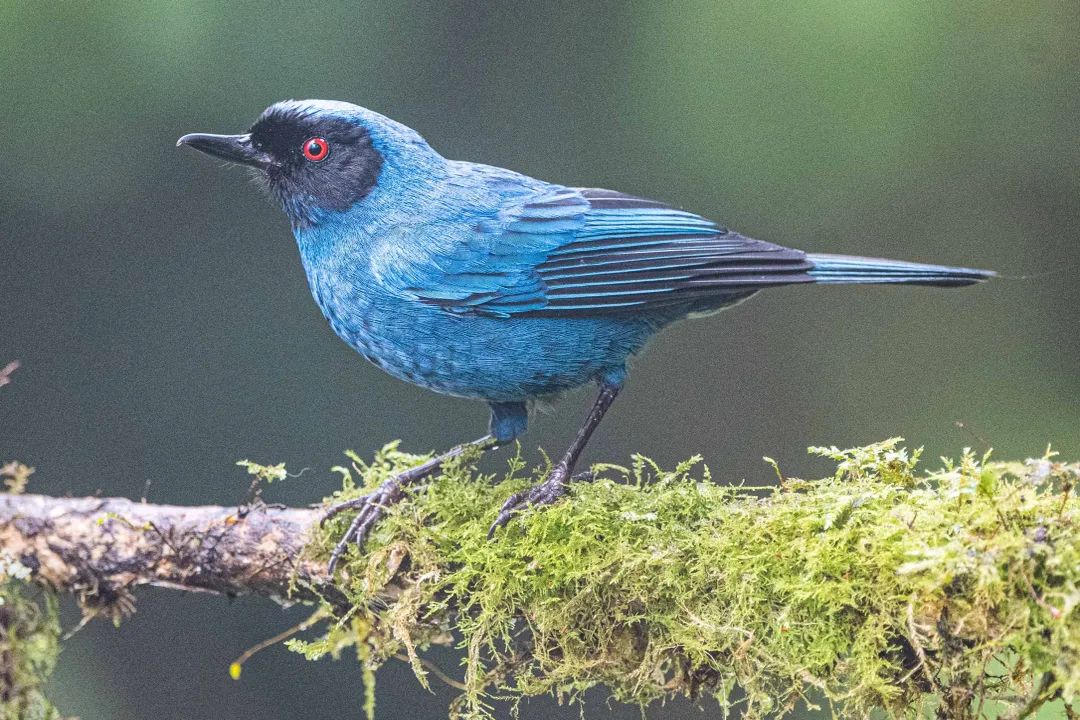
What feature suggests that developing structural coloring in the Black-and-Yellow Tanager is metabolically costly?
The persistence of such elaborate structures implies a significant evolutionary payoff related to securing mates or dominance over rivals.
The evolutionary persistence of feather structures capable of manipulating light to create structural color is metabolically demanding, signifying a high energetic cost associated with their development and maintenance. When a trait persists despite being energetically expensive, it strongly suggests that the trait confers a substantial evolutionary benefit—a high payoff that justifies the metabolic investment. In the context of the male's bright plumage, this payoff is clearly linked to reproductive success, specifically succeeding in securing a mate or establishing and maintaining dominance over competitors for territory or resources. The sustained presence of these elaborate visual signals implies that the visual acuity and specific preferences exhibited by potential mates have powerfully shaped the morphology of the male bird over generations.