Yellow Tanager (Black-and-Yellow Tanager) Diet

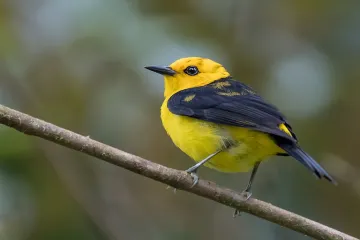
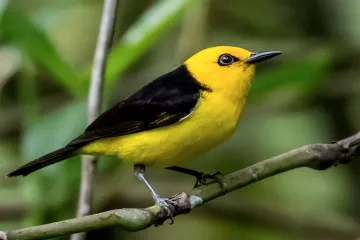
The striking Black-and-yellow Tanager, Chrysothlypis chrysomelas, is a vibrant resident of the humid tropical forests in Central America, particularly in the foothills of countries like Costa Rica and Panama. [2][4] While their dazzling black and yellow plumage makes them easy to spot when they perch, understanding what sustains such energy demands requires looking closer at their menu. Like many in the Thraupidae family, this bird maintains an omnivorous diet, relying on a dynamic balance between easily digestible sugars and essential animal matter. [3][4]
# Diet Balance
The dietary intake of the Black-and-yellow Tanager is characterized by two main pillars: small fruits and various small invertebrates. [3][5][6] This dual reliance suggests an adaptability crucial for surviving in seasonal tropical environments where the availability of one food source might fluctuate while the other remains stable. The male, with his vivid coloration, needs ample energy, and both sexes secure this through their mixed feeding habits. [2][6]
# Fruit Value

Small fruits form a significant part of this tanager’s sustenance. [5][6] These birds are known to favor ripe or even overripe berries and other soft fruit available in the trees and shrubs of their wet forest canopy habitat. [1][3][4] A notable detail of their fruit consumption is the method: they are observed to swallow the small fruit whole. [3][6] This suggests that the seed content is less critical for immediate energy needs than the pulp itself, which provides quick calories, likely from sugars, essential for daily activities such as singing and territorial maintenance. [6] In regions where the bird resides year-round, the reliable presence of fruiting plants supports their non-migratory lifestyle. [3]
# Insect Protein
To complement the carbohydrates from fruit, the Black-and-yellow Tanager actively seeks out arthropods. [5] Their invertebrate diet is diverse, including spiders, beetles, flies, crickets, and ants. [3][4] This insect consumption is especially important as it delivers the necessary protein that fruits alone cannot adequately provide. [3] This protein is a non-negotiable requirement, particularly during the breeding season when energy demands skyrocket to support egg production, incubation, and the intense feeding schedule required for rapidly growing chicks. [3] While fruit is perhaps the easiest meal to acquire, the consistent pursuit of insects ensures the necessary building blocks for growth and repair are available.
# Flock Foraging
The feeding routine of these tanagers is rarely a solitary affair. They are described as gregarious and social, often observed foraging alone, in pairs, or, very frequently, as members of mixed-species feeding flocks. [2][4][5] This flocking behavior, common among many tanager species, offers distinct advantages related to diet. When a small group moves through the mid-canopy and woodland edges, they effectively cover a larger area than an individual bird could manage alone. [2][5] For an insectivore, seeing another bird suddenly stir up a leaf or probe a flower indicates a potential meal, reducing the individual search time for hidden arthropods. This communal approach to finding food is a tactical adaptation to their dense forest environment. [2]
# Feeding Strategy
Observing the Black-and-yellow Tanager’s movements shows a careful approach to taking advantage of fluctuating food availability. A common behavior involves slowly surveying food options in trees and shrubs, often described as deliberate and focused. [3] This measured pace contrasts sharply with the rapid, flitting movements of some other insectivores.
One can reasonably deduce that the bird is constantly calculating the energetic cost versus the nutritional reward of its next move. Consuming a berry whole offers immediate energy return with minimal chewing or handling time, a behavior well-suited for filling a quick energy gap between foraging bouts for harder-to-catch insects. [3][6] Conversely, the pursuit and capture of a beetle or grasshopper demands more focused attention and movement, likely to secure the vital amino acids needed for feather maintenance and reproductive health. [3] This strategic shift—leaning toward easy fruit when energy is low or when preparing for a demanding activity like nest defense, and increasing invertebrate intake when protein is prioritized—demonstrates a sophisticated, non-rigid feeding strategy tailored to the moment-to-moment reality of the neotropical forest. [2][3] For a birder hoping to spot one, focusing search efforts on fruiting shrubs or dense foliage where insects might be gleaned, especially when the bird is moving with a larger, diverse group, increases the chance of a sighting. [2][5]
Related Questions
#Citations
Yellow Tanager (Black-and-Yellow Tanager) Bird Facts - A-Z Animals
Black-and-yellow tanager - Facts, Diet, Habitat & Pictures ... - Animalia
Black-and-yellow Tanager
Black-and-yellow Tanager - Birds of Colombia
Black-and-yellow Tanager (Chrysothlypis chrysomelas) identification
Yellow Tanager (Black-and-Yellow Tanager) Facts & Photos