What highly refined evolutionary trait makes ticks formidable vectors regarding pathogen carriage?
Answer
Remaining infective across the entire lifespan via trans-stadial or trans-generational passage
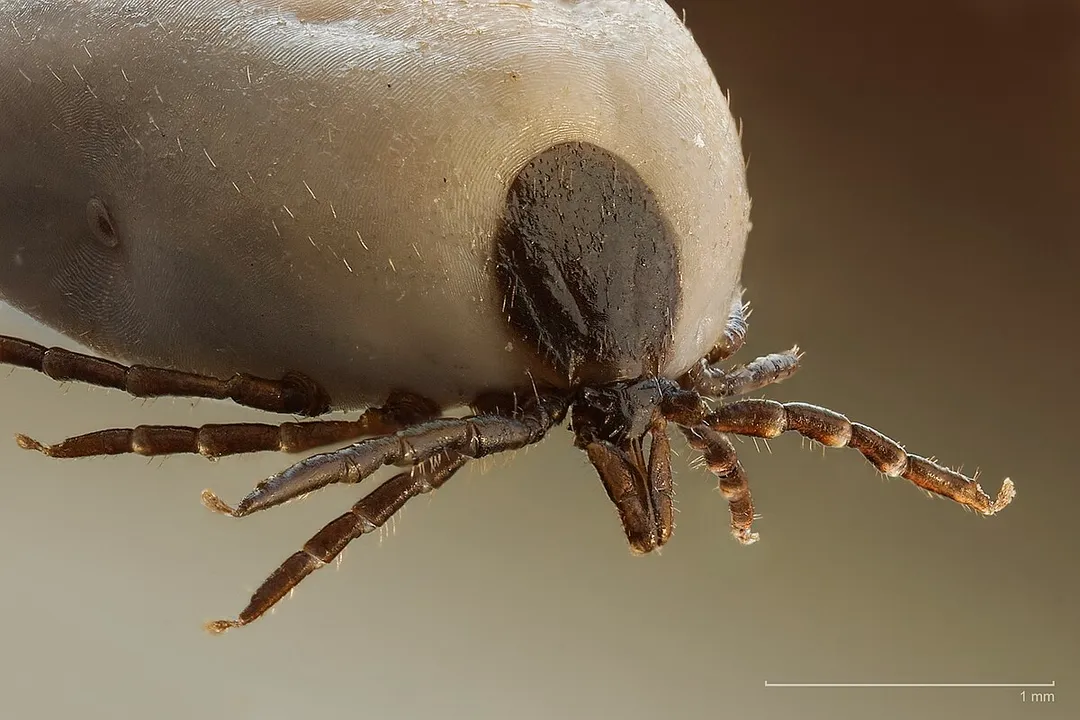
Ticks exhibit a highly refined evolutionary trait that significantly enhances their danger as disease vectors: their ability to maintain infectivity across different developmental stages or even across generations. This means pathogens can be passed trans-stadially (from larva to nymph, or nymph to adult) or trans-generationally (from the parent tick to its offspring). This persistence ensures that the tick remains a continuous threat throughout its lifespan, making them formidable agents in disease ecology, unlike pathogens that are only retained for a short duration or only acquired at a single life stage.
Related Questions
When did tick divergence from other mites potentially begin according to genetic analysis?What unique parasitic role defines ticks within the Acari group?What defined the fundamental evolutionary turning point for ticks?What structural feature characterizes hard ticks like Dermacentor andersoni?What feeding strategy characterizes the Dermacentor genus regarding hosts?Where do soft ticks typically digest and molt after rapid feeding?Which two serious agents is Dermacentor andersoni best known for transmitting?What highly refined evolutionary trait makes ticks formidable vectors regarding pathogen carriage?What is the intended function of the complex saliva components introduced by ticks during feeding?What molecular tools do researchers use to reconstruct divergence times between tick groups?