Wood Frog Evolution
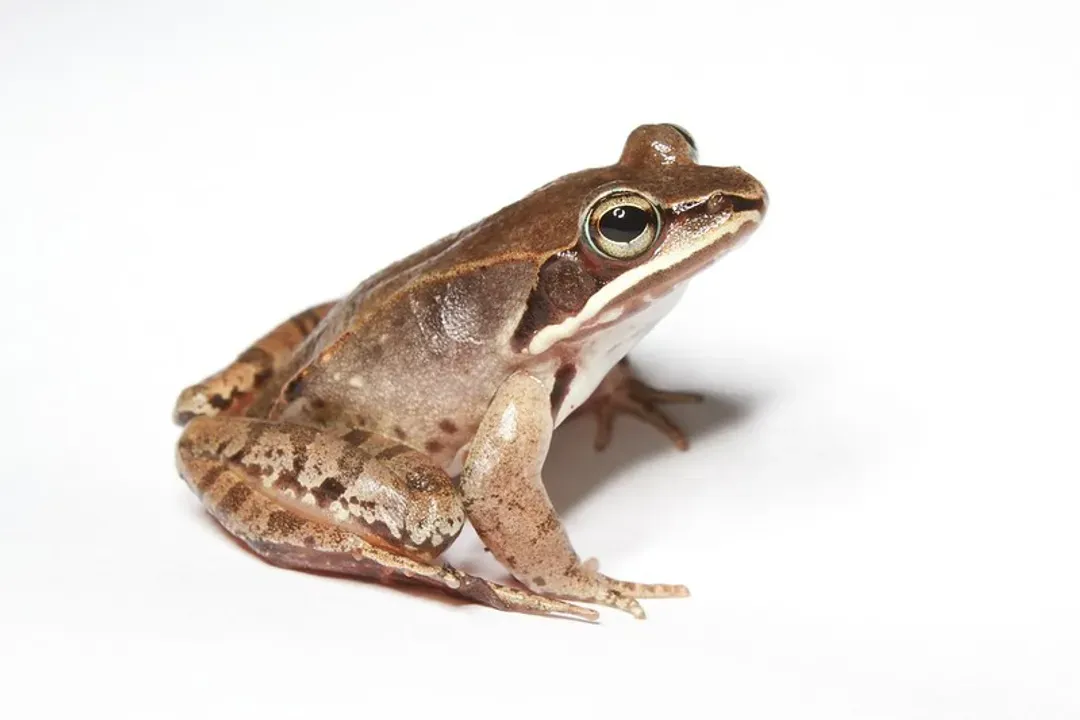
The wood frog (Rana sylvatica) pushes the boundaries of what seems biologically possible, especially when confronting the extremes of the northern winter. While many temperate amphibians survive by retreating deep underwater where the temperature remains above freezing, these hardy creatures adopt a strategy that sounds like science fiction: they essentially turn into blocks of ice. [1] This strategy, which allows them to inhabit the boreal forests of Alaska and Canada, including areas north of the Arctic Circle, is central to understanding their evolutionary path. [1][3]
# Solid State Life
The most astonishing aspect of the wood frog’s life cycle is not its summer activity but its winter hibernation, which occurs on the forest floor within leaf litter, insulated only by duff and snow. [1] In this state, the frog is inert, showing no heartbeat, no breathing, and no muscle movement—it truly resembles a frigid stone carving of itself. [1] This survival mechanism is necessary because, being cold-blooded, their body temperature mirrors the surrounding air, which can plummet to or even colder in places like Alaska’s Prospect Creek. [1]
The physics of freezing are typically deadly for multicellular life. Ice crystals forming inside cells puncture delicate structures, and when blood freezes, organs are starved of oxygen and nutrients, leading to widespread fatal damage. [1] The wood frog circumvents this by employing a sophisticated, two-part biochemical defense. First, the body permits ice formation, but it carefully orchestrates where that ice builds up—primarily outside the cells, in the abdominal cavity, and between layers of skin and muscle. [1] The eyes can even turn white as the lenses freeze solid. [1]
The critical second part involves the creation of an intracellular cryoprotectant. As winter sets in, the frog’s liver converts its massive internal glycogen stores into large amounts of glucose, which floods every cell. [1] This sugary solution lowers the internal freezing point and binds water molecules within the cells, preventing lethal internal dehydration and crystallization. [1] Interestingly, Alaskan wood frogs accumulate this cocktail along with urea and other uncatalogued osmolytes, differing chemically from other freeze-tolerant species like gray tree frogs which rely on glycerol. The metabolic shutdown is near absolute, sparing the glycogen reserves to serve as fuel upon revival. When spring arrives, the frog thaws from the inside out: the heart resumes beating first, followed by the brain activating, and finally, movement returns. [1]
The evolutionary payoff for this risk is immediate access to breeding grounds. Because land thaws and warms faster than ice-covered lakes, these frogs can emerge and breed in shallow meltwater pools that dry up by midsummer—a resource unavailable to underwater hibernators that must wait for permanent water bodies to clear. [1]
# Speed of Change
Wood frogs, being exquisitely adapted to cold and thus sensitive to warming, offer an exceptional model for observing evolution in real-time, particularly in response to anthropogenic climate change. [2] Groundbreaking research by the Skelly Lab at the Yale School of the Environment re-examined populations studied initially in 2001, applying modern analytical techniques to populations in the Yale-Myers Forest 18 years later.
The findings provided striking evidence of rapid adaptation. Embryos sampled in 2018 developed, on average, fourteen to nineteen percent faster than their predecessors from 2001. [2] This speed-up was not uniform across the species’ range; development rates varied markedly between populations separated by only a few meters, influenced by local factors like pond temperature and canopy cover. [2] This demonstrated that wood frogs have evolved rapidly in response to climate shifts over the last two decades, leading the researchers to win the 2022 Bormann Prize for this work showing vertebrate adaptation to a changing climate. [4]
While the data offer hope that wildlife possesses greater adaptability than often credited, there is a sobering caveat: the speed of human impact may still outpace the frog's capacity to adapt, risking extinction debt. [2] Researchers are now focused on sequencing the genomes of these diverse populations, seeking the specific genetic architecture that underlies these quick changes in developmental timing. [3]
# Range Variation
The wood frog’s distribution is expansive, stretching from the warmer southeastern United States up to the Arctic Circle, encompassing a massive range of climatic conditions across roughly of latitude. [6] This wide span, which includes both an eastern and a western genetic clade, means populations face vastly different selective pressures. [6] A detailed study examining 13 populations across in the eastern clade assessed traits expressed during the larval stage when reared in a controlled environment—a common garden experiment designed to isolate genetic differences from immediate environmental effects. [6]
The study compared trait divergence () against neutral genetic differentiation () to determine if variation was driven by local adaptation (Isolation by Environment, IBE) or merely genetic drift (Isolation by Distance, IBD). [6] The analysis confirmed that trait variation was significantly linked to the ecological gradient (climate suitability) rather than just geographic separation. [6] For instance, populations hailing from climatically more challenging, less suitable habitats exhibited different developmental strategies than those from optimal, milder areas. [6]
Generally, populations originating from sites with lower ecological suitability—often corresponding to warmer, drier conditions—developed slower, resulting in longer larval periods, but achieved a larger body weight at metamorphosis when reared without high competition. [6] In contrast, northern populations, adapted to shorter growing seasons in high-suitability areas, typically had shorter larval periods. [6]
The evolutionary trade-off here is quite complex: typically, larger body size confers fitness benefits, yet in ectotherms adapted to cold, being larger can mean freezing at a slightly higher temperature or incurring greater energy expenditure while frozen. [6] It is a striking example of how adaptations for extreme cold, like the freeze tolerance mechanism, can influence body size evolution in a way that contradicts general biogeographical patterns seen in other amphibians. [6]
# Density Tradeoffs
The selective pressures faced by wood frogs are not limited to climate; the density of competitors within a breeding pond exerts a powerful evolutionary force, especially since larval development time is highly sensitive to crowding. [6] The common garden experiment tested how these varied populations responded when tadpoles were reared under high-density, high-competition conditions versus low-density conditions. [6]
When competition was low, the clinal variation related to climate—shorter larval periods and larger size in southern populations—was clear. [6] However, when competition intensified (high density), the response of the life history traits diverged based on the frogs' origin. [6] Larvae from populations historically experiencing high suitability (often implying high density), maintained their growth rates and body weight much better under competitive stress compared to those from low-suitability sites. [6]
This suggests that populations in the core, high-suitability regions have evolved a reduced sensitivity to density-dependent development. Their slower growth rates under stress (compared to their own low-density counterparts) were less severe than the drastic reduction seen in low-suitability populations. [6] The finding that high-suitability populations showed greater postmetamorphic survival when forced into high-density rearing conditions strongly suggests selection has favored physiological mechanisms that buffer the negative effects of crowding over many generations. [6] The long-term implication is that while northern populations are specialized for rapid development, southern populations might have evolved specialized tolerance to density, potentially involving alterations in stress hormones, though this requires further validation. [6]
We see here a compelling example of how evolutionary history shapes current plasticity. A population that has chronically experienced high densities over millennia may have traded the ability to change its growth rate (plasticity) for a consistently faster or more resilient growth rate when stressed. [6] This evolutionary commitment, while successful in their native high-density spots, could become maladaptive if they are forced to recolonize areas further north or encounter novel environmental fluctuations, making the interplay between climate and demography a tight knot in wood frog evolution. [6] The sheer variety of evolutionary solutions—from freezing solid to adapting larval development based on the history of crowding in the natal pond—underscores Rana sylvatica as a masterclass subject in how life persists and diversifies across the planet's most demanding environments. [1][6]
Related Questions
#Citations
Unlocking the Genes of Wood Frogs - Alaska Magazine
Research on Rapid, Fine-Scale Evolution in Wood Frogs Wins 2022 ...
Ecological adaptation drives wood frog population divergence in life ...
What wood frogs tell us about adaptation to climate change
Wood Frog - Biological Miracle - National Park Service
The Secret Lives of Frozen Frogs | Answers in Genesis