Wood Duck Evolution
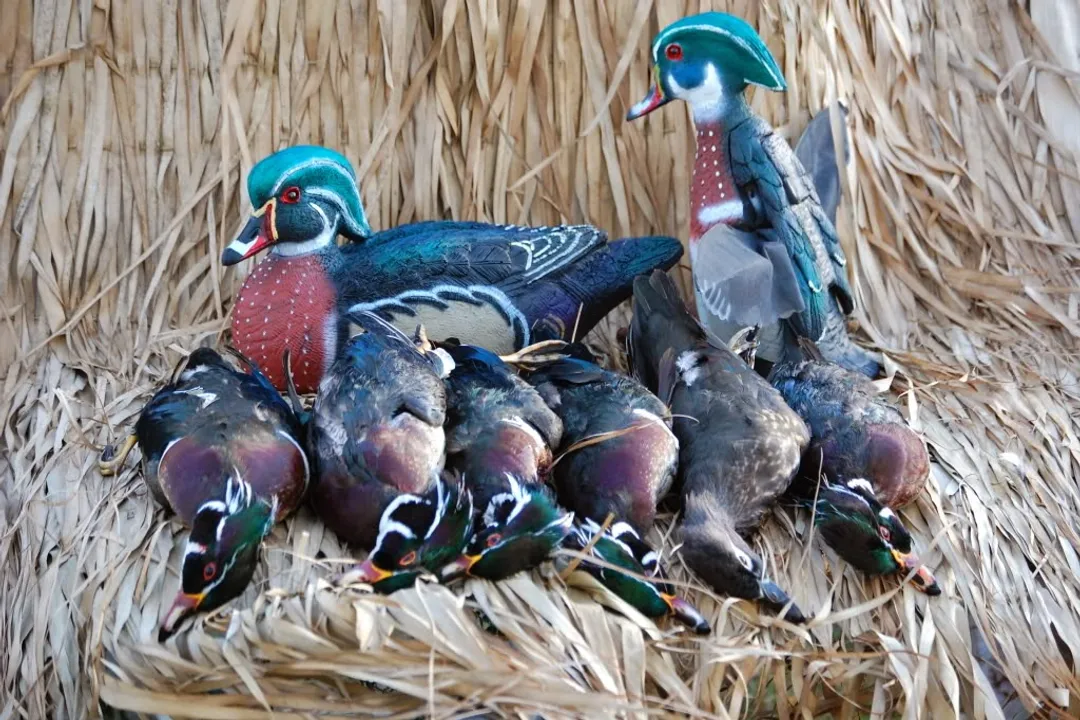
The striking beauty of the male Wood Duck, an iridescent jewel darting across still water, often overshadows the deep evolutionary history that shaped this unique waterfowl. Unlike many of their closest relatives, Wood Ducks (Aix sponsa) have carved out a highly specialized niche, primarily driven by their dependence on woody habitats for reproduction. This specialization has resulted in distinct physical characteristics and ecological behaviors that set them apart within the duck family.
# Aix Lineage
The Wood Duck belongs to the tribe Anatini, commonly known as the dabbling ducks. While often grouped with species like Mallards, their genus, Aix, highlights a specific evolutionary trajectory. In the broader context of avian classification, Aix sponsa occupies a unique spot, sometimes suggesting an older evolutionary divergence or a strong pattern of convergent evolution tailored to their specific environmental needs, particularly the requirement for tree cavities. Their scientific name, sponsa, which means "betrothed" or "bride," likely refers to the elaborate, almost bridal-like plumage of the male, a testament to the pressures of sexual selection acting upon this lineage.
# Cavity Nesting
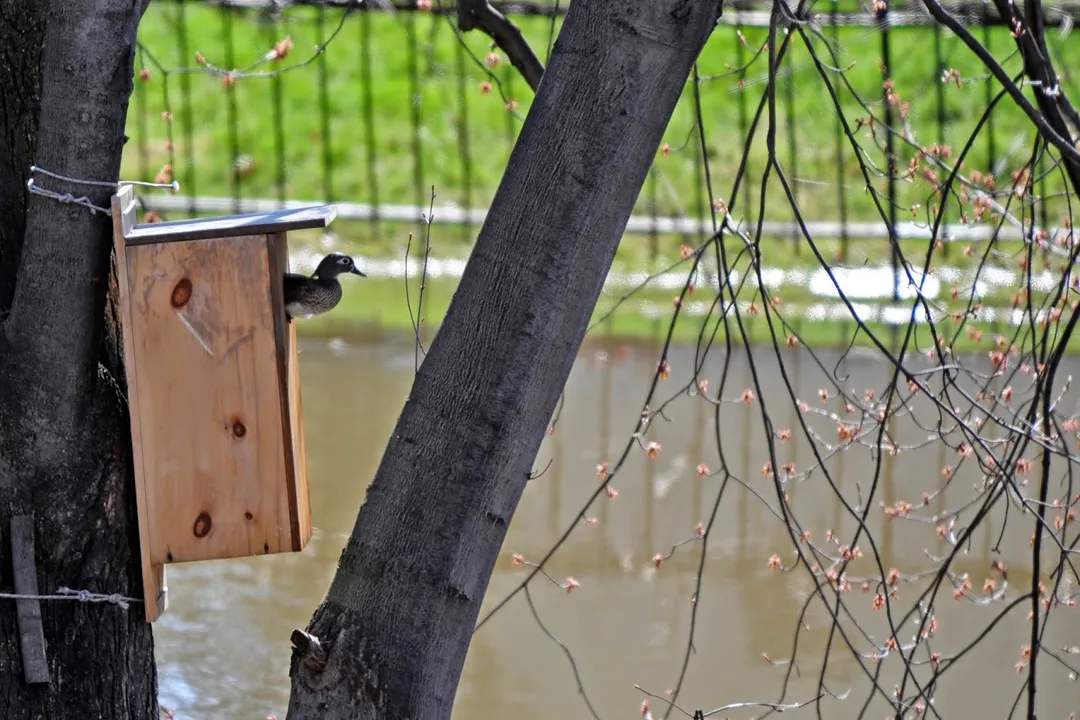
Perhaps the single most defining evolutionary trait of the Wood Duck is its strict requirement for nesting inside tree cavities. While some other ducks, like mergansers or goldeneyes, will use cavities, Wood Ducks rarely nest on the ground, a significant behavioral divergence from many other Anatinae members who prefer open nests on the ground or in dense vegetation.
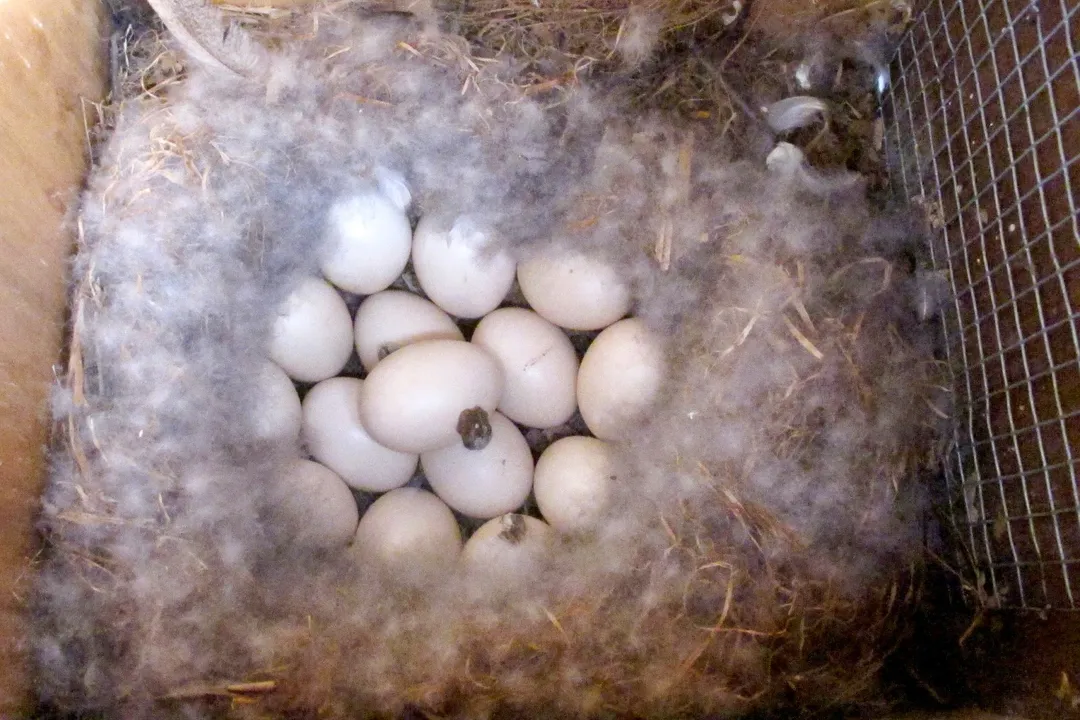
This obligate cavity use has profound implications for their life history. The ducks rely on pre-existing holes, often created by woodpeckers or natural decay, typically high above the ground or water. This elevated placement offers a substantial defense against ground predators like raccoons, snakes, and foxes, which cannot easily reach the eggs or vulnerable young.
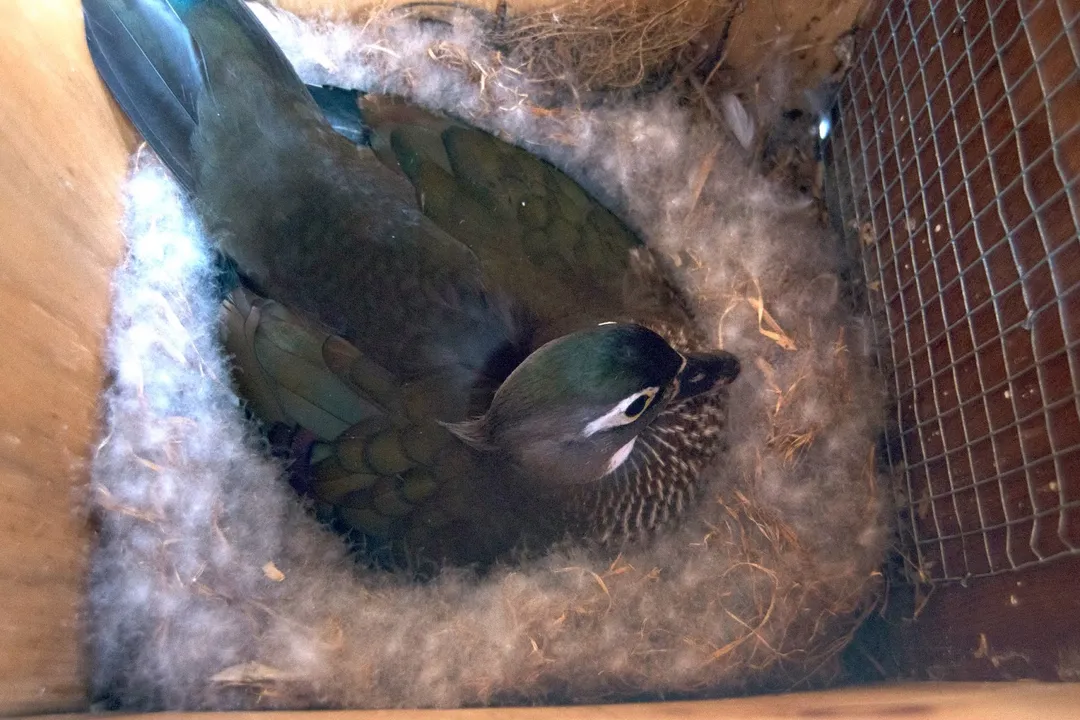
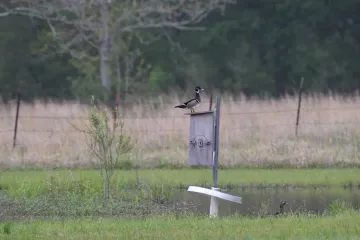
The trade-off for this protection is the energy cost and time involved in finding a suitable cavity. When natural cavities become scarce—a common issue following the removal of mature, dead, or damaged trees—Wood Ducks will readily adopt artificial nesting boxes, provided they meet specific size and placement criteria. The fact that they readily utilize human-provided structures suggests that the availability of safe, enclosed nesting sites is a greater limiting factor on their population than the ability to build a ground nest would be, indicating strong historical selection for the cavity strategy. The female Wood Duck's relatively dull coloration compared to the male also serves as critical camouflage against predators while incubating inside a dark hole.

# Selective Pressures
The evolutionary path of the Wood Duck is deeply intertwined with the availability and type of wetlands they inhabit. They are commonly associated with wooded swamps, forested edges of lakes, and slow-moving rivers.
A concept known as the Wood Duck Rule in ecology touches upon this relationship between habitat structure and geographic range. This observational rule suggests that species dependent on tree cavities for nesting often maintain broader geographical distributions than closely related species that nest on the ground in similar environments. The reasoning is that while ground-nesting success is highly sensitive to local soil type, vegetation density, and localized predation patterns, suitable tree cavities might be more consistently available across diverse forest types, allowing the species to spread across varied climates and landscapes. This suggests that their early evolutionary commitment to cavity use may have been a dispersal advantage.
However, modern pressures highlight the fragility of this adaptation. The decline of mature forests in many regions drastically reduced natural nest sites, which, combined with market hunting in the late 19th and early 20th centuries, nearly drove the species to extinction. This historical bottleneck demonstrates how quickly environmental change can overwhelm a specialized adaptation if the necessary structural component of the environment (old, cavity-bearing trees) is removed.
# Plumage Signals
The dramatic sexual dimorphism in Wood Ducks is a textbook example of the results of sexual selection, driven by mate choice. The male is famous for its complex iridescence, featuring a crest, bright white eye-rings, a deep green/purple head, and chestnut breast markings. This elaborate display is crucial for attracting a mate.
In contrast, the female is primarily a mottled grayish-brown with a distinct white teardrop patch around the eye. The stark difference suggests that while males compete visually—perhaps signaling superior foraging ability or genetic quality through the maintenance of such bright, complex feathers—females benefit most from camouflage once nesting begins. The male’s striking colors likely evolved because they are highly effective at communicating fitness across the dappled light of wooded water bodies, where such displays are most visible to prospective mates.
For readers managing local wetland habitats, understanding this dimorphism can be applied practically: providing boxes with entrances large enough for the male to enter and inspect, but perhaps slightly smaller than those readily accepted by invasive species like European Starlings, can subtly guide nesting toward the native Wood Duck. This is an applied conservation strategy directly informed by understanding the species' physical characteristics and nesting habits.
# Flight Behavior
The physical architecture required for navigating tight, wooded environments also influences their flight style. Wood Ducks are adept flyers, capable of remarkable agility among tree trunks and branches. Their wings are somewhat shorter and more rounded than those of an open-water duck, granting them the maneuverability needed to take off rapidly from confined spots, such as emerging from a nest hole or dodging obstacles in a flooded forest. This contrasts sharply with the longer, more pointed wings of ducks built for long-distance, open-water migration. Their physical form is clearly molded by a life lived in close proximity to dense cover, enabling swift escape when needed.
# Recovery Story
The Wood Duck’s recent history provides a case study in evolutionary persistence against overwhelming external pressures. By the early 1900s, due to habitat destruction and intense hunting for meat and feathers, the population reached critically low levels. Following protection under the Migratory Bird Treaty Act and, critically, the widespread installation of artificial nesting boxes starting in the mid-20th century, the population rebounded significantly.
This rapid recovery, following the removal of the primary man-made selective agents (overharvesting and habitat loss), suggests that the species possessed the inherent biological capacity—the genetics and behavior—to thrive once the environmental barriers were lowered. The success of nest box programs illustrates how effectively conservation managers can supplement a missing element of the environment to support an evolutionarily specialized species, effectively mimicking the conditions of historical old-growth forests necessary for their survival.
Related Questions
#Citations
The Wood Duck Rule in Ecology and Evolution
Wood Duck Life History, All About Birds, Cornell Lab of Ornithology
Beyond the Iconic Image: The Hidden Life of Wood Ducks
Wood Ducks - Friends of Eastern Neck
[PDF] Wood Duck - CT.gov
Division of Science and Research | Wildlife Populations- Wood Duck
Wood duck - Wikipedia
Wood Duck Biology, Life History, and Identification - Waterfowl Profile
Wood Ducks on a Wild River - Island Press |