What geological feature dictates the absolute habitat location for Kiwa hirsuta?
Answer
Hydrothermal vents
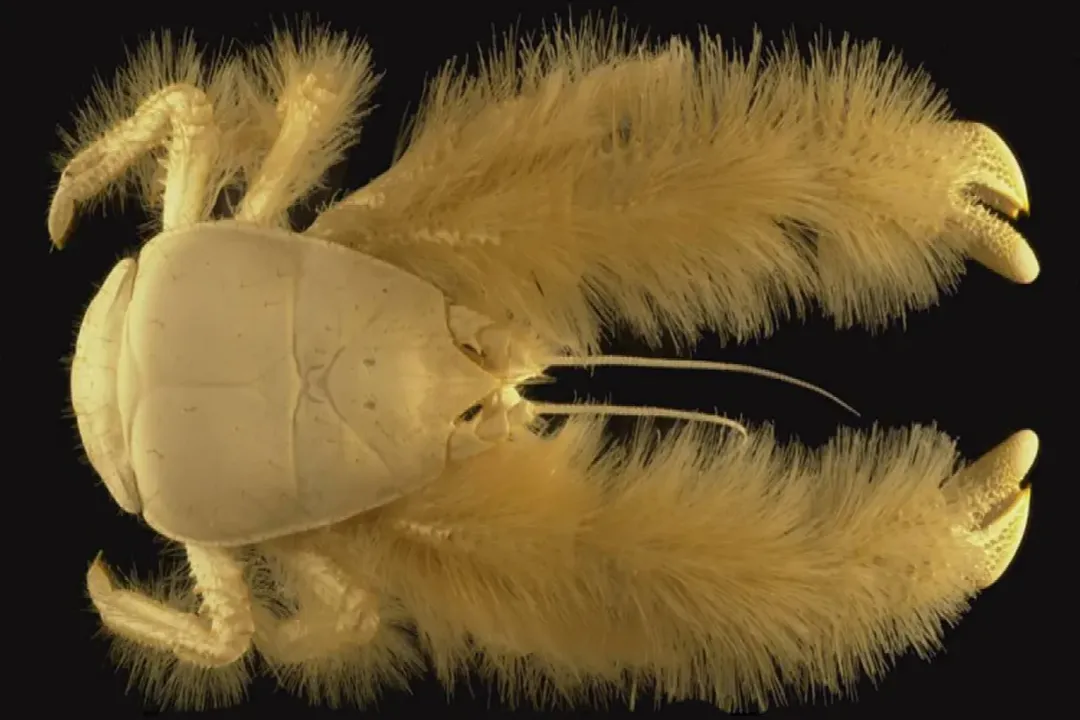
The existence of the Yeti crab is fundamentally tied to hydrothermal vents. These formations are deep-sea hot springs where geothermally heated water, heavily laden with dissolved minerals and chemical compounds, spews directly from the seafloor. The Yeti crab must cluster around these plumes because its primary survival strategy—cultivating chemosynthetic bacteria—relies entirely on the chemical output, like sulfides, provided by this specific geological phenomenon. Without the constant flow of geothermally heated, mineral-rich water, the localized ecosystem supporting the crab collapses.
Related Questions
When was the Yeti crab, Kiwa hirsuta, initially described and named?What geological feature dictates the absolute habitat location for Kiwa hirsuta?How does the Yeti crab utilize the specialized, hair-like setae covering its claws and arms?The initial discovery of Kiwa hirsuta was made near which major oceanic landmark?What approximate depth was reported for the discovery of Kiwa hirsuta?Which species is confirmed to be a relative dwelling in the Southern Ocean near Antarctica?What biological energy production process supports the Yeti crab ecosystem instead of photosynthesis?What is the primary physical attribute that immediately differentiated the Yeti crab from other deep-sea crustaceans?What is the specific depth range documented for the Antarctic relative, Kiwa tyleri?In which major ocean basin is the type species, Kiwa hirsuta, associated based on current knowledge?