Yeti Crab Evolution
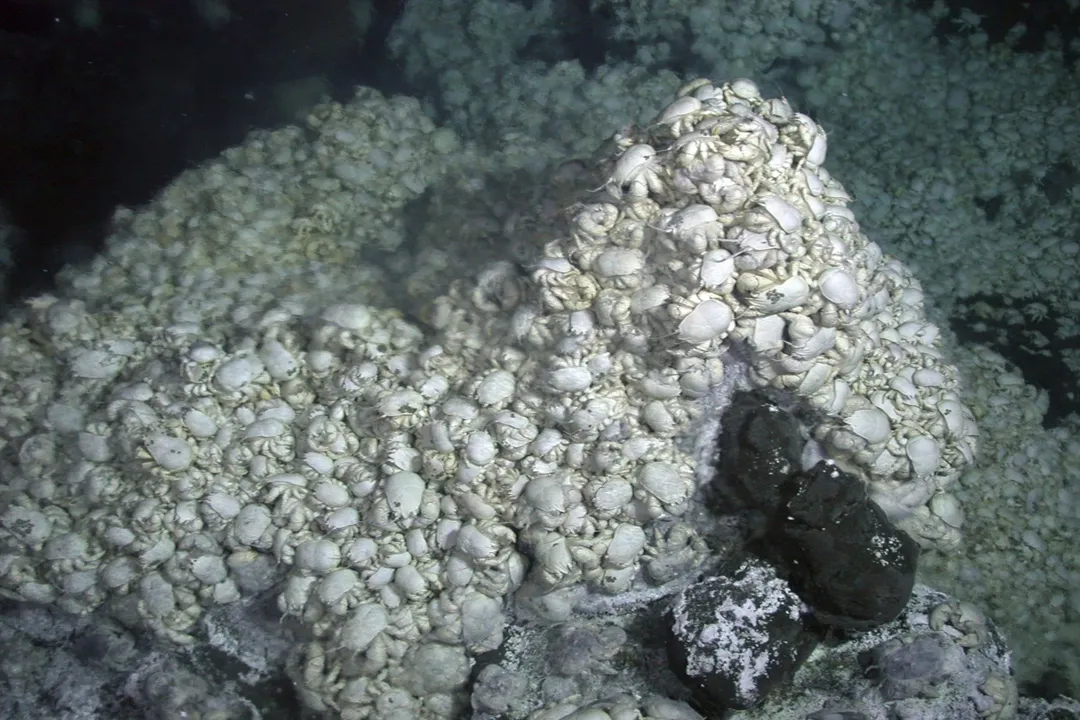
The discovery of the Yeti Crab, formally classified within the genus Kiwa, instantly captured the imagination of deep-sea biologists. These creatures, covered in dense, hair-like structures, inhabit some of the most extreme environments on Earth: hydrothermal vents where superheated, mineral-rich water spews from the seafloor. They look unlike many familiar crustaceans, possessing long, pale appendages bristling with setae—the very structures that earned them their fuzzy nickname. While Kiwa hirsuta, the first described species, was found near Easter Island in the South Pacific in 2005, subsequent discoveries have shown this genus represents a unique and specialized lineage adapted to life independent of sunlight. Understanding the Yeti Crab's place in the grand scheme of crustacean life requires tracing its lineage back through the genetic record, revealing an evolutionary history shaped by chemosynthesis and deep isolation.
# Initial Findings
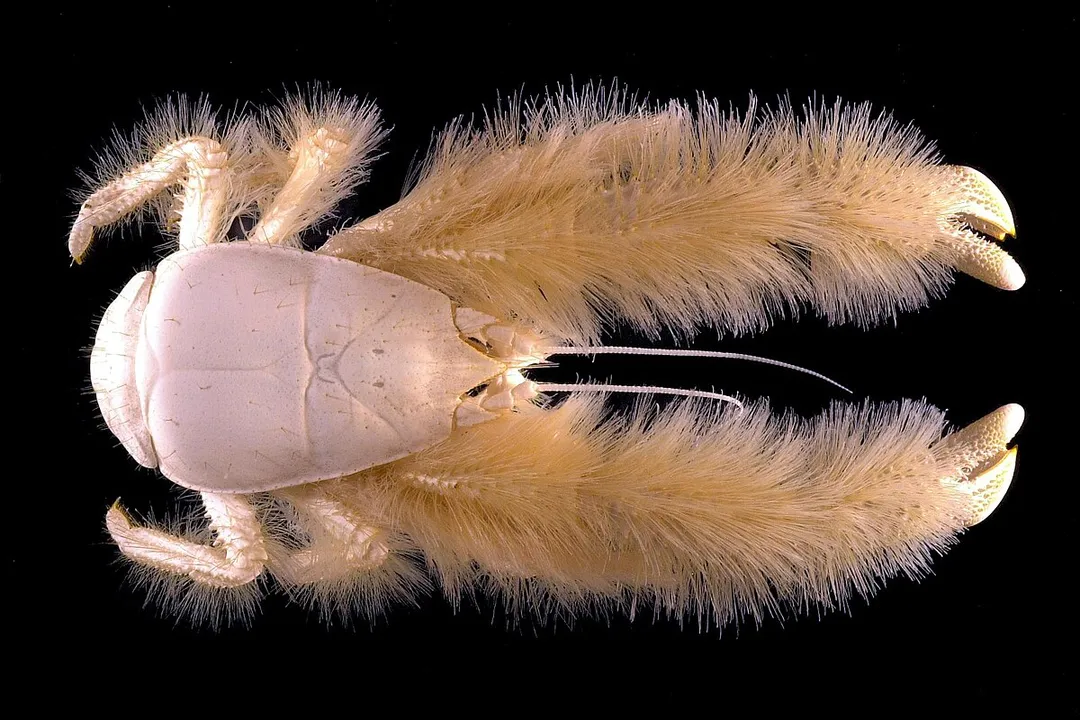
The initial identification of the Yeti Crab occurred during an expedition aboard the research vessel Atlantis, utilizing the remotely operated vehicle (ROV) Alvin. The original specimen, Kiwa hirsuta, was collected from a depth of about 2,200 meters on the South Pacific Rise, near the Galápagos Rift zone. This environment is characterized by crushing pressure, total darkness, and water temperatures fluctuating wildly near the vents. Biologists initially struggled to categorize this creature, noting its distinctive lack of eyes and its covering of fine, hair-like structures covering its legs and claws. Its unique morphology hinted at a lifestyle far removed from surface-dwelling relatives, strongly suggesting a reliance on the chemical energy fueling the vent ecosystem rather than photosynthesis.
# Classification Puzzle
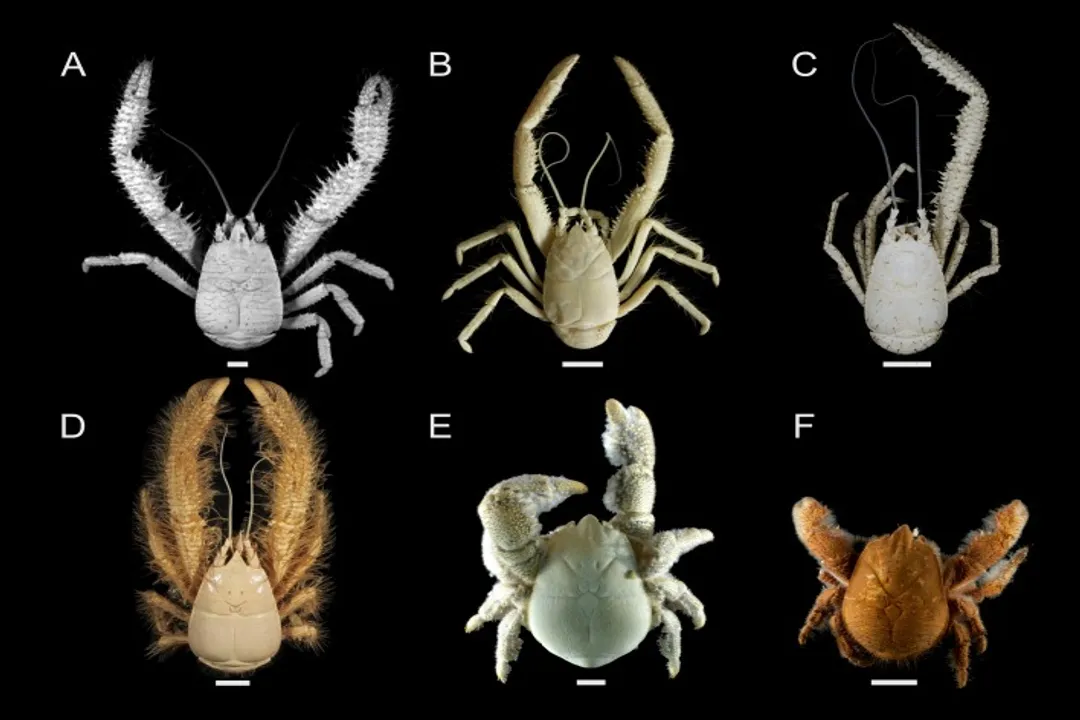
When first encountered, the Yeti Crab did not neatly fit into established crustacean groups, presenting a biological mystery. It possesses characteristics that are somewhat ambiguous, leading to its placement in a new family, Kiwaidae, within the infraorder Galatheidea. This infraorder also includes the squat lobsters and porcelain crabs, groups to which the Yeti Crab shows significant kinship. Molecular studies have been crucial in solidifying this placement, revealing that Kiwa is indeed related to these more familiar groups, despite its alien appearance. Specifically, analyses place it as a sister group to the Chirostyloidea, which encompasses the squat lobsters.
The morphological differences, however, are striking enough to warrant its distinct family status. While related to squat lobsters, the Yeti Crab lineage has clearly specialized over vast timescales. The presence of chemosynthetic bacteria, housed on its hairy claws, differentiates its feeding strategy substantially from most of its relatives, which are typically scavengers or deposit feeders. This divergence in ecological strategy likely drove rapid morphological change in key areas, such as the development of those specialized, setose appendages.
# Genetic Split
Pinpointing when the Yeti Crab lineage separated from its shallow-water cousins provides essential context for its deep-sea specialization. Molecular clock analyses, which estimate divergence times based on genetic mutation rates, suggest that the split between Kiwa and its nearest relatives occurred a substantial time ago. Studies indicate that the common ancestor of the Yeti Crab and its closest known relatives likely lived during the Mesozoic Era. Some research suggests this divergence event may have happened around 40 to 80 million years ago, placing the split well before the significant expansion of hydrothermal vent fields in some regions. This means that the ancestors of these crabs were either already adapted to low-light, chemosynthetic conditions, or they colonized the vents relatively early in their evolutionary history and then radiated within that niche.
Another fascinating aspect emerging from the genetic sequencing is the potential for a relatively recent common ancestor for all known Kiwa species, including K. hirtus and K. tyleri, which inhabit different vent fields. This suggests that while the split from other Galatheidea happened long ago, the diversification within the Yeti Crab genus might be more recent, potentially linked to the dispersal and isolation among the active vent systems across the ocean floor.
# Evolutionary Rate Context
When comparing the genetic changes in the Yeti Crab to those observed in shallower-water relatives like porcelain crabs, the deep-sea environment appears to have imposed a specific evolutionary pressure. Molecular data suggest that the evolutionary rate in the Kiwa lineage, particularly concerning genes used for this analysis, might be slower compared to some of its relatives living in more dynamic, shallower environments. If this pattern holds consistently across their entire genome, it could imply that once an organism is perfectly adapted to a stable, yet extreme, deep-sea chemosynthetic niche, the selective pressure for rapid change diminishes compared to the constant environmental shifts faced by coastal or shelf organisms. This relative stability, once established, allows a specialized morphology, like the dense bacterial "farms," to persist with minimal modification over millions of years.
Editor's Observation on Stability: The deep ocean, while physically extreme (high pressure, high temperature), offers a form of temporal stability for chemosynthetic ecosystems. Unlike surface waters subject to seasonal temperature swings, light availability changes, or predation pressures from complex food webs, a hydrothermal vent community maintains a consistent chemical energy source as long as the vent is active. For the Yeti Crab, this might translate into a slower overall rate of morphological novelty production once the primary adaptation—bacterial farming—was perfected, favoring refinement over reinvention.
# Hairy Claws Function
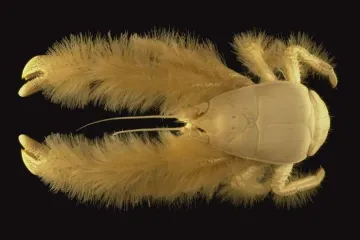
The most defining feature of the Yeti Crab is undeniably the covering of hair-like filaments, or setae, on its walking legs and pincers. These structures are not just for decoration; they are instrumental to the crab's survival. These setae are not true hair but rather modified structures covered in dense bacterial mats. The crab effectively cultivates these bacteria, farming them on its appendages. The bacteria themselves are chemosynthetic, meaning they derive energy from oxidizing the chemicals—such as hydrogen sulfide—emitted by the hydrothermal vents.
The crab then consumes these bacteria directly off its own limbs, gaining nutrition without having to rely on filtering or actively hunting the sparse particulate matter drifting in the water column. This behavior is a prime example of farming in the animal kingdom, executed in an environment where sunlight-based food chains cannot exist. The specific species, Kiwa tyleri, found near East Pacific Rise vents, shows particularly dense mats of bacteria covering its claws. The crabs use their pincers to move these "food gardens" toward their mouths.
# Vent Habitat Adaptation
The Yeti Crab is an obligate resident of hydrothermal vent communities. These ecosystems are unique because their primary energy source comes from geochemical processes rather than solar energy. The crabs must remain close to the vents to access the flow of reduced chemical compounds necessary for their symbiotic bacteria to thrive. The successful evolution of the Kiwa genus is therefore intertwined with the geological activity that creates these specialized deep-sea oases.
The environmental conditions necessitate extreme physiological tolerance. They live under immense hydrostatic pressure—hundreds of times that experienced at the surface. Furthermore, the vent water they often interact with can be scorching hot, though the crabs position themselves in the cooler mixing zones where vent fluid meets ambient seawater. This adaptation to a niche characterized by chemical gradients and high pressure represents a complete departure from the life histories of their presumed shallow-water ancestors.
# Species Variation
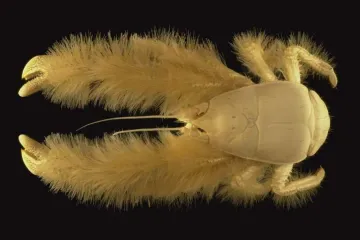
While Kiwa hirsuta was the first recognized member, subsequent research confirmed that the genus Kiwa comprises multiple species adapted to slightly different vent systems. For instance, Kiwa tyleri inhabits vents along the East Pacific Rise, a different geographic area than the initial discovery near Easter Island. The genetic analysis comparing these species suggests that while they share a close relationship, geographical separation between vent fields may have driven subtle speciation events.
This geographic isolation is critical in understanding crustacean evolution in the deep sea. Vent fields are often widely separated by vast stretches of abyssal plain, creating "islands" of suitable habitat.
Analytical Note on Isolation: The physical distance between active deep-sea vent systems acts as a significant, long-term barrier to gene flow. For a creature like the Yeti Crab, whose larvae likely rely on currents to disperse but whose adult life is utterly dependent on the stability of a specific vent chimney, the ocean floor functions like an archipelago. This isolation allows regional populations, such as those identified as K. hirsuta versus K. tyleri, to evolve independently over millions of years, even if their core lifestyle (bacterial farming) remains the same. This process accelerates local adaptation and can lead to the fixation of unique traits within a single vent field population.
# Evolutionary Vulnerability
The genetic studies that helped map the Yeti Crab’s evolutionary history also highlighted a significant concern regarding its long-term survival: vulnerability. Because the Kiwa lineage diverged from other crabs so long ago and adapted so specifically to the chemosynthetic environment, the genetic diversity within the genus appears relatively low compared to some of its relatives. A lack of broad genetic variation can severely limit a species' ability to adapt quickly to sudden environmental changes, such as the cessation of activity at a hydrothermal vent site or changes in ocean chemistry.
In essence, their specialization is also their weakness. They are perfectly tuned to their niche, but if that niche fundamentally changes—for example, if the vent cools or the chemical output shifts away from what their specific bacterial partners can process—the population has fewer alternative genetic pathways to draw upon for survival. This places the entire genus in a precarious position relative to less specialized, more genetically diverse fauna found in other deep-sea benthic zones. Their evolutionary success was built on mastering one unique energy source, which now presents a risk factor in a changing planetary environment.
Related Questions
#Citations
How the Hairy-Chested 'Hoff' Crab Evolved | Live Science
A new yeti crab phylogeny: Vent origins with indications of regional ...
Kiwa (crustacean) - Wikipedia
Genetic Study of Yeti Crabs Reveals Likely Common Ancestor—and ...
Origins of 'The Hoff' crab revealed | University of Oxford
The Yeti Crab has a past - a new fossil family of Squat Lobsters
The Origins of Hairy Crabs - Deep Sea News
Discovery of the "Yeti crab" - MBARI
The biogeography of the yeti crabs (Kiwaidae) with notes ... - Journals
Yeti Crabs grow bacteria on their hairy claws - Scientific American