Yeti Crab Scientific Classification
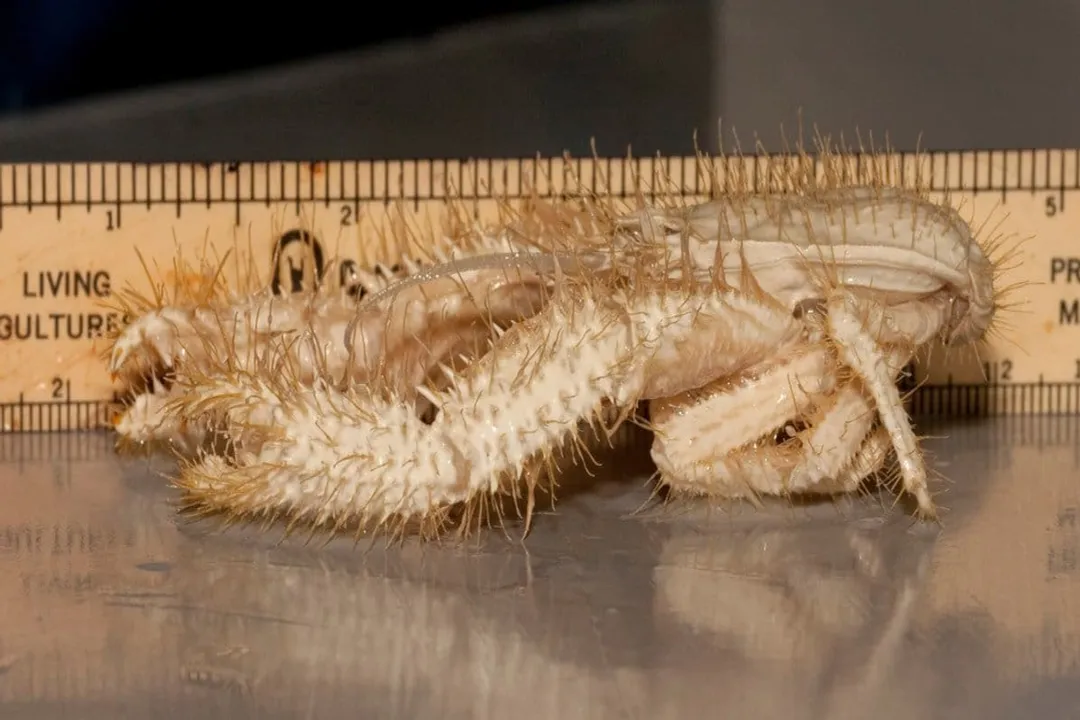
The creature known informally as the Yeti Crab inspires curiosity not just because of its bizarre, furry appearance, but because of where it sits on the grand tree of life. Placing the Yeti Crab, Kiwa hirsuta, into its formal scientific structure reveals much about its evolutionary history and its strange, deep-sea existence. [1] This animal is far from the common shore crabs we observe; its classification marks it as a relatively recent addition to the known fauna of the planet, highlighting how much remains hidden in the abyssal zones. [8]
# Kingdom Status
Like all multicellular animals, the Yeti Crab begins its formal classification in the broadest category: Kingdom Animalia. [1][4] This simply groups it with all other creatures that ingest food and typically possess specialized sense organs and nervous systems. [2] Within the animal kingdom, the Yeti Crab falls into the phylum Arthropoda, which is one of the largest phyla on Earth, characterized by an exoskeleton, a segmented body, and jointed appendages. [1][4] This phylum includes insects, spiders, and all other crustaceans, placing the Yeti Crab among relatives ranging from house flies to lobsters. [2]
# Crustacean Rank
Moving further down the hierarchy, the Yeti Crab is situated within the class Malacostraca and the order Decapoda. [1][4] Decapoda, meaning "ten-footed," is the group that contains nearly all familiar crabs, lobsters, and shrimp. [2] This placement is crucial because it confirms that despite looking somewhat unique—especially with its dense, golden "fur"—it fundamentally shares a body plan with these more common underwater dwellers. [1] However, Kiwa hirsuta is not grouped with typical true crabs (Brachyura); rather, it is more closely aligned with the Anomura infraorder, a group that includes hermit crabs and king crabs. [1]
# Family Identity
The most defining taxonomic placement for this organism comes at the family level. The Yeti Crab belongs to the genus Kiwa and is the type species for its family, Kiwaidae. [1][4] This family level classification is relatively new, established specifically because the physical and genetic differences between Kiwa and other known groups, like the squat lobsters (Galatheidae), were significant enough to warrant a separate designation. [9] The official description of Kiwa hirsuta as a new genus and species occurred following its discovery near hydrothermal vents along the East Pacific Rise. [8]
| Taxonomic Rank | Classification | Defining Characteristic |
|---|---|---|
| Kingdom | Animalia | Multicellular heterotrophs [1][4] |
| Phylum | Arthropoda | Jointed legs, segmented body, exoskeleton [1][4] |
| Class | Malacostraca | Dominant class of crustaceans [1] |
| Order | Decapoda | Possesses ten legs (five pairs of walking legs) [2][4] |
| Infraorder | Anomura | Shares traits with hermit crabs and king crabs [1] |
| Family | Kiwaidae | Distinct grouping established for the Kiwa genus [1][9] |
| Genus | Kiwa | Genus containing the Yeti Crabs [4] |
| Species | Kiwa hirsuta | The specific hairy deep-sea organism [1] |
# Deciphering the Name
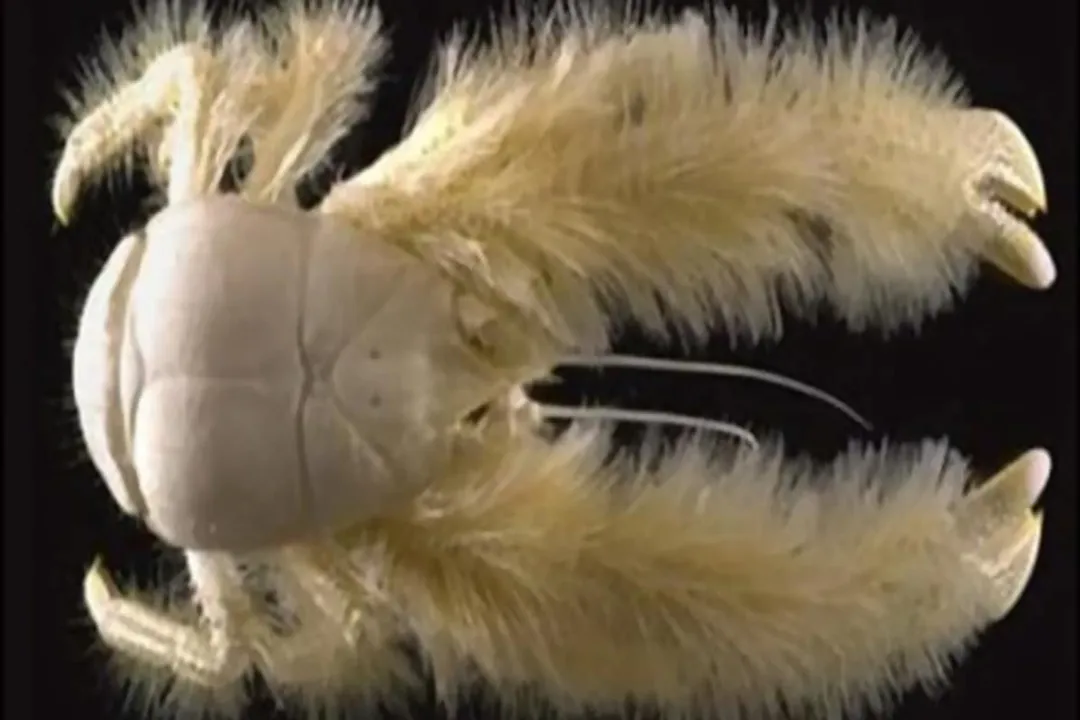
Understanding the scientific name itself offers a direct window into the crab’s unique morphology and the respect its discoverers held for it. [3] The genus name, Kiwa, was derived from Māori mythology, meaning "goddess of the bottom of the sea". [3] This choice reflects the creature's discovery in a remote, sunless environment deep beneath the waves. [8] The specific epithet, hirsuta, is Latin and translates directly to "hairy" or "shaggy," an unmistakable reference to the dense covering of yellowish-white bristles, or setae, that cover its claws and much of its body. [1][3] This hairy quality is arguably its most recognizable feature, setting it apart from almost all other recognized decapods. [7]
# The Hairy Advantage
The literal translation of hirsuta points directly to an adaptation critical for survival in its extreme habitat. These "hairs" are not simply for insulation or display; they are specialized structures that host large colonies of bacteria. [9] The Yeti Crab lives near deep-sea hydrothermal vents, environments characterized by superheated, mineral-rich water issuing from the seafloor. [8] Since sunlight cannot penetrate these depths, photosynthesis is impossible, meaning the entire ecosystem relies on chemosynthesis—the conversion of chemical energy into organic matter by bacteria. [9] The Yeti Crab effectively "farms" these bacteria on its claws, scraping them off to eat. [1][9] Its classification as a depauperate family, Kiwaidae, is likely linked to this highly specialized, chemosynthetic-dependent lifestyle, separating it evolutionarily from vent fauna that rely on other food sources. [9]
When we look at the description provided by the researchers, the hairs themselves are described as being arranged in tufts along the chelipeds (claws) and the ventral surfaces of the cephalothorax. [9] One interesting comparison is that while many deep-sea crabs possess modified bristles, the sheer density and arrangement on Kiwa hirsuta seem to have been a primary driver for establishing its own genus and family, suggesting a long, isolated adaptation history. [1] If we consider the sheer volume of bacterial biomass these setae can host, it suggests that the evolutionary pressure favoring this dense "fur" was immense, likely because the vent fields themselves are patchy and unpredictable habitats. [8] It’s fascinating that an animal placed firmly within the Decapoda order, an order known for its functional claws used for grasping or defense, has evolved its primary appendage function toward agriculture rather than pure predation or scavenging. [1][2]
# Insights from Placement
The very act of classifying Kiwa hirsuta required a careful balance of morphology and genetics. When first discovered, some early ideas might have tentatively placed it near the Galatheoidea (squat lobsters) due to general body shape. [1] However, molecular analyses were necessary to solidify its position within the Kiwaidae family, confirming it as a unique branch off the main evolutionary path of other vent crustaceans. [9] This reliance on genetic sequencing to define a new family underscores a general trend in modern taxonomy: superficial resemblance, especially in extreme environments where convergent evolution is common, is insufficient without DNA evidence. [4]
Furthermore, the placement of Kiwa within the Anomura infraorder tells us something about the general evolutionary history of creatures living around these deep-sea springs. Most of the charismatic megafauna associated with vents—like giant tube worms and certain clams—are entirely separate phyla. The Yeti Crab, however, represents a highly modified decapod successfully colonizing this niche. [8] This suggests that the Anomuran body plan, known for its flexibility in adaptation (think of the irregular symmetry of hermit crabs), proved particularly successful at adapting to the chemical, rather than solar, energy base of this ecosystem. [1]

# Taxonomic Comparisons and Context
While Kiwa hirsuta is the best-known member, the genus Kiwa is now recognized to include other species, solidifying the family Kiwaidae rather than being an outlier. [4] Other species, such as Kiwa tyleri (discovered later near vents on the Mid-Atlantic Ridge), share the same genus, further confirming the validity of this classification. [4] This discovery pattern—finding a highly specialized animal, naming it, and then finding its close relatives in similar but geographically separated habitats—is common in deep-sea biology. [8] The fact that these crabs are found across major oceanic spreading centers suggests that the ability to colonize and thrive near hydrothermal vents is an ancient, shared trait within the Kiwa lineage. [9]
It is also worth noting the sheer depth factor involved in its classification. Kiwa hirsuta was found at depths between 2,200 and 2,700 meters. [1] Classifying an organism that has never been exposed to sunlight requires relying entirely on its morphology, physiology, and genetics, rather than its behavior relative to solar cycles or shallow-water species. [8] The description notes that the organism is white or pale yellow, lacks pigmentation typical of shallower crustaceans, and has reduced eyes, all classifications consistent with a life spent in perpetual darkness. [1]
# Habitat Specificity
The scientific classification is inseparable from the environment that shaped it. The discovery location, specifically the hydrothermal vent fields on the East Pacific Rise, is the defining feature of the Kiwa genus. [8] The presence of the chemoautotrophic bacteria on the setae is so central to its life that it acts as a defining trait for the family. [9]
To appreciate this habitat, imagine a small, rocky area on the ocean floor where the water temperature is near freezing, yet steam vents spew out water hotter than boiling point, rich in toxic sulfides. [8] The Yeti Crab is perfectly adapted to the peripheral zones of these vents, where the temperature is survivable, and the bacterial mats are thickest. [9] This extreme specialization means that any future discovery of a creature sharing the Kiwa classification—say, a new species Kiwa nova—would almost certainly place it in an analogous, chemosynthetic environment, reinforcing the link between its taxonomic placement and its unique energy source. [1][4]
This reliance on chemical energy fundamentally separates the Yeti Crab from the vast majority of crabs in the Decapoda order, which are primarily omnivores or scavengers relying on organic fallout from the sunlit surface waters. [2] In essence, Kiwa hirsuta's classification as a unique family is a direct recognition of its deep evolutionary divergence driven by adaptation to chemosynthesis. [9]
# Final Thoughts on Taxonomy
The Yeti Crab remains a fascinating example of how deep-sea exploration continually refines our understanding of life's organizational structure. Its official designation, Kiwa hirsuta, places a unique, hairy dweller of the dark abyssal plains firmly within the crustacean tree, specifically alongside the squat lobsters, yet distinct enough to warrant its own family, Kiwaidae. [1][4] This taxonomic clarity, supported by morphological observation of its furry claws and molecular data, affirms its status as a specialized survivor of the deep ocean vents. [9] It serves as a constant reminder that the Linnaean system, when applied rigorously, accurately captures the evolutionary pathways forged in even the most alien corners of our own planet. [3]
Related Questions
#Citations
Kiwa hirsuta - Wikipedia
Yeti Crab - A-Z Animals
Yeti Crab | What's in a Name? - Harvard University
Yeti Crabs (Genus Kiwa) - iNaturalist
Yeti Crab (Kiwa hirsuta) | U.S. Fish & Wildlife Service
Meet the “Yeti Crab” – The Hairy Marvel of the Deep! - Facebook
The Yeti Crab – @issaashleyblog on Tumblr
Lurking Benignly on the Seafloor, the 'Yeti' Crab is Discovered
The biogeography of the yeti crabs (Kiwaidae) with notes on the ...