Do crab-eating macaques actually eat crabs?
The moniker "crab-eating macaque" immediately conjures an image of a monkey expertly cracking shells on a tropical shore, and while this behavior is certainly part of their repertoire, the name only tells a fraction of the story about this adaptable primate, Macaca fascicularis. [1][7] These creatures, more commonly referred to as long-tailed macaques, do indeed consume crustaceans, and this penchant for shoreline dining is a defining characteristic that earned them their descriptive title. [2] They are observed foraging along coasts and in mangrove ecosystems where crabs are readily available. [2] Evidence even points toward them consuming larger, armored prey like horseshoe crabs, sometimes employing rudimentary tools to aid their meal acquisition. [3]
# Shellfish Hunting
Observing a crab-eating macaque obtaining its meal often reveals a surprising level of intelligence applied to securing high-protein snacks. They are known to hunt for various types of crabs, mollusks, and other shellfish found in their intertidal environments. [2] The process isn't always simple cracking; in some documented cases, these monkeys utilize stones as hammers or anvils to break open hard shells, an example of basic tool use in the wild. [1] This ability to manipulate the environment to access otherwise inaccessible food sources speaks volumes about their cognitive flexibility. [1] It’s tempting to assume this behavior dominates their existence simply because it sounds dramatic and is easy to name them after, but an analysis of their actual diet reveals a far broader, opportunistic eating strategy. The focus on crab consumption likely stems from historical observations in areas where coastal foraging was a highly visible part of their daily routine, perhaps near human settlements, making it the most memorable aspect of their feeding habits to early observers. [1][5]
# Omnivorous Range
The diet of the long-tailed macaque is testament to its classification as an omnivore. [7] While crabs provide an essential source of marine protein, it is far from the primary component of their sustenance across their entire range. [1] Their diet shifts dramatically depending on the locale and seasonal availability, frequently leaning heavily on vegetation. They consume large amounts of fruit, seeds, flowers, and nectar. [1][7] When plant matter is scarce or when an easy protein boost is required, their hunting skills extend to insects, birds, small mammals, and even lizards. [7] This adaptability is key to their success; they thrive not just near the ocean but also in inland riverine forests and disturbed areas. [1][7] If we consider the sheer caloric intake required for a small Old World monkey, it's probable that fruits and seeds constitute the bulk of their annual energy consumption, making the crab a significant, but secondary, resource rather than the main staple suggested by their common name. [4]
# Water Adaptation
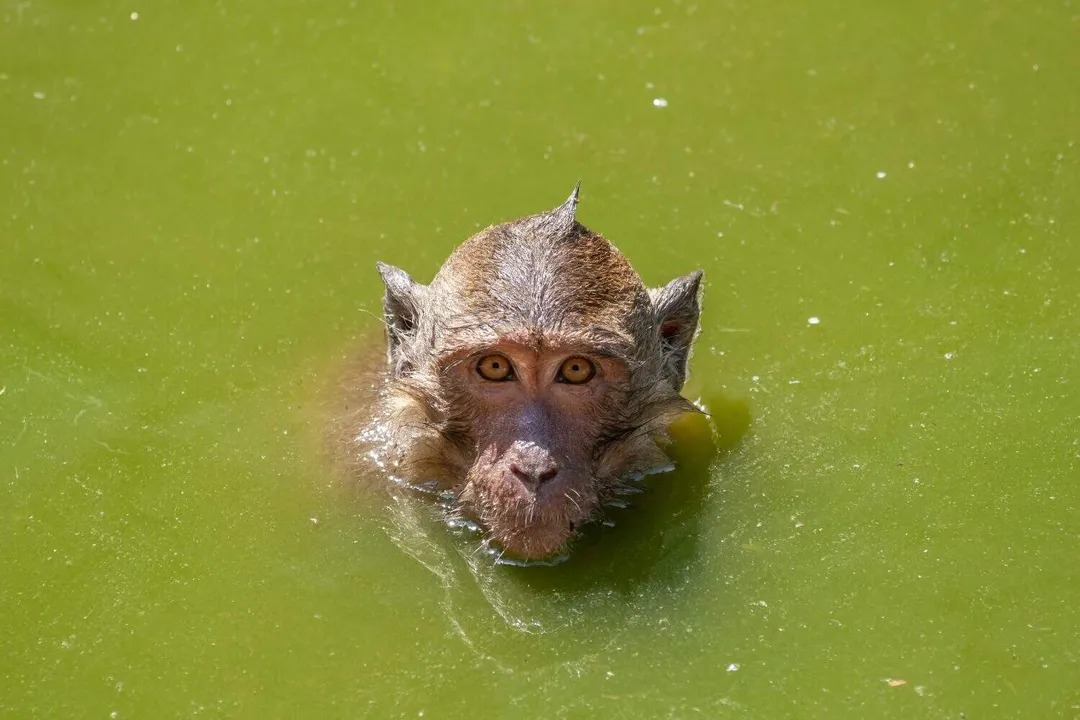
A crucial element explaining their access to crabs, oysters, and other aquatic fare is their profound comfort in water. Unlike many primates, crab-eating macaques are known to be excellent swimmers. [2] They readily enter the water, often diving beneath the surface to forage for food or perhaps to cross small channels or escape predators. [2] Their natural habitats are frequently situated adjacent to water sources, including coastlines, estuaries, and mangrove swamps. [1][2] This comfort level with aquatic environments gives them exclusive access to a food base that many other terrestrial primates cannot exploit. Furthermore, their ability to thrive in these coastal zones, which are often transitional spaces between land and sea, highlights a behavioral plasticity that allows them to exploit multiple niches simultaneously. [7] They are not strictly forest dwellers but thrive in habitats that offer both tree cover and easy access to shorelines. [1]
# Distribution Range
The native distribution of Macaca fascicularis spans a significant portion of Southeast Asia, including countries like Malaysia, Thailand, and Indonesia. [1] Their presence is extensive, which contributes to their status as "Vulnerable" on the IUCN Red List, though local populations can be dense. [1] Interestingly, while native to Asia, they have also been introduced to other areas, notably becoming established in Florida, where they present significant challenges. [5] In places like Florida, where native crab populations might not have evolved defenses against primate predation, these introduced macaques can exert significant pressure on local ecosystems. [5] This highlights a contrast: in their native habitats, local fauna has co-evolved to some degree, whereas in introduced settings, the macaque's opportunistic feeding habits—including crab eating—can become a substantial threat to the stability of the new environment and potentially to human health. [5]
# Ecological Pressures
Understanding the macaque’s relationship with crabs requires looking beyond simple predation and considering population dynamics. Because they are highly social and adaptable, their population density can become quite high when resources are plentiful. [6] When a population is large, the demand for accessible food sources increases, which would naturally lead to more conspicuous, high-effort foraging behaviors like cracking shellfish. [3] For conservationists and ecologists studying these groups, differentiating between what a macaque can eat, what it prefers to eat, and what it must eat seasonally dictates management strategies. [1] The fact that they are easily habituated to human presence in many areas means that feeding habits often overlap with human refuse or managed resources, further complicating the simple narrative that they are primarily fishing for wild crabs. [1][4]
# Survival Tactics
The long-tailed macaque’s success is inherently tied to its observational learning and adaptability rather than purely instinctual specialization. They learn foraging techniques from older, more experienced individuals, which means that while tool use for cracking hard shells is documented, not every individual in every troop will necessarily employ it. [1] This social learning mechanism allows useful but difficult skills, like prying open oysters or smashing crabs, to be passed down through generations, ensuring that the knowledge of how to access high-value, hard-to-reach food persists within the group. [1] If an environmental shift suddenly made easy fruit scarce, a troop with strong knowledge of coastal foraging techniques would likely fare better than one lacking that skill set. This blend of generalist eating habits supported by specialized, learned behaviors—like targeting crabs—is the true secret to why this small monkey remains so widespread and successful across diverse Asian landscapes. [7]
Related Questions
#Citations
Crab-eating macaque - Wikipedia
Meet the Crab-Eating Macaque, an Ocean-Swimming Monkey
Macaques eating horseshoe crabs : r/natureismetal - Reddit
Little Bit Wildlife Rescue - Facebook
Macaca fascicularis (long-tailed macaque) - Animal Diversity Web
Crab-eating monkey one of Florida's greatest threats to ecosystems ...
A closer look at crab-eating macaques - Instagram
Crab-eating Macaque Facts For Kids | AstroSafe Search - DIY.ORG