Yeti Crab Locations
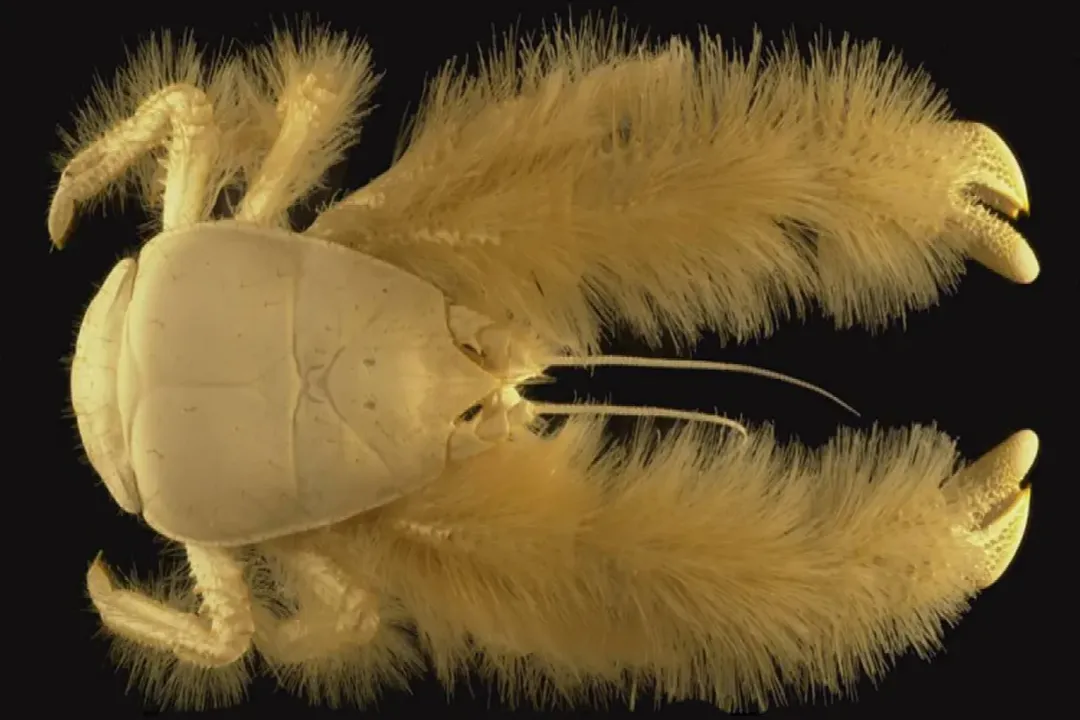
The Yeti crab, formally known as Kiwa hirsuta, occupies some of the most unusual real estate on the planet, deep beneath the ocean surface where sunlight is an abstract concept. These pale, ghostly creatures are not found near coral reefs or coastal shallows; their entire existence is tethered to geological activity occurring thousands of feet down. [1][4] Pinpointing their locations means tracing the routes of deep-sea exploration submersibles to sites characterized by searing hot fluids and mineral deposits. [3]
# First Appearance
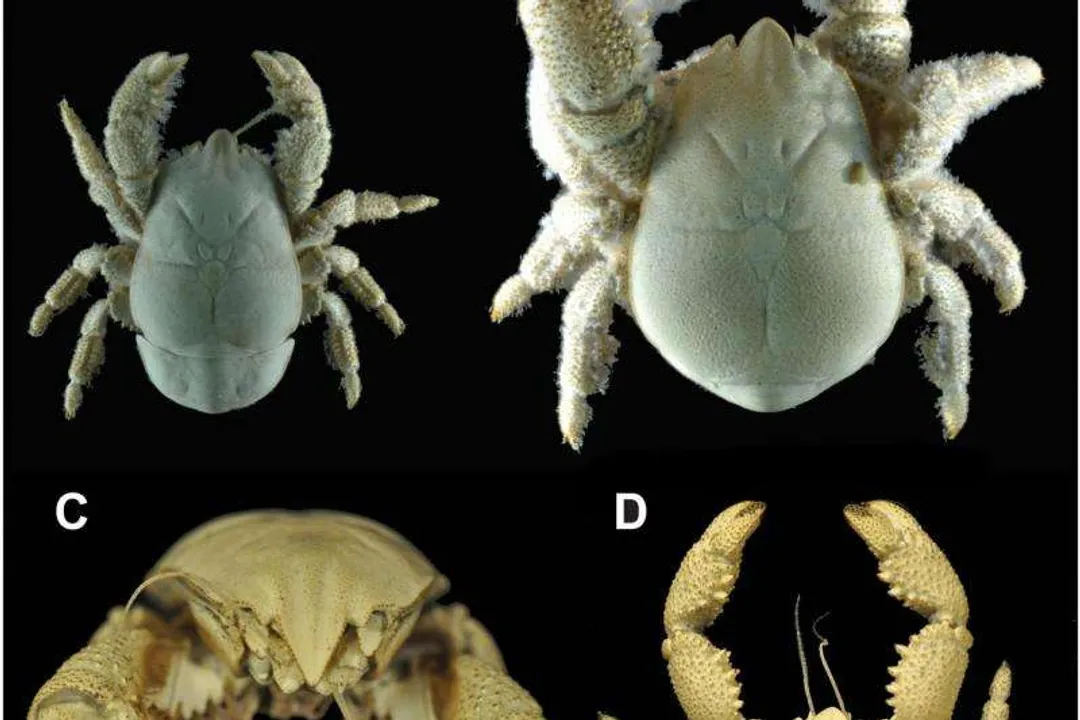
The initial description and naming of the Yeti crab followed its discovery in the year 2005. [1][3][8] This landmark find occurred during an expedition focused on mapping volcanic vent fields near Easter Island in the vast expanse of the Pacific Ocean. [3][8] The creature immediately stood out, not just for its remote habitat but for its distinctive, almost surreal appearance, which led to its evocative common name. [2] It was the presence of these hairy appendages that researchers noticed right away, setting it apart from other deep-sea crustaceans. [2]
# Vent Habitats
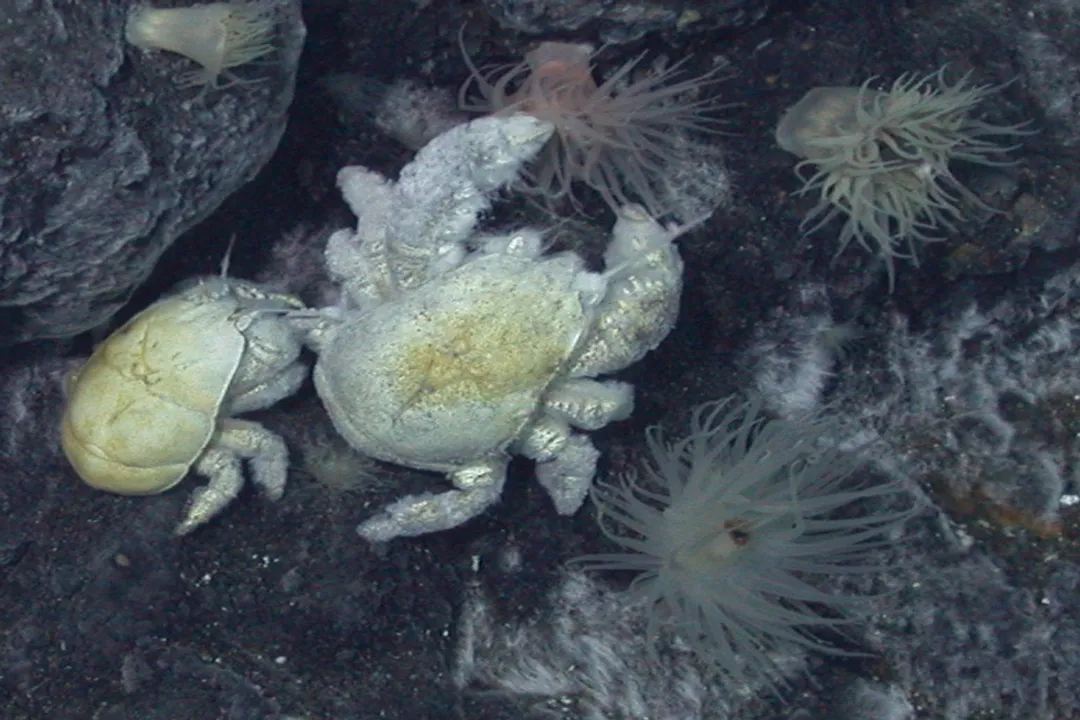
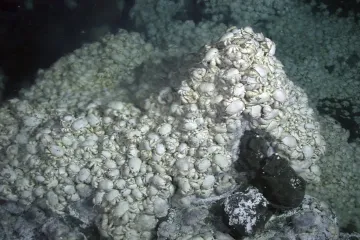
The single most defining feature of the Yeti crab's geography is its absolute dependence on hydrothermal vents. [1][3][4][6][7][8] These are essentially deep-sea hot springs where geothermally heated water, rich in minerals, spews from the seafloor. [4] The Yeti crab clusters directly around these plumes. [3][5] This environment is extreme, characterized by crushing pressure and temperatures that would instantly kill most surface life. [4]
These vents support unique ecosystems that rely on chemosynthesis rather than photosynthesis. [1] The Yeti crab capitalizes on this by cultivating bacteria on the specialized, hair-like setae covering its claws and arms. [1] These bacteria are the foundation of the local food chain, meaning the crab's 'location' is not just determined by geology, but by the availability of the chemical compounds necessary to feed its internal microbial farm. [1] It is interesting to consider that for the Yeti crab, a location with lower sulfide concentrations might be inhospitable, regardless of how close it is to a physical vent structure, suggesting a micro-habitat selection process within the broader vent field. [1]
# Pacific Discoveries
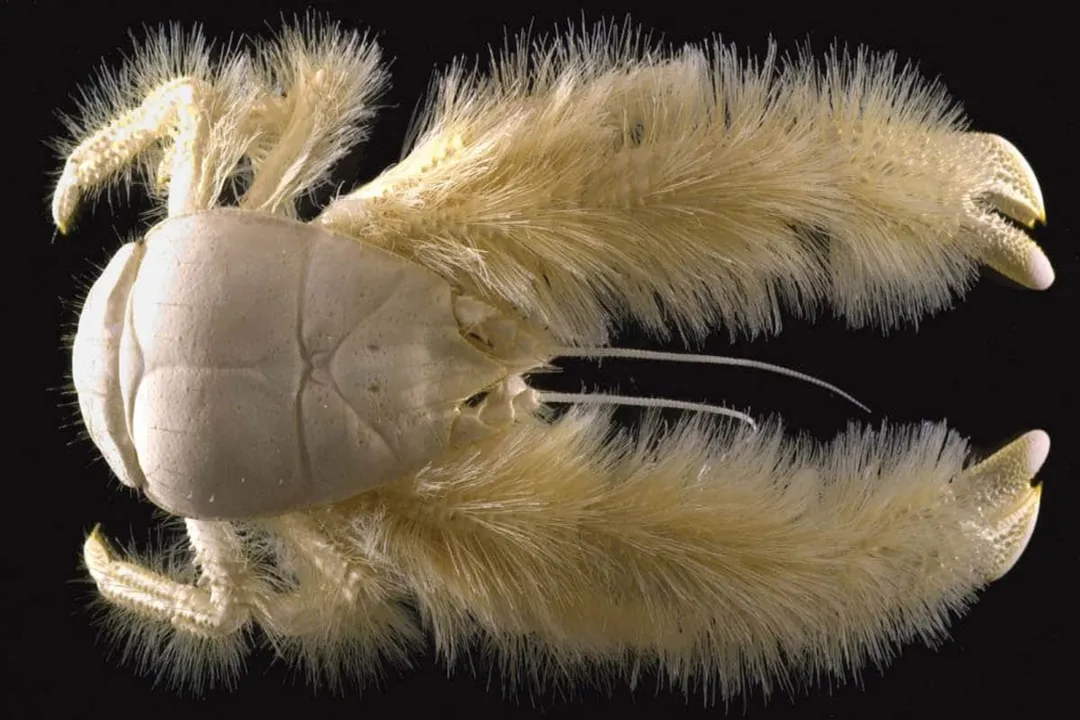
The type species, Kiwa hirsuta, is specifically associated with the volcanic activity around Easter Island. [1][3] This area lies within the Pacific Ocean basin. [6] The discovery depth for this particular species was reported to be around 2,200 meters (about 7,200 feet) below the surface. [1] While the general location points to the Easter Island volcanic vent field, the actual distribution across other Pacific vents remains an area of ongoing deep-sea mapping. [3]
The sheer remoteness of these locations means that every new sighting or sample requires significant technological investment. To visualize the sheer scale of the isolation, imagine a spot in the Pacific Ocean where the water pressure is over 200 times that experienced at sea level; this is the standard operating environment for K. hirsuta. [1]
# Antarctic Kin
While K. hirsuta dominates the early literature regarding Pacific hydrothermal vents, the genus Kiwa is not exclusive to that region. [9] Research has confirmed the presence of other species within the same genus dwelling in distinctly different, yet equally challenging, deep-sea settings. [9] A notable relative, Kiwa tyleri, has been identified in the Southern Ocean in the vicinity of Antarctica. [9]
This Antarctic species exhibits a slightly different depth range, being found between 2,200 and 3,000 meters. [9] This indicates that while the ecological requirement—the hydrothermal vent—is consistent, the geographical range for Yeti crab relatives spans vast distances across the global ocean floor, from the warm(er) vents near Easter Island to the frigid waters surrounding the Antarctic Ridge. [9] If one were to create a crude map of known Kiwa distribution, it would look like two widely separated "islands" of colonization, both linked by the chemistry of vent fluid. [9]
The existence of two distinct populations in such disparate areas—the relatively warmer equatorial Pacific versus the frigid deep Southern Ocean—raises fascinating biogeographical questions. It suggests that the larval dispersal mechanisms of these vent specialists are capable of spanning massive oceanic divides, or perhaps that vent fields serve as isolated evolutionary refugia that only occasionally communicate across tectonic plates. [9] Understanding the exact location of all Yeti crab species requires finding these isolated, geologically active oases scattered across the abyssal plain.
# Extreme Niche
The location dictates the survival strategy. Being fixed to a hydrothermal vent means the crab lives in a highly localized, energy-rich island surrounded by an otherwise nutrient-poor desert—the abyssal plain. [4] Their geography is defined by the chemistry of the water, not the light or temperature fluctuations common in shallower habitats. [1]
Accessing these areas demands specialized remotely operated vehicles (ROVs) and submersibles capable of handling the extreme conditions. [3] For the general public, the location of the Yeti crab is less a latitude and longitude and more a description: "near an active, sulfide-rich hydrothermal vent at depths exceeding 2,000 meters". [1][6] This ecological requirement places a hard limit on where researchers can expect to find them; they are entirely absent from standard trawling depths or cold seeps. [7]
The commitment to this environment means that any change to the vent's output—a shift in temperature, a cessation of flow, or a change in mineral composition—directly threatens the crab population living there. [4] Their entire known habitat is intrinsically linked to the dynamic, and often temporary, nature of seafloor volcanism.
# Mapping Distribution
While specific coordinates are often proprietary or restricted to scientific logs, the publicly confirmed localities center on these vent provinces. [3] It is important to differentiate between discovery locations and full distribution. The discovery of K. hirsuta near Easter Island establishes one major reference point. [8] The subsequent identification of K. tyleri near Antarctica establishes a second. [9]
To put this into context regarding exploration effort: the initial discovery was made by an expedition utilizing advanced deep-sea imaging and sampling equipment, highlighting that finding these crabs is an active pursuit in oceanography, not a passive event. [3] Every new deployment to a known vent field carries the potential of encountering Kiwa or related fauna, even if the primary focus is on geology or microbial life. [5]
The current known locations strongly suggest that the genus Kiwa is adapted to active, high-temperature, deep-sea venting systems, regardless of whether they are situated in the mid-Pacific ridge system or the rift zones beneath the Southern Ocean. [9] Any successful future sighting will almost certainly involve a submersible descending to depths well over a mile, searching for the tell-tale plume of superheated water that signals a Yeti crab neighborhood. [1][6]
# Summary of Key Locales
To summarize the current understanding of where to find the hairy inhabitants of the abyss:
| Species | Primary Ocean Basin | Associated Landmark | Approximate Depth Range |
|---|---|---|---|
| Kiwa hirsuta | Pacific Ocean | Easter Island Vent Field | ~2,200 meters [1][3] |
| Kiwa tyleri | Southern Ocean | Antarctic Ridge | 2,200 – 3,000 meters [9] |
This table, derived from the scattered findings, emphasizes that the location is defined more by the specific geological structure—the hydrothermal vent—than by a continuous geographical range like that seen in shallow-water crabs. [9] One could infer that expeditions targeting other geologically active deep-sea trenches or ridge systems globally would be the most logical next step in finding novel Kiwa species. [5] The presence of the crab is a direct indicator of active, deep-sea chemosynthetic activity. [4]
Related Questions
#Citations
Kiwa hirsuta - Wikipedia
Yeti Crab | What's in a Name? - Harvard University
Discovery of the "Yeti crab" - MBARI
The Curious Yeti Crab - Ocean Conservancy
Yeti crabs clustering around hydrothermal vents in Antarctic waters
Yeti Crab | Smithsonian Ocean
Yeti Crabs, Ghost Octopi Found at 1st Antarctic Deep-Sea Vents
Yeti Crab - Census of Marine Life
First species of yeti crab found in Antarctica named after British deep ...