What biological energy production process supports the Yeti crab ecosystem instead of photosynthesis?
Answer
Chemosynthesis
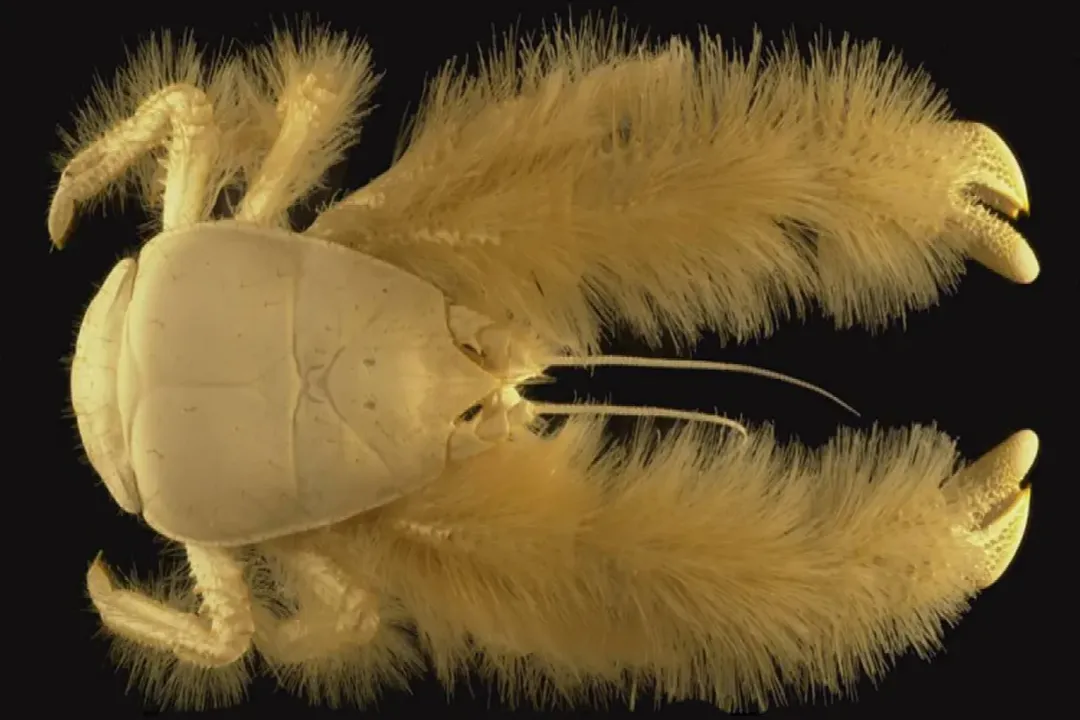
The entire ecosystem supporting the Yeti crab is based on chemosynthesis, which is an energy-producing process that utilizes chemical energy derived from inorganic compounds, such as sulfur compounds emitted by the vents. This contrasts sharply with photosynthesis, which relies on sunlight, an abstract concept thousands of feet below the surface. The Yeti crab facilitates this process by farming bacteria on its setae, which convert the vent chemicals into usable biological energy, forming the foundation of the local food web.
Related Questions
When was the Yeti crab, Kiwa hirsuta, initially described and named?What geological feature dictates the absolute habitat location for Kiwa hirsuta?How does the Yeti crab utilize the specialized, hair-like setae covering its claws and arms?The initial discovery of Kiwa hirsuta was made near which major oceanic landmark?What approximate depth was reported for the discovery of Kiwa hirsuta?Which species is confirmed to be a relative dwelling in the Southern Ocean near Antarctica?What biological energy production process supports the Yeti crab ecosystem instead of photosynthesis?What is the primary physical attribute that immediately differentiated the Yeti crab from other deep-sea crustaceans?What is the specific depth range documented for the Antarctic relative, Kiwa tyleri?In which major ocean basin is the type species, Kiwa hirsuta, associated based on current knowledge?