Which characteristic primarily defines the specific epithet *hirsuta* in *Kiwa hirsuta*'s scientific name?
Answer
It translates directly to 'hairy' or 'shaggy'
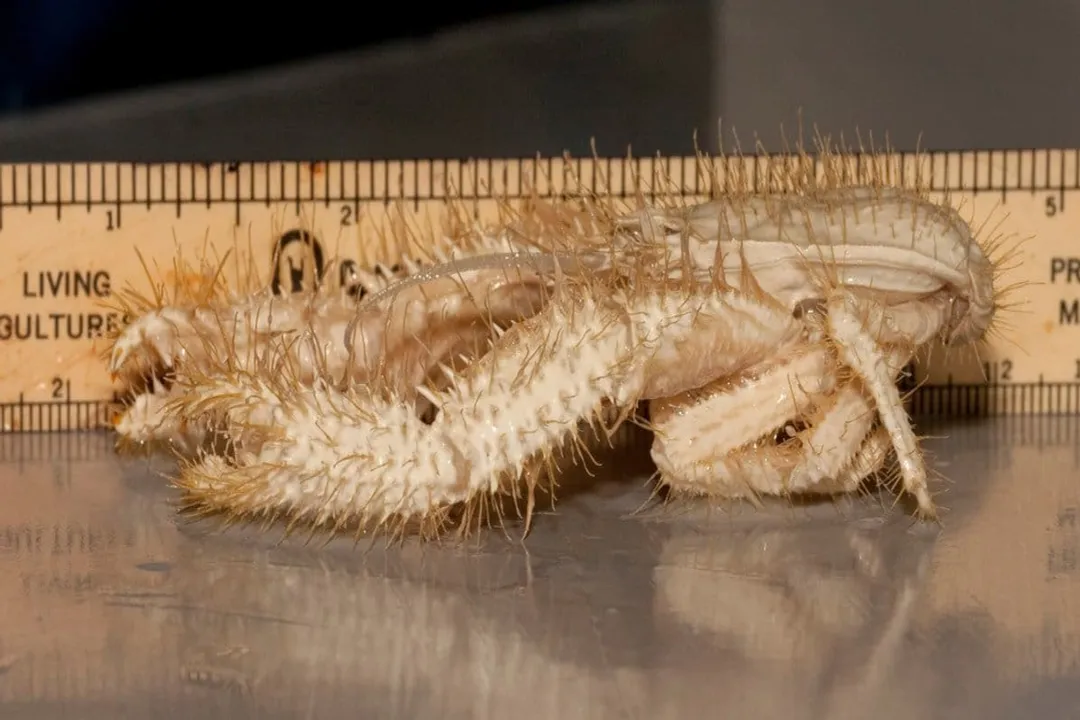
The specific epithet, *hirsuta*, is derived from Latin and has a direct and unmistakable translation: 'hairy' or 'shaggy.' This term was selected because it accurately describes one of the creature's most recognizable morphological features: the dense covering of yellowish-white bristles, known as setae, that densely cover its claws and significant portions of its body. This dense hairiness is a key feature that distinguishes *Kiwa hirsuta* from nearly all other recognized members of the Decapoda order, driving much of the justification for establishing its unique genus and family classification.
Related Questions
What is the meaning associated with the genus name *Kiwa* for the Yeti Crab?Which characteristic primarily defines the specific epithet *hirsuta* in *Kiwa hirsuta*'s scientific name?Where does *Kiwa hirsuta* sit structurally relative to hermit crabs within the Decapoda order?What specialized structures on the Yeti Crab's claws are used for cultivating food?Why was the family designation Kiwaidae established specifically for the *Kiwa* genus?What fundamental biological process supports the ecosystem near the Yeti Crab's habitat?What key factor necessitated relying heavily on molecular analyses during the classification of *Kiwa hirsuta*?What defining environmental feature characterizes the discovery location of *Kiwa hirsuta*?Which characteristics are listed for organisms classified under the Phylum Arthropoda?Which other species shares the genus *Kiwa* with the Yeti Crab, and where was it found?