Near which geological features was the Yeti Crab discovered in 2005?
Answer
Hydrothermal vents along the East Pacific Rise
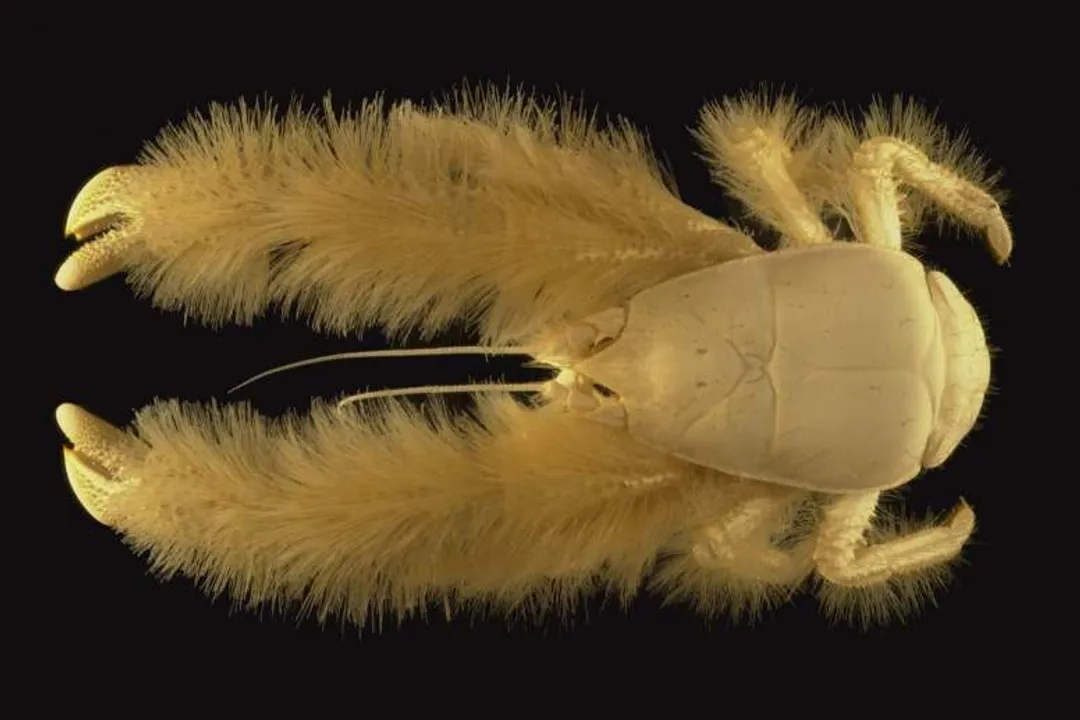
The initial discovery of *Kiwa hirsuta* occurred in 2005 during an expedition focused on studying deep-sea communities thriving near hydrothermal vents. These vents are unique geological structures on the seafloor characterized by the eruption of scorching hot, mineral-rich water. Specifically, the location cited for its discovery was along the East Pacific Rise, positioning the Yeti Crab as a remarkable example of life adapted to one of Earth’s most extreme environments sustained by chemosynthesis rather than photosynthesis.
#Videos
What Exactly Is: Yeti Crab | The Crabominable Deep-Sea Crustacean
Related Questions
What does the Latin species name hirsuta directly describe about Kiwa hirsuta?Near which geological features was the Yeti Crab discovered in 2005?What adaptation suggests chemical sensing is overwhelmingly vital for Kiwa hirsuta survival?What specialized feeding strategy defines how the Yeti Crab obtains sustenance?What specialized structures fill the long, elaborate setae covering the Yeti Crab's claws?Why does the Yeti Crab exhibit notably pale coloration ranging from whitish-yellow to cream?What is the typical documented length measurement for adult Yeti Crabs?What inorganic chemical do the symbiotic chemoautotrophic bacteria metabolize near the vents?What posture does the Yeti Crab adopt to maximize its chemosensory surface area?What concept inspired the selection of Kiwa as the genus name for the Yeti Crab?