What adaptation suggests chemical sensing is overwhelmingly vital for Kiwa hirsuta survival?
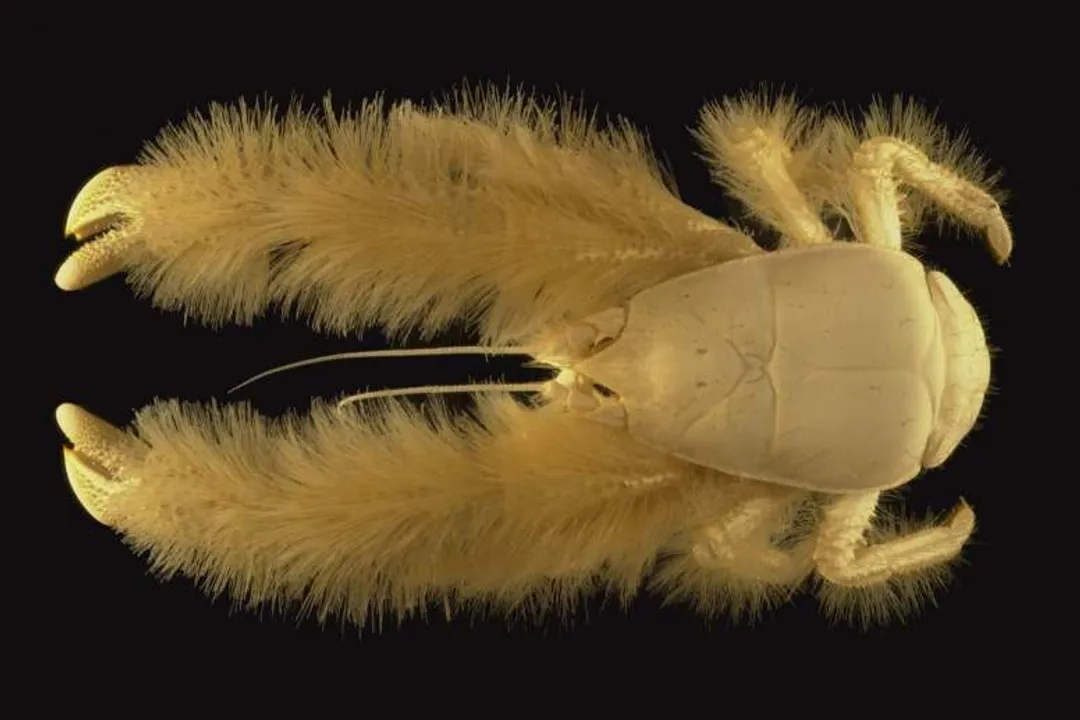
Dense setae packed with chemosensory organs
The Yeti Crab's survival hinges on its specialized appendages, which are covered in a dense field of long setae. These are not simple hairs; they are highly modified structures packed with pits or grooves containing chemosensory organs. These organs are crucial for detecting chemicals in the water, allowing the crab to navigate and forage in absolute darkness near the vents. The sheer volume and specialized placement of these structures suggest that the evolutionary energy investment in chemical sensing far outweighs the investment in other senses, such as sight, making it the most vital sense for locating necessary plumes and food sources.
#Videos
What Exactly Is: Yeti Crab | The Crabominable Deep-Sea Crustacean