What specialized, hair-like spines cover the Yeti Crab's chelipeds and legs?
Answer
setae
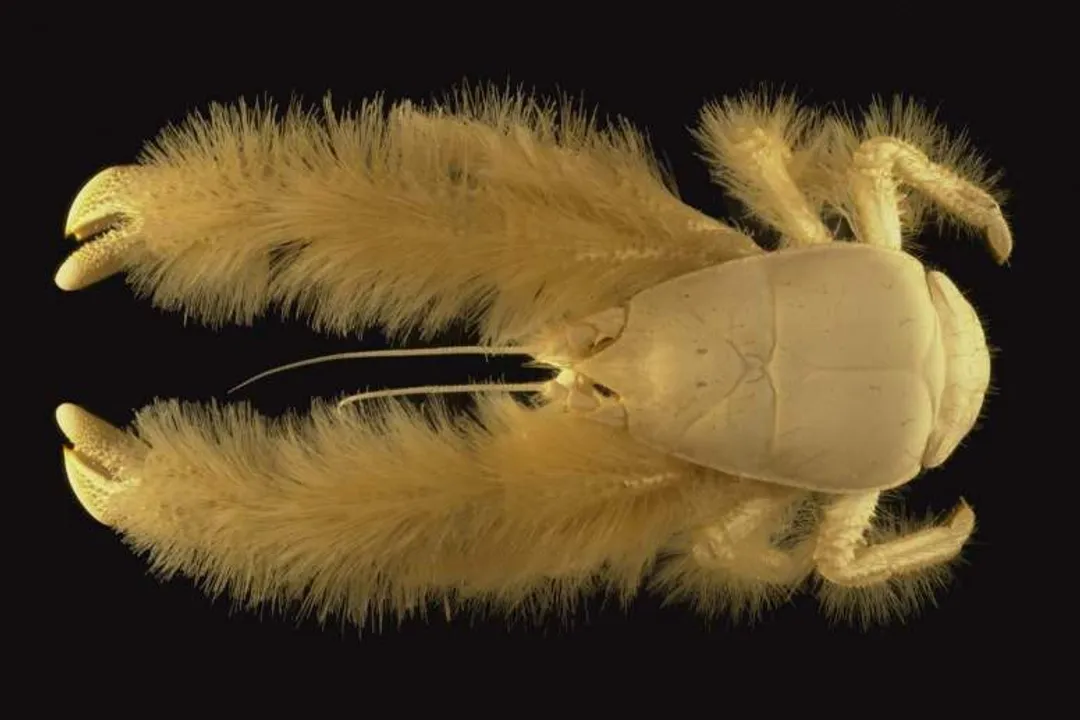
The distinctive, hairy appearance of the Yeti Crab, which inspired its nickname, comes from specialized structures covering its claws (chelipeds) and legs. These structures are not true fur but are scientifically identified as setae. These setae are long, silky, and often exhibit rhythmic waving motions in the water currents near hydrothermal vents. This unique morphology is crucial not only for its appearance but also functionally, as these hair-like spines are believed to serve as sensory organs, potentially detecting chemical changes and physical presence in the absolute darkness of its environment.
#Videos
Yeti Crab - Animal of the Week - YouTube
Related Questions
When was Kiwa hirsuta, the Yeti Crab, first encountered by scientists?What specialized, hair-like spines cover the Yeti Crab's chelipeds and legs?To which infraorder, grouping it with hermit crabs, is the Yeti Crab classified?What geological feature is essential for sustaining the dense populations of Yeti Crabs?What is the primary diet strategy involving bacteria cultivated on the Yeti Crab's bristles?Given its near-blindness, what dual sensory role might the Yeti Crab's setae perform?Which deep-sea submersible was used by the expedition that discovered Kiwa hirsuta?What entirely new biological family was created to accommodate the distinct nature of Kiwa hirsuta?What maximum density of Yeti Crabs has been observed packed per square meter near favorable vent flows?Where does the female Kiwa hirsuta attach her eggs until they hatch into larvae?