What feature camouflages the female *Dysdera crocata*'s egg sac in its damp habitat?
Answer
Coverage with debris or fragments of leaf litter
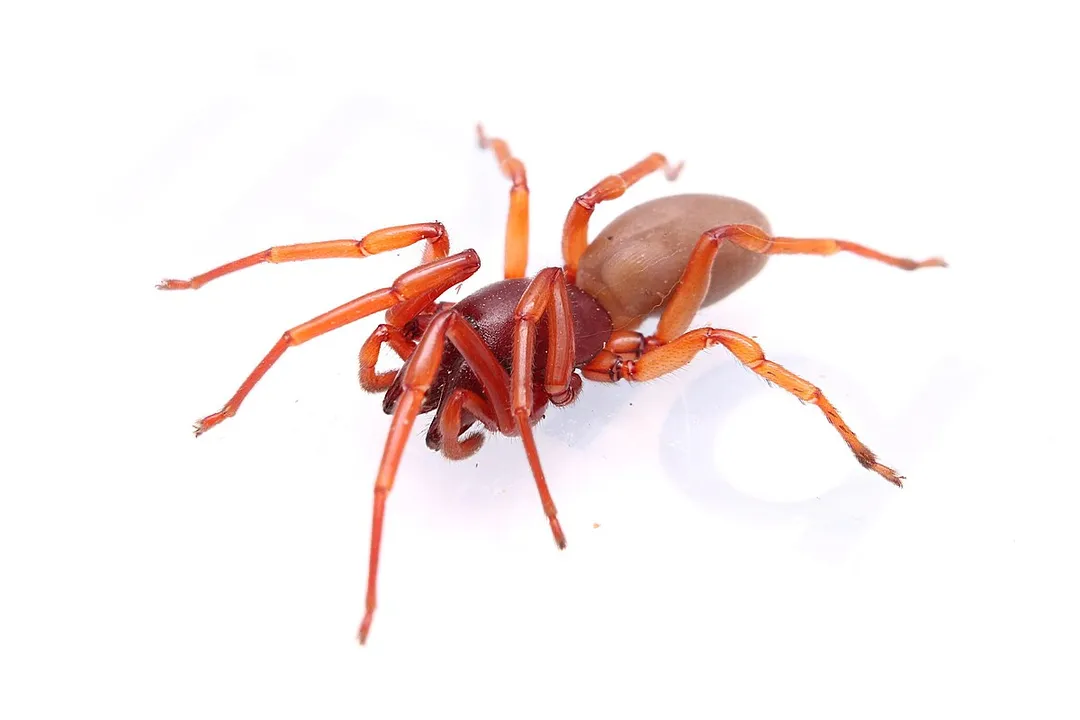
The female woodlouse spider employs a specific adaptive strategy to protect her offspring within the egg sac. The sac itself is generally small, spherical, and whitish or grayish. Crucially, the female covers this sac with materials found in her environment, such as debris or fragments of leaf litter. This camouflaging technique helps the vulnerable egg sac blend seamlessly into the dark, damp retreats where they are laid, offering protection against potential predation.
Related Questions
What is the family classification for the woodlouse spider, *Dysdera crocata*?Why does *Dysdera crocata* possess elongated and robust chelicerae?How many eyes does the woodlouse spider possess, unlike *Tegenaria* or *Eratigena* genera?What specific terrestrial crustaceans constitute the primary diet of the woodlouse hunter?What feature camouflages the female *Dysdera crocata*'s egg sac in its damp habitat?When bitten by a woodlouse spider, what characterizes the typical localized reaction in humans?What environmental condition is essential for the woodlouse spider because of its reliance on woodlice?Which hunting web structure is typically *not* constructed by the nocturnal woodlouse spider?What is the general body length range for adult male woodlouse spiders compared to females?If pest management is deemed necessary for *Dysdera crocata*, what is the recommended primary defense strategy?